
The Final Chapter? Elizabeth Holmes' Lost Appeal and Its Investment Implications
The U.S. Court of Appeals for the Ninth Circuit’s denial of Elizabeth Holmes’ petition for an en banc rehearing in May 2025 marks a definitive end to her legal battle to overturn her 2022 fraud conviction. The decision, which concluded her appellate options at the circuit court level, underscores the finality of her 11-year prison sentence and the $452 million restitution order. For investors and stakeholders in the biotech sector, this ruling raises critical questions about corporate accountability, regulatory oversight, and the long-term fallout from high-profile fraud cases.
The Rise and Fall of Theranos
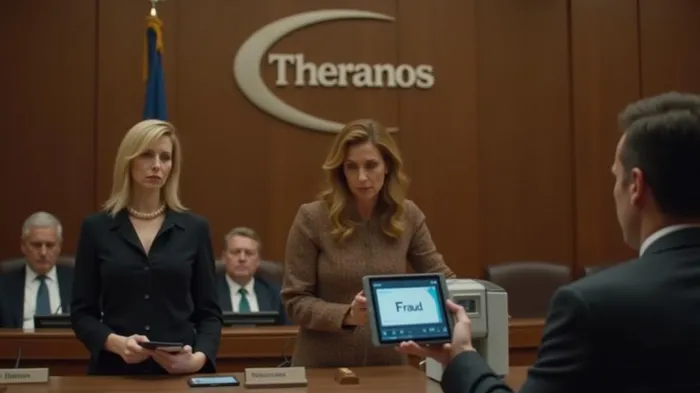
Holmes’ once-celebrated startup, Theranos, promised to revolutionize healthcare with a portable blood-testing device that could diagnose hundreds of conditions with just a single drop of blood. Backed by investors like Rupert Murdoch and Walgreens, the company raised over $700 million before its collapse in 2018, when Wall Street Journal investigations exposed its fraudulent claims. The technology, it turned out, was riddled with errors, and Holmes had falsified data to deceive investors. Her 2022 conviction for wire fraud and conspiracy, along with her co-defendant Sunny Balwani, signaled a rare legal reckoning for a Silicon Valley founder.
The Legal Battle and Its End
Holmes’ legal team had argued that procedural errors during her trial—such as the admission of post-scheme evidence and the exclusion of defense testimony—warranted overturning her conviction. The Ninth Circuit’s initial February 2024 ruling dismissed these claims, affirming that such errors were “harmless” and did not affect the jury’s verdict. The May 2025 denial of the en banc rehearing request closed the door to further appeals at the circuit level.
Investor Implications: Trust and Due Diligence
The Theranos saga has profound lessons for investors. Holmes’ case highlights the risks of investing in startups with unproven technologies and charismatic leaders. The $452 million restitution order pales in comparison to the $878 million total fraud, underscoring the difficulty of recovering losses from such schemes.
For venture capital firms, the ruling reinforces the need for rigorous due diligence. A 2023 study by PitchBook found that 68% of biotech startups fail within five years, often due to technical or regulatory setbacks. Holmes’ case adds another layer: the potential for outright fraud.
Sector-Wide Impact: Biotech and Beyond
The biotech sector, which relies heavily on investor optimism about breakthrough technologies, faces lasting reputational damage. Post-conviction, public trust in emerging health tech companies has waned. A 2024 survey by the National Venture Capital Association revealed that 42% of investors now require independent third-party validation of claims before funding early-stage biotech ventures—a marked increase from 2018.
Meanwhile, the SEC has stepped up scrutiny of startup disclosures. In 2024 alone, it filed 15% more enforcement actions against companies for misleading claims compared to 2019.
The Road Ahead
Holmes’ final recourse is a Supreme Court petition, which experts deem unlikely to succeed. Even if granted, the high court’s decision would not come before 2027, leaving her projected release date unchanged at March 2032. For investors, the focus now shifts to how institutions and regulators prevent similar frauds.
Conclusion: A Cautionary Tale with Lasting Echoes
The Ninth Circuit’s denial of Holmes’ rehearing request is a milestone in a case that reshaped perceptions of corporate accountability. With her legal avenues exhausted, the Theranos story serves as a stark reminder of the risks of unchecked ambition in the innovation economy.
Historical data shows that major fraud cases like Enron and WorldCom caused investor losses exceeding $100 billion combined. While Theranos’ $878 million fraud pales in comparison, its impact on trust and regulatory frameworks is disproportionate. For investors, the lesson is clear: vigilance in due diligence and skepticism toward overhyped startups are critical. As Holmes’ case demonstrates, the consequences of fraud extend far beyond the courtroom, reshaping industries—and investor behavior—for years to come.







Comentarios
Aún no hay comentarios