
Figma's Valuation Bubble: A Cautionary Tale in a Cooling Tech Market
The FigmaFIG-- IPO in July 2025 was a seismic event in the tech sector, with shares surging 250% on the first day to briefly value the design platform at $68 billion[1]. Yet, by September 2025, its market cap had plummeted to $27 billion following a lackluster earnings report, raising urgent questions about whether the company is overvalued or simply navigating the volatility of a cooling tech market[2]. This analysis examines Figma's valuation through the lens of broader SaaS industry trends, ESG integration, and competitive dynamics to assess the risks of a potential bubble.
The IPO Hype vs. Post-Earnings Reality
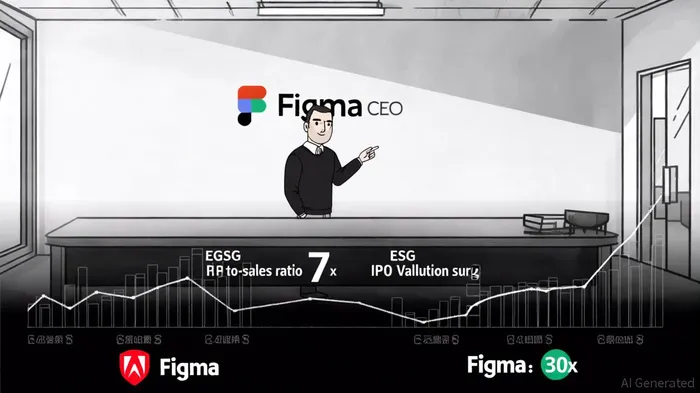
Figma's IPO was hailed as a sign of renewed investor confidence in high-growth tech companies, with the stock closing at $115.50 on its debut day[3]. However, the subsequent 50% drop in valuation underscores the fragility of expectations built on speculative momentum. While the company reported 41% year-over-year revenue growth ($249.6 million) and a 129% net dollar retention rate[2], its price-to-sales ratio of 30 remains far above industry peers like AdobeADBE-- (7x) and the SaaS sector average of 8–10x[4]. This disconnect suggests that Figma's valuation is driven more by its market-leading position in design tools than by concrete financial metrics.
A Cooling Tech Market and Rising ESG Scrutiny
The broader SaaS industry is recalibrating after years of inflated valuations. According to a report by L40, 2025 valuations for strong SaaS companies range between 8–10x revenue, with most private deals clustering at 4–7x[5]. Figma's 30x multiple defies this trend, reflecting a market that may be overestimating its AI-driven product roadmap (e.g., Figma Make and Sites) and underestimating operational risks. Meanwhile, ESG factors are reshaping investor priorities. While 60% of SaaS companies have science-based emissions targets[6], Figma's Climate Pledge (net-zero by 2040) lacks detailed progress metrics, putting it at a disadvantage compared to peers who disclose granular carbon data[7].
Competitive Pressures and Strategic Risks
Figma's dominance in design collaboration tools faces challenges from Adobe's abandoned $20 billion acquisition offer and the rise of AI-native competitors. The company's expansion into developer and marketer tools aims to broaden its ecosystem, but this strategy risks diluting its core offering. Additionally, Figma's reliance on venture capital stakeholders—Index Ventures, Greylock, and Sequoia collectively hold $24 billion in equity[1]—could pressure management to prioritize short-term growth over long-term sustainability.
Conclusion: Balancing Hype and Fundamentals
Figma's valuation bubble risk hinges on its ability to justify its premium multiple through consistent innovation and ESG alignment. While its Q1 2025 net income of $44.9 million and 88–92% gross margins[1] are impressive, these metrics must be sustained in a market increasingly focused on profitability and ethical practices. For investors, the key question is whether Figma's AI-driven roadmap and cross-functional tooling can create durable value—or if its valuation is a fleeting product of post-IPO euphoria.





Comentarios
Aún no hay comentarios