
Fiera Capital's Fund Closure: A Wake-Up Call for Bond Investors in a Rising Rate World
The termination of Fiera Capital's imaxx Canadian Fixed Pay Fund and imaxx Short Term Bond Fund—set to take effect on November 28, 2025—marks a significant shift in the fixed income landscape. While the announcement offers no explicit reasons for the closures, the move underscores a growing trend: institutional retreat from traditional bond strategies in an environment of persistent rate hikes and liquidity pressures. For investors, this is a critical moment to reassess fixed income allocations and adopt strategies that balance risk mitigation with yield-seeking opportunities.
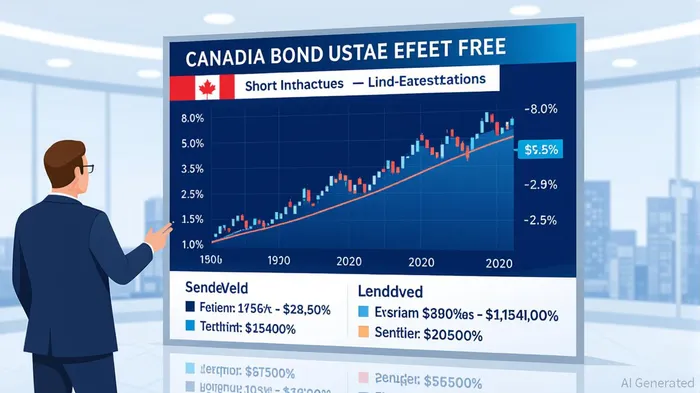
Why Fiera's Decision Signals Broader Market Shifts
Fiera's decision to close these funds—already barred from accepting new investments—hints at structural challenges in fixed income markets. The funds' inability to fully adhere to their original investment mandates as they wind down suggests operational constraints in managing liquidity and duration risks amid prolonged rate volatility. Consider the context:
- Rising Rates and Low Yields: Central banks' aggressive tightening has eroded bond prices, while short-term yields have surged. The Bank of Canada's policy rate, now at 5.25%, has compressed returns on short-duration bonds.
- Liquidity Risks: Illiquid bond markets, exacerbated by reduced central bank balance sheet support, make it harder for funds to execute trades without price slippage.
- Strategic Realignment: Firms like Fiera may prioritize higher-margin products (e.g., alternatives or equities) over fixed income, which faces headwinds from secular stagnation and inflation volatility.
The writing is on the wall: traditional bond funds are struggling to deliver returns in this environment, and investors must adapt.
Strategic Shifts for Bond Investors: 3 Key Moves
To navigate these challenges, investors should pivot toward active management, diversification, and flexibility in their fixed income portfolios. Here's how:
1. Shorten Duration to Mitigate Rate Risk
As rates rise, longer-duration bonds face sharper declines in value. Shifting allocations to ultra-short-term bond funds (e.g., 1–3-year maturities) or floating-rate notes (FRNs) can reduce duration risk while still generating income. FRNs, which reset their coupons periodically, are especially effective in volatile rate environments.
Action: Replace long-dated government bonds with FRNs or short-term corporate debt.
2. Prioritize Credit Quality and Sector Selection
With corporate bond spreads widening due to economic uncertainty, high-quality credits (e.g., investment-grade issuers in stable sectors like utilities or healthcare) offer a safer yield pickup. Avoid speculative-grade bonds unless paired with rigorous risk assessments.
Action: Target sectors with strong balance sheets and defensive cash flows. Diversify into global bonds to exploit yield differentials.
3. Embrace Alternative Fixed-Income Instruments
Traditional bonds are no longer the sole solution for income needs. Consider:
- Inflation-Linked Bonds (e.g., TIPS): Protect against rising prices while offering steady returns.
- Municipal Bonds: Tax-exempt yields can outperform taxable equivalents in higher tax brackets.
- Structured Products: Collateralized loan obligations (CLOs) or mortgage-backed securities (MBS) provide yield-enhancing opportunities, though they require careful due diligence.
Action: Allocate 10–15% of fixed income to alternatives to boost diversification.
The Bottom Line: Adapt or Fall Behind
Fiera's decision is a stark reminder that fixed income is no longer a “set-it-and-forget-it” asset class. Investors must actively manage duration, credit quality, and liquidity to preserve capital and generate income. Those who cling to long-dated government bonds or low-yielding funds risk underperformance as rates remain elevated.
The bond market's evolution demands strategic agility. By shortening maturities, favoring high-quality credits, and exploring alternatives, investors can navigate the challenges posed by Fiera's closure—and position themselves for resilience in the years ahead.
Stay vigilant, stay diversified.







Comentarios
Aún no hay comentarios