
Why Fevertree Drinks' Capital Allocation and ROCE Trends Suggest a Missed Growth Opportunity
Fevertree Drinks PLC (LON:FEVR), a leading premium mixer brand, has long been celebrated for its strong balance sheet and consistent profitability. However, a closer examination of its capital efficiency metrics and reinvestment strategies reveals a troubling narrative: despite robust liquidity and a debt-free position, the company's Return on Capital Employed (ROCE) trends and capital allocation decisions suggest a systemic underutilization of growth opportunities. This analysis argues that Fevertree's conservative approach to reinvestment and its inability to sustain high ROCE levels have left shareholders with suboptimal returns.
ROCE Trends: A Tale of Volatility and Stagnation
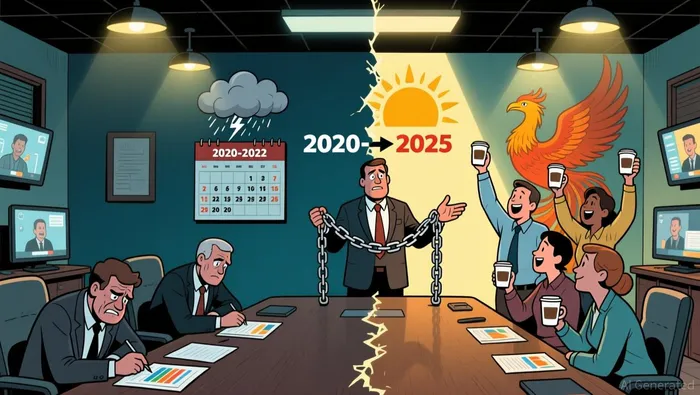
ROCE, a critical metric for assessing how effectively a company generates profits from its capital, has shown inconsistent performance for Fevertree. While the company's Return on Assets (ROA) declined from 11.47% in 2018 to 6.45% in 2022 before rebounding to 10.07% by 2025, its Return on Total Capital dropped even more sharply-from 13.29% in 2018 to a low of 3.81% in 2022, recovering only to 8.01% in 2025. These figures highlight a pattern of declining capital efficiency during the pandemic and a slow, incomplete recovery afterward.
The EBIT data further underscores this trend. Fevertree's EBIT peaked at £78.6 million in 2018 but plummeted to £30.6 million in 2020, reflecting the severe impact of the on-trade sector's collapse during the pandemic. While EBIT rebounded to £33.9 million in 2024, it remains below pre-pandemic levels. This stagnation, combined with rising total liabilities (from £53.43 million in 2018 to £94.36 million in 2024), suggests that the company has not fully capitalized on its strong cash reserves to drive higher returns.
Capital Allocation: A Missed Opportunity for Growth
 Fevertree's balance sheet is undeniably strong. As of 2024, the company held £130.0 million in cash and short-term investments, with a debt-to-equity ratio of 0%. While this financial discipline is commendable, it also raises questions about the company's willingness to reinvest in high-return opportunities. For instance, total assets grew from £225.38 million in 2018 to £336.1 million in 2021, but this expansion was accompanied by a rise in current liabilities from £42.03 million to £50.8 million. The lack of significant reinvestment in R&D, CAPEX, or strategic acquisitions-key drivers of long-term growth-suggests a conservative approach that prioritizes stability over innovation.
Data from the 2020 annual report notes that the company made "strategic investments and production advancements" despite pandemic challenges, but these efforts appear insufficient to offset the decline in EBIT. The absence of detailed disclosures on capital reinvestment strategies in recent reports further obscures the company's growth trajectory.
The Cost of Caution: Suboptimal Returns for Shareholders
Fevertree's capital efficiency metrics and reinvestment decisions collectively point to a missed opportunity. A company with such a robust balance sheet and brand equity should ideally leverage its liquidity to fund high-ROCE projects or acquisitions. Instead, the focus on maintaining a debt-free position and distributing cash to shareholders (via dividends or buybacks) has limited the compounding potential of its capital.
For example, while Fevertree's ROE stabilized at 9.6% as of June 2025, this figure lags behind the ROCE levels of its peers in the premium beverage sector, which often exceed 15%. The company's reluctance to take on debt-despite historically low interest rates-has also constrained its ability to scale operations or enter new markets.
Conclusion: A Call for Strategic Reimagining
Fevertree Drinks' financial health is undeniably strong, but its capital allocation strategy has not translated into commensurate growth. The ROCE trends and reinvestment patterns suggest a company that prioritizes short-term stability over long-term value creation. For investors, this raises a critical question: can Fevertree's management evolve its capital allocation approach to unlock the full potential of its brand and balance sheet? Until then, the company risks being perceived as a cash hoarder rather than a growth engine-a misalignment that could deter long-term shareholders.







Comentarios
Aún no hay comentarios