
FET's 11% Rally: Assessing Short-Term Gains Against Liquidity Risk and Retail Sentiment Shifts
The recent 11% surge in Fetch.ai's (FET) price has sparked renewed interest among crypto investors, driven by a confluence of derivatives market activity, shifting retail sentiment, and on-chain dynamics. However, the rally's sustainability hinges on navigating critical liquidity clusters and mitigating risks tied to waning retail participation. For strategic investors, understanding these factors is key to timing entries and exits effectively.
Derivatives Market Momentum and Funding Rate Dynamics
The immediate catalyst for FET's upward movement lies in the derivatives market, where a positive funding rate of 0.0083% signals a structural advantage for long positions over short sellers. This metric, combined with a 9% surge in open interest-adding $6.37 million to the market, reflects heightened bullish conviction among institutional and leveraged traders. Such inflows often precede short-term price resilience, as they indicate a willingness to absorb downward pressure. However, this optimism is not without caveats.
Liquidity Clusters: A Double-Edged Sword
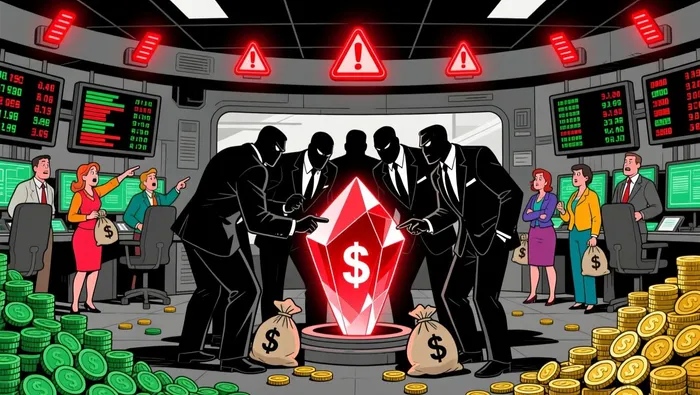
While the derivatives market paints a bullish picture, on-chain data reveals a precarious landscape above current price levels. Liquidity clusters-concentrations of large sell orders-pose a significant risk if FETFET-- breaches these thresholds. These clusters, formed by accumulated institutional or strategic retail positions, could trigger a sharp correction should the price enter them. For instance, a break above $0.385 resistance could either validate the rally or expose the token to aggressive profit-taking, depending on how these clusters are navigated. Investors must monitor volume profiles and order-book depth to anticipate potential breakdowns.
Retail Sentiment: From Accumulation to Distribution
Retail participation, a critical barometer for retail-driven assets, has shifted dramatically. FET's accumulation levels have plummeted from $24.1 million in early October to a mere $1.22 million by late December. This decline suggests that retail investors are either locking in profits or anticipating further weakness, eroding the grassroots support that often fuels prolonged rallies. On-chain metrics corroborate this trend, with spot traders reducing exposure and derivatives activity becoming the dominant force. For strategic investors, this divergence between institutional and retail sentiment underscores the importance of hedging against sudden reversals.
External Catalysts: Legal Uncertainty and Tokenomics
Beyond on-chain and market dynamics, external factors loom large. Ongoing legal disputes involving Ocean Protocol-a project with overlapping use cases-have cast a shadow over FET's governance and tokenomics. Allegations of token dumping and regulatory ambiguity amplify sensitivity to negative news, creating a volatile backdrop. While FET has shown resilience near key support levels, any escalation in these disputes could trigger a reevaluation of risk, particularly in a market already primed for volatility.
Strategic Entry and Exit Timing
For investors considering FET, the interplay of these factors demands a nuanced approach:
1. Entry Points: Aggressive buyers may target support levels where FET has historically rebounded, using dips as opportunities to accumulate ahead of potential breakouts above $0.385. However, given the liquidity clusters, entries should be accompanied by tight stop-loss orders to mitigate sudden corrections.
2. Exit Strategies: Profit-taking near liquidity clusters or after a successful breakout above $0.385 could capitalize on short-term momentum. Conversely, a breakdown below current levels may signal a shift in sentiment, warranting immediate exits to avoid deeper drawdowns.
3. Hedging: Given the legal uncertainties, derivatives positions (e.g., short-term put options) could hedge against black-swan events tied to governance risks.
Conclusion
FET's 11% rally is a product of derivatives-driven optimism and temporary retail disengagement, but its longevity depends on overcoming structural liquidity risks and stabilizing retail sentiment. For strategic investors, the path forward involves balancing opportunistic entries with disciplined risk management. As the token approaches critical resistance and liquidity zones, the ability to adapt to shifting on-chain and off-chain dynamics will separate successful traders from those caught in a potential reversal.







Comentarios
Aún no hay comentarios