
Ferrero's Kellogg's Acquisition: A Bold Bet on Breakfast Consolidation – Is the Premium Worth the Risk?
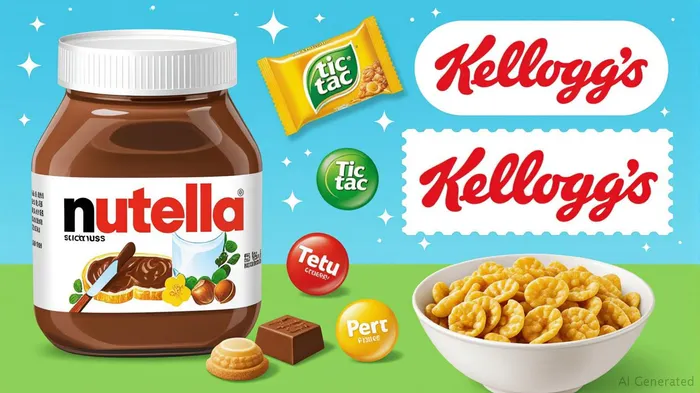
The confectionery giant Ferrero has made a daring move into the cereal market with its $3 billion acquisition of WK KelloggKLG--, owner of iconic brands like Corn Flakes and Frosted Flakes. The deal, which carries a 50% premium over WK Kellogg's pre-announcement stock price, signals a strategic pivot for Ferrero—a privately held firm known for Nutella, Tic Tac, and Kinder chocolates—to capitalize on North America's breakfast landscape. But is this premium justified, and can Ferrero turn around a struggling category?
The Strategic Rationale: Expanding Beyond Chocolate
Ferrero's move is a classic example of strategic consolidation in a fragmented food industry. By acquiring WK Kellogg, Ferrero gains immediate access to the $20 billion U.S. cereal market, a sector where its own presence was negligible. The acquisition diversifies its revenue streams, reducing reliance on its core chocolate business, which faces rising cocoa costs and shifting consumer preferences toward healthier snacks.
The premium paid reflects Ferrero's confidence in synergies:
- Distribution Networks: Leveraging Kellogg's established supply chain and retail partnerships could amplify cross-selling opportunities.
- Brand Equity: Combining Kellogg's iconic cereal brands with Ferrero's premium confectionery lineup creates a formidable portfolio.
- Innovation Potential: Ferrero's track record in launching hits like Nutella Ice Cream and healthier brands (FULFIL, Eat Natural) suggests it could rejuvenate Kellogg's offerings through premiumization or functional additives.
Ferrero's Growth Track Record: A Foundation for Confidence
Ferrero's financial strength underpins its ability to digest this acquisition. Over the past five years, the company has grown revenue at a consistent 8.9% CAGR, reaching EUR18.4 billion in 2023/24. Its aggressive capital investments—up 18% to EUR958 million in the latest fiscal year—signal a willingness to fund growth. Notably, Ferrero opened its first U.S. chocolate plant in Illinois and expanded hazelnut sourcing in Chile, demonstrating its operational agility.
The chart above shows WK Kellogg's stock languishing for years, a reflection of declining cereal sales and margin pressures. For Ferrero, acquiring this undervalued asset at a 50% premium is a calculated risk—buying a distressed asset at a discount relative to its long-term potential.
Risks and Challenges: The Cereal Market's Structural Decline
The deal's success hinges on overcoming the structural challenges of the cereal category:
- Commoditization: Cereal is a mature, price-sensitive category. Kellogg's has struggled with stagnant sales as consumers shift toward ready-to-eat alternatives (e.g., oatmeal, plant-based options) or skip breakfast altogether.
- Regulatory Scrutiny: The $3 billion price tag may draw antitrust concerns. Regulators could demand asset divestitures, reducing synergies or forcing Ferrero to dilute its stake.
- Integration Complexity: Merging a private, family-owned firm with a publicly traded, debt-heavy entity will require meticulous management.
Investment Implications: A High-Reward, High-Risk Play
For investors, the deal presents a nuanced opportunity:
- Upside: If Ferrero successfully revitalizes Kellogg's brands—perhaps by launching premium, health-focused cereals or leveraging its confectionery expertise to create hybrid products—the combined entity could dominate breakfast food categories.
- Downside: A failure to address declining demand or regulatory hurdles could leave Ferrero overextended, particularly given the premium paid.
Investment Advice:
- Buy on Pullbacks: Long-term investors might consider accumulating shares of WK Kellogg ahead of the merger, given the 50% premium embedded in the deal. However, volatility is likely until regulatory approvals and shareholder votes are finalized.
- Watch Ferrero's Private Market Valuation: As a private company, Ferrero's financials lack transparency. Investors should monitor post-merger performance through public signals (e.g., new product launches, margin improvements) to gauge success.
- Beware of Commoditization: If cereal remains a low-margin, declining category, the premium paid could weigh on returns.
Conclusion
Ferrero's acquisition of WK Kellogg is a bold bid to reshape its portfolio and dominate breakfast food markets. While the premium reflects ambition, the deal's success depends on Ferrero's ability to innovate in a stagnant category and navigate regulatory pitfalls. For investors, this is a high-risk, high-reward bet—suitable only for those willing to bet on a confectionery giant's vision for breakfast's future.
This analysis assumes the deal closes as announced. Regulatory and market conditions may alter outcomes.





Comentarios
Aún no hay comentarios