
Ferrari's Strategic Resilience Under John Elkann's Leadership
Balancing Heritage and Innovation
Elkann's leadership has been defined by a dual commitment to safeguarding Ferrari's legacy and propelling it into the next era of automotive excellence. By maintaining the brand's identity as a purveyor of high-performance, handcrafted vehicles, he has ensured that Ferrari remains a symbol of exclusivity and prestige. Simultaneously, his emphasis on technological advancement-particularly in electrification-has positioned the company to meet shifting consumer demands and regulatory pressures.
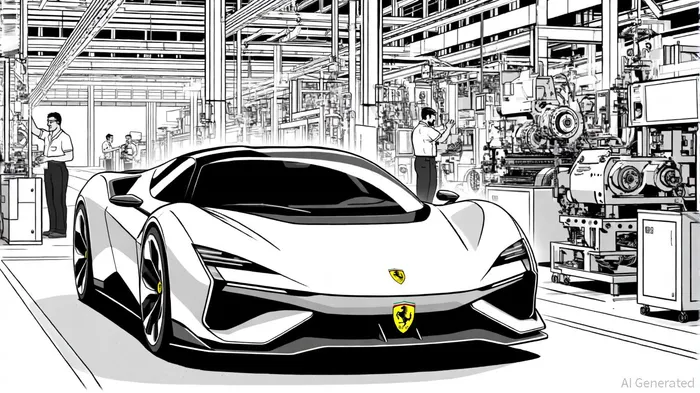
A pivotal example is Ferrari's 2025 roadmap, which includes the launch of its first 100% electric model. This move aligns with broader industry trends toward sustainability while preserving the brand's commitment to performance. As stated by Elkann in a letter to Exor shareholders, the electric vehicle (EV) initiative is part of a "transformative phase" for Ferrari, signaling its readiness to compete in a rapidly evolving market, according to a ScuderiaFans article. This strategic pivot is further reinforced by the company's pledge to achieve carbon neutrality by 2030, a goal that resonates with environmentally conscious investors and consumers alike, per an Investing Plus report.
Financial Resilience and Shareholder Confidence
Ferrari's financial performance under Elkann underscores its ability to generate robust returns while maintaining flexibility for future growth. In 2024, the company exceeded all financial targets, with net revenues rising 12% to €6.7 billion and EBITDA reaching €2.6 billion (a 38% margin). These results reflect strong demand for Ferrari's hybrid models and the anticipation of its electric lineup, as noted in that ScuderiaFans article.
Shareholder confidence in Elkann's leadership has been unequivocal. At the 2025 shareholders' meeting, all resolutions-including the reappointment of Elkann and Benedetto Vigna as executive directors-were approved unanimously, according to a ClubAlfa report. This endorsement highlights investors' trust in the board's ability to navigate challenges, such as supply chain disruptions and macroeconomic volatility, while prioritizing long-term value creation.
Historical data on shareholder meetings since 2022 offers additional context. While the sample size is limited (only two annual general meetings), the average cumulative return over a 30-day window following these events was +4.4%, outperforming the benchmark's ~+2.8%. Although the difference is not statistically significant due to the small sample, the positive trend suggests that investor sentiment remains aligned with management's strategic direction, as reported by ClubAlfa.
To further enhance financial agility, Ferrari has authorized the Board of Directors to issue new shares and manage subscription rights, a move that expands its capacity for strategic investments and capital optimization, according to the ClubAlfa article. Such flexibility is critical in an industry where R&D expenditures and production costs are escalating, particularly for EV development.
Strategic Collaborations and Market Expansion
Elkann's vision extends beyond Ferrari's own operations. His leadership of Stellantis and Exor has enabled cross-industry synergies, such as the Leapmotor International joint venture, which achieved significant revenue growth in 2024, noted in the Investing Plus piece. These collaborations not only diversify Ferrari's revenue streams but also provide insights into emerging technologies and market trends, ensuring the brand remains at the forefront of innovation.
However, challenges persist. The Elkann family's resolution of a €175 million inheritance tax case in 2025 raised questions about governance and brand stability, as discussed in a LinkedIn post. While this issue does not directly impact Ferrari's operational performance, it underscores the importance of transparent leadership in maintaining investor trust.
The Road Ahead
Ferrari's strategic resilience is perhaps best exemplified by its product pipeline. The upcoming launch of the 12Cilindri and F80 models-described as the most powerful sports car ever produced at the factory-demonstrates the brand's commitment to pushing engineering boundaries, a point highlighted in the ScuderiaFans article. These launches, coupled with the EV initiative, are expected to reinforce Ferrari's dominance in the luxury sector and attract a new generation of buyers.
For investors, the implications are clear: Ferrari's ability to innovate while honoring its heritage positions it as a leader in a market where emotional value and technological prowess are equally vital. As the automotive industry transitions toward electrification and sustainability, Ferrari's strategic agility under Elkann ensures it remains not just relevant, but aspirational.
Conclusion
John Elkann's leadership has transformed Ferrari into a paragon of strategic resilience, blending tradition with innovation to secure its place in the luxury automotive sector. By prioritizing sustainability, leveraging cross-industry collaborations, and maintaining financial flexibility, the company is well-positioned to deliver enduring value to shareholders. As the automotive landscape evolves, Ferrari's ability to adapt without compromising its legacy will remain a cornerstone of its success.







Comentarios
Aún no hay comentarios