
Ferguson's Q4 2025 Earnings Outperformance and Strategic Momentum: A Blueprint for Sustainable Growth in Industrial Distribution
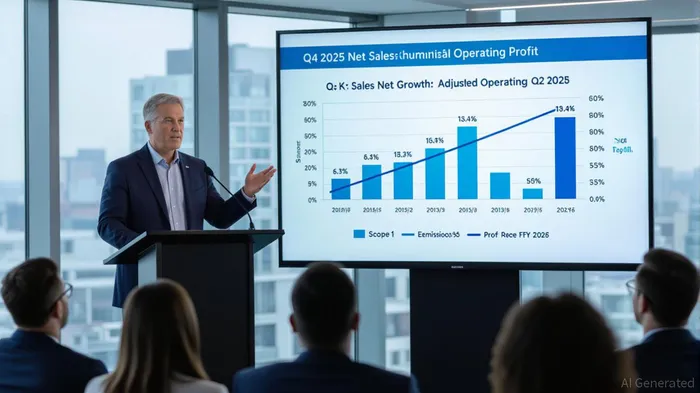
Ferguson Enterprises Inc. has emerged as a standout performer in the industrial distribution sector, with its Q4 2025 earnings results and strategic initiatives underscoring a compelling narrative of sustainable growth and operational execution. The company reported fourth-quarter net sales of $8.5 billion, a 6.9% year-over-year increase, while gross margin expanded to 31.7% and adjusted operating profit surged 13.4% to $972 million[1]. These figures outpace broader industry trends, reflecting Ferguson's ability to balance top-line growth with margin discipline—a critical differentiator in a sector often plagued by commodity pressures[2].
Strategic Momentum: Capitalizing on Industrial Tailwinds
Ferguson's strategic focus on high-growth verticals such as HVAC, waterworks, and large capital projects has proven pivotal. In Q4 2025, the non-residential segment drove 15% revenue growth, fueled by robust demand in commercial and civil infrastructure projects[1]. This aligns with macroeconomic tailwinds, including U.S. infrastructure spending and aging water systems requiring modernization[3]. The company's acquisition of HPS Specialties and Ritchie Environmental Solutions further solidified its position in water treatment and HVAC markets, adding $300 million in annualized revenue[1].
Operational execution has also been bolstered by digital transformation. Ferguson's FergusonFERG-- Home division now offers omnichannel capabilities, integrating e-commerce with in-branch services to enhance customer retention[1]. Meanwhile, the shift to a calendar-year fiscal reporting cycle (effective 2026) signals a strategic pivot to align with industry benchmarks, streamlining comparisons with peers and improving transparency for investors[1].
ESG Integration: Balancing Profit and Planetary Impact
Ferguson's commitment to sustainability is not merely aspirational but operationalized through measurable targets. The company has reduced Scope 1 and 2 emissions by 33% since its 2019/2020 baseline, with a 35% reduction target for 2026[1]. A 65-megawatt virtual power purchase agreement (VPPA) underscores its transition to clean energy, while hybrid vehicle fleets and optimized packaging reduce waste[2]. These initiatives resonate with customers seeking sustainable supply chains, positioning Ferguson as a partner in their decarbonization journeys[3].
Beyond environmental metrics, Ferguson's social impact programs address systemic challenges in the industrial sector. Its Ferguson Cares initiative, which partners with educational institutions to train skilled tradespeople, tackles a $500,000+ labor shortage in the U.S. plumbing and HVAC industries[2]. By fostering workforce diversity through programs like Women in Plumbing and Piping, the company is not only enhancing its talent pipeline but also contributing to industry-wide equity[2].
Financial Resilience and Shareholder Returns
Ferguson's balance sheet strength—evidenced by a net debt-to-adjusted EBITDA ratio of 1.1x—enables disciplined capital allocation. In Q4 2025, the company returned $483 million to shareholders via dividends and buybacks, with $1.4 billion returned over the full fiscal year[1]. This capital efficiency, combined with $305 million in strategic capital expenditures for supply chain and technology upgrades, illustrates a balanced approach to reinvestment and reward[1].
Historical analysis of FERG's performance following earnings beats since 2022 offers additional context for investors. While the stock typically gains approximately 1% on the day of a positive earnings surprise, this initial momentum tends to fade quickly. Over a 30-day window, the average return does not significantly outperform the S&P 500 benchmark, and drawdowns of up to -6% are observed after day 13. This pattern suggests that while strong quarterly results generate short-term optimism, sustained outperformance relies on the company's ability to execute its long-term strategic initiatives, such as digital transformation and ESG integration, beyond the quarterly earnings cycle.
Conclusion: A Model for Industrial Distribution's Future
Ferguson's Q4 2025 results and strategic playbook highlight a rare alignment of financial performance, operational agility, and ESG leadership. By targeting high-growth industrial markets, investing in digital and physical infrastructure, and embedding sustainability into its value chain, the company is well-positioned to capitalize on long-term tailwinds. For investors, Ferguson exemplifies how industrial distributors can evolve from cost-driven intermediaries to innovation-driven partners in a decarbonizing economy.





Comentarios
Aún no hay comentarios