
Feeding the Future: Navigating the Regulatory Crossroads of the U.S. Food Industry
The U.S. food industry is at a regulatory crossroads, where state-level reforms aimed at enhancing food safety and transparency are clashing with federal efforts to establish a unified standard. This tension, exacerbated by the Biden and Trump administrations' competing approaches to preemption and the ambitious dietary guidelines championed by Health and Human Services Secretary Robert F. Kennedy Jr., is reshaping the investment landscape for food manufacturers, agribusinesses, and healthcare investors.
The State of the States: Innovation or Overreach?
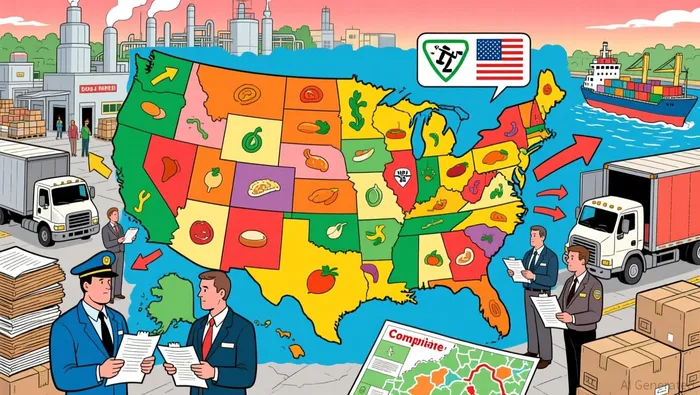
Over the past two years, states like California, Virginia, and West Virginia have enacted laws banning synthetic food additives and dyes in school meals, while others, including Arkansas and Utah, have revised regulations on raw milk sales and cottage food operations according to a 2025 update. These measures reflect a broader trend of state-led innovation in food policy, driven by public health advocates who argue that federal oversight has lagged behind scientific advancements and consumer demand for transparency. According to the National Agricultural Law Center, such state-level reforms have created a "patchwork" of requirements that complicate compliance for food companies operating across multiple jurisdictions.
For investors, this fragmentation introduces significant risks. Mergers and acquisitions in the food sector now require rigorous due diligence to assess regulatory alignment, as seen with California's Real Food, Healthy Kids Act (AB 1264), which mandates the removal of ultraprocessed foods from school meals. The ambiguity surrounding definitions of "ultraprocessed" and the scientific criteria for compliance has led to litigation and supply chain disruptions, increasing costs for manufacturers and retailers alike.
 Federal Preemption: A Double-Edged Sword
Industry groups, including the Americans for Ingredient Transparency (AFIT), have lobbied for federal preemption to harmonize these divergent state laws. Their argument is pragmatic: a uniform standard would reduce compliance costs and litigation risks, fostering innovation and investment in the sector according to industry analysis. However, Senator Roger Marshall's Better Food Disclosure Act of 2025, which seeks to reform the GRAS process by requiring FDA notifications, notably omits a preemption clause-a deliberate move to appease public health advocates who fear federal overreach.
The legal battle lines are further drawn by the dormant commerce clause and federal preemption doctrines. The Trump Administration has signaled a willingness to challenge state laws that it deems burdensome, as seen in its lawsuit against California's egg production standards. Yet the Supreme Court's narrow interpretation of the dormant commerce clause in NPPC v. Ross has limited the federal government's ability to preempt state laws that primarily affect intrastate commerce according to legal analysis. This legal ambiguity leaves investors in a precarious position, balancing the potential for federal clarity against the risk of protracted litigation.
RFK Jr.'s Dietary Revolution: Aligning with or Clashing with State Efforts?
Robert F. Kennedy Jr.'s 2025 dietary guidelines, part of his Make America Healthy Again (MAHA) initiative, aim to redefine food culture by curbing ultraprocessed foods and eliminating synthetic additives according to industry sources. While these goals align with state-level reforms, they also risk creating friction. For instance, RFK's push to redefine "ultraprocessed food" could conflict with state definitions, forcing companies to navigate overlapping-and sometimes contradictory-regulatory frameworks.
A critical component of RFK's agenda is the elimination of the self-affirmed GRAS pathway, requiring manufacturers to submit notices to the FDA for approval according to regulatory analysis. This shift, while enhancing transparency, could delay product launches and increase costs for small businesses. For investors, the long-term upside lies in a more predictable regulatory environment, but the short-term pain of compliance adjustments is nontrivial.
Investor Implications: Risks and Opportunities
The regulatory turbulence presents both challenges and opportunities. On the risk side, food companies face heightened litigation exposure. Plaintiffs' attorneys are increasingly targeting noncompliance with state laws, seeking refunds or damages for products deemed unsafe under local standards according to legal trends. Indemnification clauses in supplier agreements have become a minefield, with potential liabilities running into the millions.
Conversely, investors who position themselves to capitalize on the shift toward healthier food systems stand to gain. Agribusinesses adapting to new dietary guidelines-such as those promoting plant-based proteins or regenerative agriculture-could see demand surges. Similarly, companies specializing in natural additives or clean-label products are well-positioned to benefit from state and federal trends. Healthcare investors, too, may reap rewards as reduced exposure to ultraprocessed foods correlates with lower chronic disease rates, easing the burden on the healthcare system according to public health data.
The Path Forward
The coming years will test the resilience of the U.S. food industry. For investors, the key lies in agility: hedging against regulatory uncertainty by diversifying supply chains, investing in compliance technologies, and supporting companies that align with both state and federal priorities. As RFK Jr. and state legislators continue to push the boundaries of food policy, the sector's ability to adapt will determine who thrives-and who gets left behind.







Comentarios
Aún no hay comentarios