
FedEx's Strategic Resilience Amid MD-11 Groundings
Operational Agility: Contingency Planning in Action
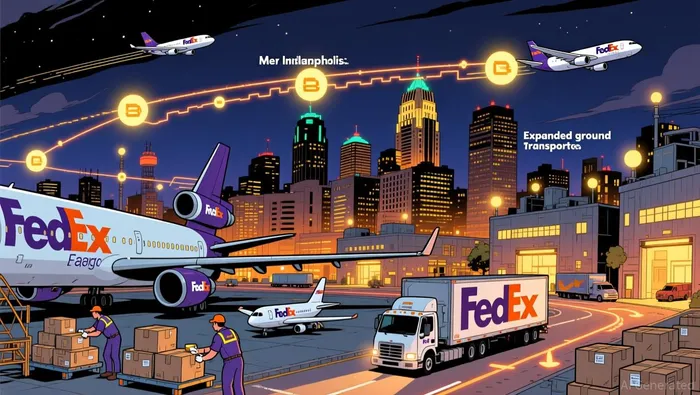
FedEx's immediate grounding of its MD-11 fleet-accounting for 4% of its aircraft-demonstrated a proactive stance, preceding the FAA's emergency directive, as reported by Action News 5. The company emphasized its "integrated air-ground network" to absorb the disruption, leveraging ground transport and alternative aircraft to maintain service reliability, according to the Action News 5 report. This agility is critical in an industry where even minor delays can cascade into systemic bottlenecks.
The grounding also exposed vulnerabilities in the MD-11's design and maintenance protocols. The crash involved an engine detachment, prompting FAA-mandated inspections of engine-pylon structures, as noted by AviationA2Z. While FedExFDX-- has not disclosed granular details of its inspections, its emphasis on "thorough safety reviews" aligns with industry best practices, as Action News 5 reported. For now, the company's ability to reroute capacity without significant service degradation suggests robust contingency planning.
Risk Mitigation: Restructuring for Long-Term Stability
Beyond immediate adjustments, FedEx's broader strategy to spin off its FedEx Freight division into a standalone public company-set to conclude within 18 months-reflects a calculated effort to reduce operational complexity, as reported by Inside Logistics. This move isolates the less-profitable LTL (less-than-truckload) freight business from its high-margin parcel operations, which generated $78.3 billion in revenue in fiscal 2024, according to Inside Logistics. By focusing on core strengths, FedEx aims to allocate capital more efficiently and insulate its parcel business from risks tied to aging aircraft like the MD-11.
The spin-off also aligns with a broader industry trend: the shift toward diversified logistics ecosystems. As e-commerce drives demand for faster, more flexible delivery networks, companies are prioritizing investments in ground infrastructure and technology, as noted in the U.S. Short Haul Road Freight Transport Industry Report 2025. FedEx's Network 2.0 initiative, which includes automation and route optimization, complements this strategy, as Inside Logistics reported. For investors, the separation of Freight signals a commitment to streamline operations-a hedge against future disruptions.
The Bigger Picture: Air Cargo's Evolving Risks
The MD-11 crisis is a microcosm of challenges facing air cargo operators. The aircraft's age (first certified in 1990) and mechanical complexities make it a costly asset to maintain. FedEx's decision to ground its fleet voluntarily-before regulatory pressure-highlights the reputational risks of complacency. Meanwhile, the NTSB's ongoing investigation into the crash, focusing on design flaws and maintenance practices, could reshape industry standards, as AviationA2Z reported.
Yet FedEx's response also reveals opportunities. The grounding has accelerated conversations about alternative logistics solutions, such as regional air freight hubs and electric ground vehicles, as noted in the U.S. Short Haul Road Freight Transport Industry Report 2025. With the U.S. short-haul road freight market projected to grow to $202 billion by 2033, as reported in the U.S. Short Haul Road Freight Transport Industry Report 2025, FedEx's integrated network positions it to capitalize on this shift.
Investor Implications
For shareholders, the key takeaway is FedEx's ability to balance short-term pragmatism with long-term vision. While the MD-11 grounding and Freight spin-off may temporarily strain margins, they also reduce systemic risks and unlock value. The company's Q4 2025 earnings-up 8% year-on-year to $1.46 billion, as reported by Commercial Appeal-suggest that these strategies are already paying dividends.
However, challenges remain. Economic uncertainty, including potential tariffs, could dampen demand for premium shipping services, as Commercial Appeal reported. Moreover, the FAA's safety directives may lead to higher maintenance costs across the industry. Investors should monitor FedEx's capital expenditures on fleet modernization and its progress in integrating AI-driven logistics tools.
In the end, FedEx's resilience hinges on its capacity to adapt. The MD-11 crisis is not just a test of operational agility but a catalyst for reinvention-a trait that will define its competitiveness in an increasingly volatile market.







Comentarios
Aún no hay comentarios