
FedEx's Strategic Alignment with Disaster Relief NGOs: A Catalyst for Investor Confidence in Logistics CSR
In an era where corporate social responsibility (CSR) is increasingly tied to financial resilience, FedEx's strategic alignment with disaster relief NGOs offers a compelling case study for investors. By embedding itself in humanitarian logistics through its FedEx Cares program, the company has not only enhanced its operational agility but also cultivated a reputation for crisis preparedness-a trait that resonates strongly with stakeholders in an unpredictable global climate.
Strategic Partnerships: Building a Humanitarian Logistics Network
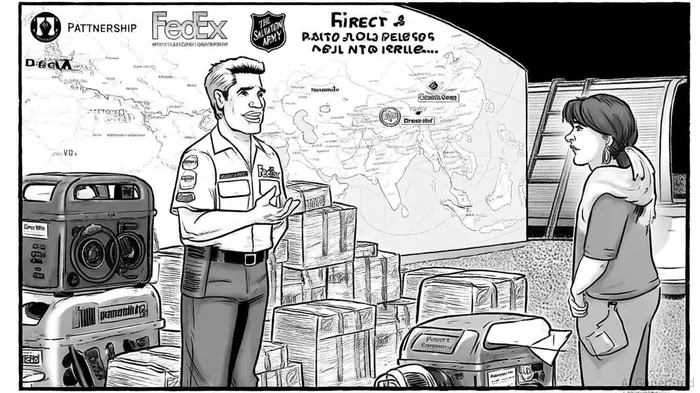
FedEx's collaboration with NGOs such as the American Red Cross, Direct Relief, and The Salvation Army has become a cornerstone of its CSR strategy. In October 2025, the company hosted a FedExFDX-- Cares virtual forum with nine prominent disaster relief NGOs, emphasizing the use of AI-driven logistics, drone technology, and volunteer networks to streamline aid delivery. This initiative underscores a shift from reactive aid to proactive coordination, ensuring that resources are dispatched with precision during crises like the 2024 hurricanes Helene and Milton. For instance, FedEx transported 375 generators, 68,300 hygiene kits, and over $11 million in medical supplies to affected regions, leveraging its global network to bypass traditional bottlenecks, according to a Morningstar report.
The long-term value of these partnerships extends beyond immediate relief. A 15-year Direct Relief partnership, for example, has resulted in the distribution of 15,000 emergency medical backpacks across 63 countries, positioning FedEx as a critical player in global health security. Such initiatives align with the UN C-PReP, which integrates FedEx's infrastructure into disaster response frameworks, ensuring airports remain operational during crises.
Business Advantages: From Brand Reputation to Operational Efficiency
FedEx's disaster relief efforts have translated into tangible business advantages. The Morningstar report noted that the company's swift response to Hurricanes Helene and Milton-including the pre-deployment of satellite communication equipment for the Red Cross-demonstrated operational reliability, a key metric for investor confidence. This reliability is further reinforced by cost-saving innovations like AI-optimized routing, which reduce delivery times and expenses while maintaining service quality.
The financial impact is equally noteworthy. The FedEx ROI reached 11.36% as of August 2025, outpacing industry averages, while its DRIVE initiative-a $4 billion cost-cutting program-has bolstered margins without compromising CSR commitments. By aligning disaster readiness with operational efficiency, FedEx mitigates risks associated with supply chain disruptions, a growing concern for investors in the post-pandemic era.
Investor Confidence: ESG Ratings and Market Resilience
Despite mixed ESG scores-such as an MSCI A rating that reflects resilience to ESG risks rather than direct sustainability impact-FedEx's disaster relief CSR initiatives have bolstered its appeal to socially conscious investors. The company's 25th mobile canteen donation to The Salvation Army, for example, not only supports immediate relief but also enhances its alignment with the UN Sustainable Development Goals (SDGs), particularly in disaster resilience and community well-being, as noted in 2025 Q1 updates.
Moreover, FedEx's strategic separation of its Freight division into two publicly traded entities, slated for 2026, signals a focus on shareholder value while maintaining its CSR commitments. This move, coupled with a $1.38 quarterly dividend and a 25 million share repurchase program, underscores confidence, according to a strategic shifts analysis.
Conclusion: A Model for Resilient Investment
FedEx's integration of disaster relief logistics into its CSR framework exemplifies how strategic partnerships can drive both humanitarian impact and financial returns. By leveraging technology, fostering global collaborations, and prioritizing infrastructure resilience, the company has positioned itself as a leader in crisis-ready logistics. For investors, this alignment offers a dual benefit: mitigating risks through operational robustness and capitalizing on the growing demand for ESG-compliant portfolios. As natural disasters become more frequent, FedEx's proactive approach may well serve as a blueprint for sustainable, shareholder-value-driven CSR.





Comentarios
Aún no hay comentarios