
FedEx's Role in Emergency Preparedness and Corporate Social Responsibility as a Competitive Advantage
In an era where climate-driven disasters are intensifying, logistics resilience has become a critical factor for both societal stability and corporate competitiveness. FedExFDX-- Corp. (FDX) has positioned itself at the forefront of this challenge, leveraging its global infrastructure and corporate social responsibility (CSR) initiatives to not only mitigate disaster impacts but also strengthen its market position. By aligning emergency preparedness with long-term sustainability goals, FedEx is transforming disaster response into a strategic asset that enhances brand loyalty, operational efficiency, and investor confidence.
FedEx's Disaster Response: A Strategic Pillar of CSR
FedEx's disaster response efforts are deeply embedded in its CSR framework, with initiatives that span immediate relief, long-term resilience, and partnerships with humanitarian organizations. For instance, during the 2024 Gulf Coast hurricanes Helene and Milton, FedEx mobilized its logistics network to deliver generators, water treatment systems, and medical supplies in collaboration with the American Red Cross and ShelterBox USA [1]. These actions were part of a broader strategy that includes pre-disaster preparedness, such as deploying satellite communication equipment to ensure connectivity during outages [1].
The company's Community and Port Resiliency Program (C-PReP), integrated into the United Nations' global framework, ensures airports remain operational during crises, safeguarding supply chains and emergency aid routes [1]. Additionally, FedEx's 15-year partnership with Direct Relief to supply emergency medical backpacks underscores its commitment to both disaster scenarios and everyday healthcare access in underserved communities [1]. Such programs reflect a dual focus: addressing immediate humanitarian needs while investing in systemic resilience.
Aligning CSR with Sustainability and Operational Excellence
FedEx's disaster response initiatives are not siloed but integrated into its broader sustainability strategy. The company aims for carbon-neutral operations by 2040, a goal reinforced by its 2025 Corporate Responsibility Report, which highlights a 6.1% year-on-year reduction in Scope 1 emissions and a 31% decline in aviation emissions intensity since 2005 [2]. These environmental gains are achieved through fleet electrification (with over 8,000 electric vehicles in service) and fuel-efficient aircraft modernization, which also enhance disaster response capabilities by reducing operational vulnerabilities [2].
Operational efficiency is further bolstered by the DRIVE initiative, a $4 billion cost-saving program by 2025 that employs AI-driven route optimization and staffing tools. While primarily a financial strategy, DRIVE indirectly supports disaster resilience by streamlining resource allocation during crises [3]. For example, during the 2025 Los Angeles wildfires, FedEx's rapid deployment of food and shelter services via The Salvation Army was facilitated by its agile logistics infrastructure [4].
Competitive Advantage: Brand Trust and Market Differentiation
FedEx's disaster response efforts have become a cornerstone of its brand identity, differentiating it from rivals like UPS and DHL. According to a 2025 report by Ethisphere, FedEx was named one of the World's Most Ethical Companies®, the only honoree in the transportation sector [5]. This recognition, coupled with high-profile disaster relief campaigns, has strengthened stakeholder trust. Investors increasingly prioritize ESG (environmental, social, governance) metrics, and FedEx's alignment with global standards like the UN Sustainable Development Goals (SDGs) positions it as a leader in socially responsible logistics [6].
Market differentiation is further evident in FedEx's Delivering for Good program, which provides in-kind shipping and donations to nonprofits. In Q1 2025 alone, the program supported 20 cases of technology equipment for the Red Cross, 1,350 hygiene kits for Rise Against Hunger, and 66 emergency medical backpacks for Direct Relief [7]. These actions not only amplify the impact of humanitarian partners but also reinforce FedEx's reputation as a mission-driven corporation.
Financial Performance and Investor Confidence
Despite economic headwinds, FedEx's 2025 financials demonstrate resilience. The company reported $87.9 billion in revenue and $4.09 billion in net income, with $7.04 billion in operating cash flow [8]. Analysts attribute this performance to cost discipline via the DRIVE program and strategic restructuring, such as the planned spin-off of FedEx Freight, which aims to unlock shareholder value [9]. While disaster response initiatives are not directly tied to these figures, they contribute to long-term investor confidence by mitigating reputational risks and aligning with ESG-driven capital flows.
A 2025 Monexa.ai analysis notes that FedEx's integration of CSR into core operations has enhanced its appeal to impact investors, particularly as competitors lag in sustainability commitments [3]. This alignment is reflected in its $4.09 billion net income and consistent dividend payouts, which signal financial stability amid industry volatility [8].
Visualizing the Impact
Conclusion
FedEx's disaster response initiatives exemplify how CSR can evolve from a reputational tool to a strategic differentiator. By embedding logistics resilience into its sustainability and operational frameworks, the company not only mitigates disaster risks but also strengthens its competitive edge in a values-driven market. For investors, FedEx's ability to balance humanitarian impact with financial performance-evidenced by its ESG leadership, cost efficiencies, and stakeholder trust-positions it as a compelling long-term bet in the logistics sector.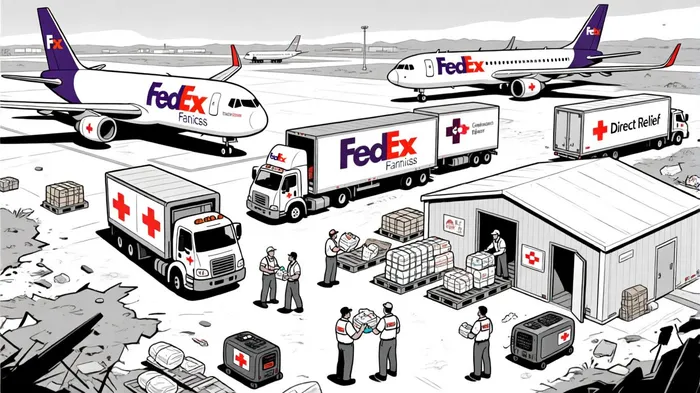





Comentarios
Aún no hay comentarios