
FedEx's Q2 Outperformance and Strategic Spin-Off as a Catalyst for Long-Term Value Creation
In the second quarter of 2024, FedEx CorporationFDX-- (FDX) demonstrated resilience amid a challenging macroeconomic environment, reporting $22.0 billion in revenue and an operating income of $1.05 billion, translating to a 4.8% operating margin. This performance, while modest, underscores the company's progress in executing its operational efficiency initiatives, particularly the DRIVE program, which has delivered $2.2 billion in structural cost reductions by 2025. However, the broader narrative of FedEx's value creation lies not in its quarterly results alone but in its strategic decision to spin off its FedExFDX-- Freight segment-a move poised to redefine its competitive positioning and unlock shareholder value.
Operational Efficiency: The Foundation of Resilience
FedEx's Q2 results highlight the tangible benefits of its cost-reduction efforts. The Federal Express segment reported operating profit growth driven by the DRIVE program's cost savings, higher base yields, and increased international export volumes. These gains offset headwinds such as weak U.S. domestic demand and the expiration of its U.S. Postal Service contract, which had previously bolstered revenue. Meanwhile, the company's Network 2.0 initiative is projected to generate an additional $2 billion in savings, further reinforcing its earnings resilience.
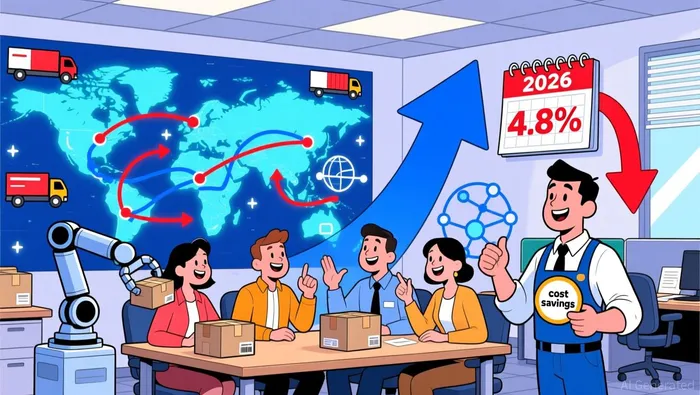 According to a report by DCF Modeling, these structural cost reductions have enabled FedEx to maintain a 6.9% operating margin in fiscal 2026, even as macroeconomic pressures persist. This margin expansion is critical for a company historically sensitive to cyclical demand shifts, particularly in its high-margin international parcel segment. By prioritizing operational efficiency, FedEx has not only stabilized its core business but also created a buffer to invest in innovation and customer-centric improvements.
Strategic Spin-Off: A Catalyst for Focused Growth
The announced spin-off of FedEx Freight, slated for June 1, 2026, represents a pivotal structural repositioning. As stated by FedEx in its investor communication, the separation is structured as a tax-free transaction and aims to create two industry-leading public companies: one focused on parcel delivery and the other on less-than-truckload (LTL) freight. This move is driven by the recognition that the LTL segment, while critical, operates under distinct economic dynamics compared to the parcel business.
The strategic rationale is clear. By granting FedEx Freight operational independence, the company can tailor its cost structure, pricing strategies, and capital allocation to the specific demands of the LTL market. For instance, the Freight segment's Q2 challenges-stemming from fewer shipments, lower fuel surcharges, and reduced weight per shipment-highlight the need for agile decision-making. A standalone entity would be better positioned to address these issues without being constrained by the broader corporation's priorities.
Moreover, the spin-off is expected to preserve synergies through collaborative agreements in areas such as technology and logistics. For example, the parcel business can double down on its strengths in e-commerce and international delivery, while the Freight business can focus on optimizing its LTL network, which remains the largest in the industry.
Long-Term Value Creation: Unlocking Shareholder Potential
The spin-off's value proposition extends beyond operational clarity. By separating the Freight segment, FedEx aims to unlock latent shareholder value. This includes expanding its presence in high-growth markets and accelerating automation initiatives, which are critical for maintaining competitive differentiation in a sector increasingly dominated by Amazon and other tech-driven logistics players.
Furthermore, the separation is expected to enhance capital efficiency. With the Freight segment operating independently, each company can optimize its debt structure and dividend policies to align with its unique cash flow profile. This flexibility is particularly valuable in a low-interest-rate environment, where access to capital is a key determinant of growth.
Conclusion: A Strategic Rebirth
FedEx's Q2 outperformance and its impending spin-off of FedEx Freight collectively signal a strategic rebirth. The company has demonstrated that operational efficiency is not a one-time fix but a sustained commitment to cost discipline and innovation. Meanwhile, the spin-off addresses a long-standing structural challenge, enabling both entities to thrive in their respective markets. For investors, this dual focus on short-term resilience and long-term repositioning offers a compelling case for continued confidence in FedEx's ability to navigate macroeconomic volatility and deliver value.
As the logistics industry evolves, FedEx's ability to adapt through strategic divestitures and operational rigor will likely determine its success in the years ahead. The June 2026 separation of FedEx Freight is not merely a corporate restructuring-it is a calculated step toward securing the company's leadership in a rapidly transforming global supply chain.







Comentarios
Aún no hay comentarios