
FedEx's Automation Play: A Logistics Revolution You Can't Afford to Miss
The logistics industry is undergoing a seismic shift, and FedExFDX-- (FDX) isn't just keeping up—it's leading the charge. With e-commerce surging past $6.3 trillion by 2024 and warehouses struggling to keep pace, automation isn't optional; it's a lifeline. And FedEx is leveraging it to slash costs, boost reliability, and carve out a dominant position in the $41 billion warehouse automation market by 2027. This is a play for investors who want to profit from the logistics tech revolution before it hits mainstream. Let's dive in.
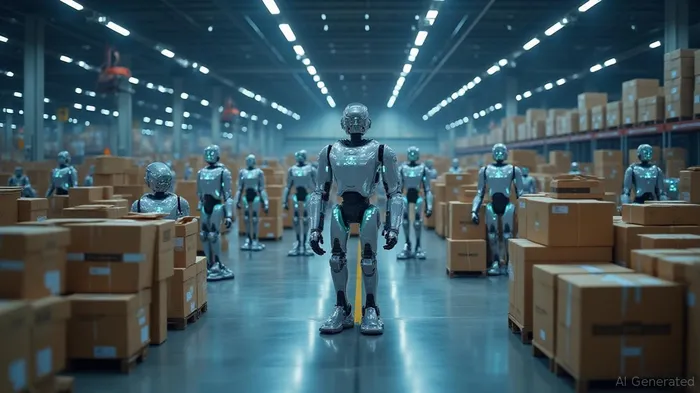
The Automation Gold Rush: Why the Market is Exploding
The global warehouse automation market is growing at a 15% annual clip, fueled by e-commerce growth, labor shortages, and the need to cut costs. By 2027, Statista projects this market to hit $41 billion—a 75% jump from 2023. And the best part? We're just at the starting line. AI-driven robotics, like autonomous mobile robots (AMRs) with 19.5% CAGR growth, are the rocket fuel here. These technologies aren't just “nice to have”—they're existential for companies drowning in returns (475 million annually for FedEx) and last-mile delivery chaos.
FedEx's Masterstroke: The DRIVE Program
FedEx isn't sitting on the sidelines. Its DRIVE program aims to slash $4 billion in costs by . And how? By doubling down on automation and AI. Here's the cold, hard math:
- 40% of sortation operations are now automated, reducing variability and speeding up throughput.
- Nimble Robotics, a $106M investment by FedEx, is deploying AI-powered robots that cut “click-to-deliver” costs by 40%. These bots handle returns and inventory with precision, eliminating the $70 billion cost drag of “patchwork” automation.
- Vecna's CaseFlow system boosted productivity by over 100% in trials, slashing labor needs by automating 90% of warehouse travel tasks.
The result? A leaner, meaner FedEx that's reducing labor costs by up to 60% in key areas. CEO Raj Subramaniam isn't kidding when he says this makes FDX “structurally more profitable.”
Why This Isn't Just About Cost Cutting—It's About Dominance
Automation isn't just saving money; it's supercharging reliability. FedEx's “control tower” systems use real-time AI to reroute packages during disruptions, ensuring on-time delivery even in chaos. Here's the kicker:
- Delivery reliability has improved as AI optimizes routes and forecasts demand with 99% accuracy.
- Scalability without sticker shock: Automation lets FedEx handle 50% more volume without proportional cost hikes. During the holidays? No problem.
And don't forget sustainability. By 2040, FedEx aims to be carbon-neutral—a goal that automation helps achieve by cutting fuel use and emissions. This isn't just greenwashing; it's long-term cost control.
The Investment Case: Buy Now, or Pay Later
Here's why FDX is a must-own stock:
- First-mover advantage: While rivals scramble to catch up, FedEx is already automating 40% of its sortation.
- Valuation upside: As peers invest in automation, FDX's early lead could widen its margins, boosting P/E multiples.
- Market tailwinds: With warehouse automation hitting $65 billion by 2030, FDX's $2 billion+ annual revenue from logistics tech is just the start.
This isn't a fad—it's a fundamental shift. And right now, FDX is priced to fail, not to lead.
Bottom Line: This is a Buy—No Excuses
FedEx isn't just keeping up with the automation wave; it's surfing it. With $4 billion in cost savings on the horizon and a stranglehold on e-commerce logistics, this is a stock primed to explode once investors realize what's coming. Don't wait for the mainstream to catch on.
Action Item: Buy FDX now. Set a price target of $100+ by 2027—this isn't a bet on a company; it's a bet on the future of logistics. The robots are here, and FedEx is driving them.
Disclosure: The author does not own FDX shares at the time of writing. Always do your own research before investing.







Comentarios
Aún no hay comentarios