
Federal Reserve Rate Cuts and Their Impact on Equities and Fixed Income: Navigating Sector Rotation and Risk Rebalancing in a Post-Rate-Cut Environment
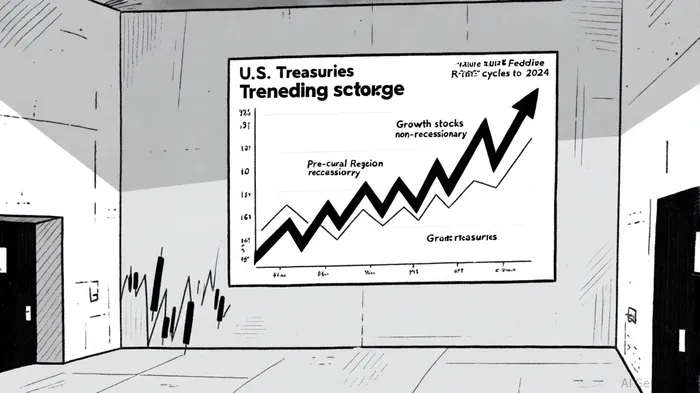
The Federal Reserve's rate-cutting cycles have long been a focal point for investors, yet their outcomes remain as enigmatic as they are consequential. Historical data reveals a fragmented narrative: equities and fixed income respond differently depending on whether rate cuts are preemptive, reactive, or coincident with broader economic stability. For investors, the challenge lies in decoding these nuances to implement sector rotation and risk-rebalancing strategies that align with macroeconomic realities.
Historical Patterns: Context Trumps Consistency
Federal Reserve rate cuts have historically delivered mixed results for equities and fixed income. According to a report by the CFA Institute, equity style performance varies significantly across cycles, with high beta, growth, and quality stocks often leading during yield curve normalization phases[1]. However, this pattern is not universal. For instance, the 1966 cycle—a rare case where a recession was avoided—saw growth and high beta styles thrive despite a 35-month yield curve inversion[1]. Conversely, pre-recessionary rate cuts (e.g., 2001) often fail to cushion equity markets, as broader economic momentum erodes investor confidence[1].
The Fed's lag in policy responsiveness further complicates matters. Data from iShares indicates that rate cuts typically begin after equity markets have already peaked, creating a misalignment between monetary policy and market dynamics[1]. This lag underscores the importance of monitoring macroeconomic indicators, such as yield curve inversions, which have historically predicted recessions in eight of nine cases[1]. Yet exceptions like 1966 and 2024 highlight the need for contextual analysis.
Sector Rotation: Growth, Quality, and the Belly of the Curve
In a post-rate-cut environment, sector rotation strategies must prioritize asset classes that benefit from lower discount rates and improved liquidity. U.S. government bonds have historically outperformed across most rate-cut cycles, with Treasuries delivering positive returns in nearly all instances[2]. This resilience is attributed to their role as a safe-haven asset and the inverse relationship between bond prices and yields during rate-cutting periods[2].
For equities, growth stocks—particularly in technology—have historically outperformed value stocks during insurance cuts (rate cuts to prevent a recession). Lower discount rates amplify the present value of future earnings, making long-duration assets more attractive[2]. However, small-cap stocks face headwinds due to their anti-quality tilt and vulnerability to liquidity constraints[1]. International equities, on the other hand, often benefit from a weaker U.S. dollar, which boosts export-driven economies and foreign investor appetite[3].
Fixed income strategies should focus on the "belly" of the yield curve (3- to 7-year bonds), which balances duration exposure with downside resiliency in non-recessionary environments[1]. Long-term bonds, while attractive in deep rate-cut cycles, underperform in shallow cuts due to supply dynamics and investor demand shifts[2].
Risk Rebalancing: Macro Alignment and Duration Flexibility
Risk-rebalancing strategies must account for the Fed's policy trajectory and broader economic signals. During insurance cuts, investors should overweight growth equities and underweight value stocks, while extending fixed income duration to capture yield curve normalization[2]. Conversely, pre-recessionary cycles demand a defensive tilt: short-duration bonds, cash equivalents, and high-quality equities to mitigate downside risk[1].
A key consideration is the Fed's credibility in averting recessions. The 2024 cycle, if it avoids a recession, could mirror 1966's success, reinforcing the case for growth and high beta strategies[1]. However, if inflationary pressures resurface or global growth falters, a pivot to shorter-duration assets and cash may be prudent.
Conclusion: Context-Driven Investing in a Fragmented Landscape
Federal Reserve rate cuts are not a one-size-fits-all event. Their impact on equities and fixed income hinges on whether they are preemptive, reactive, or coincident with economic stability. Investors must adopt a dynamic approach, rotating into growth and quality equities during insurance cuts, leveraging the belly of the yield curve for fixed income, and maintaining flexibility to adjust duration and sector exposure based on macroeconomic signals. As history shows, the key to navigating these cycles lies not in rigid rules but in contextual adaptability.







Comentarios
Aún no hay comentarios