
Federal Reserve Rate Cuts: Asymmetric Impacts on Large-Cap Tech, Small-Cap, and Value Stocks
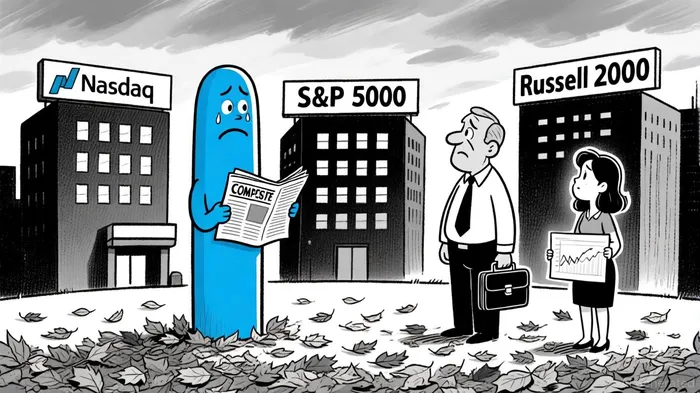
The Federal Reserve's rate-cut cycles have long been a focal point for investors, yet their impacts on different stock categories remain asymmetric. Large-cap technology stocks, small-cap equities, and value-oriented investments each respond uniquely to monetary easing, shaped by structural differences in leverage, earnings visibility, and macroeconomic sensitivity. This analysis unpacks historical patterns and recent shifts in investor behavior to illuminate these divergent outcomes.
Historical Performance: Large-Cap Tech vs. Small-Cap and Value Stocks
Federal Reserve rate cuts have historically acted as a tailwind for equities, but their benefits are unevenly distributed. Large-cap tech stocks, particularly those in the S&P 500, have thrived during non-recessionary rate-cut cycles. For example, the S&P 500 averaged 14.1% returns in the 12 months following the start of a rate-cut cycle since 1980, with growth stocks like the Nasdaq Composite often outperforming due to lower discount rates boosting future earnings valuations[1]. During the 2024 easing cycle, the Nasdaq Composite surged 29.6% as tech giants capitalized on accommodative monetary policy[2].
Small-cap stocks, represented by the Russell 2000, have shown a more nuanced response. While they historically outperform large-cap stocks in low-rate environments—driven by reduced borrowing costs and easier financial conditions—their gains are contingent on economic stability. For instance, the Russell 2000 rallied 5% over five sessions ahead of the 2024 rate cut but later fell nearly 3% in a single week amid rising Treasury yields and election-related uncertainty[3]. This volatility underscores small caps' dual sensitivity to monetary policy and macroeconomic risks.
Value stocks, meanwhile, have exhibited mixed results. In expansionary cycles, value equities benefit from rising interest rates and higher yields, but during rate cuts, their performance hinges on whether the cuts signal recessionary support or growth-oriented easing. Historical data from 1972 to 2021 shows U.S. large-cap value stocks averaging 11.4% annualized returns, but these gains often lag behind growth sectors during prolonged low-rate periods[4].
Investor Behavior and Fund Flows in 2024–2025
Recent Fed rate cuts have triggered distinct shifts in investor allocations. Large-cap tech stocks initially attracted significant inflows, with technology funds drawing $4.2 billion in Q2 2024[5]. However, by July 2025, sentiment began rotating toward small caps as investors anticipated further easing. The Russell 2000 surged 9% in the same period, reflecting a strategic rebalance toward smaller, potentially undervalued firms[5].
Conversely, value stocks faced sustained outflows, with large value funds losing $7.8 billion in Q2 2024 alone[5]. This trend aligns with historical patterns where value equities underperform during prolonged low-rate environments, as growth stocks dominate with their high earnings multiples.
Bond markets also saw a reallocation, with intermediate-term funds gaining as investors sought higher yields amid falling cash returns[6]. This shift highlights the broader risk-on environment typical of rate-cut cycles but underscores the conditional nature of small-cap and value stock performance.
Sentiment Metrics and Market Dynamics
Investor sentiment during the 2024–2025 cycle reveals a tug-of-war between optimism and caution. The put/call ratio hit an extreme low in late 2024, signaling heavy bullish positioning[7], while the AAII survey showed bullish sentiment near 50%—a level often associated with market tops[7]. By early 2025, bearish sentiment reached an eight-year high, reflecting growing concerns about economic resilience despite accommodative policy[7].
These mixed signals suggest that while rate cuts have supported equity markets broadly, investor behavior remains fragmented. Large-cap tech stocks continue to benefit from strong earnings and low discount rates, but small-cap and value stocks face headwinds unless the Fed's easing translates into a sustained soft landing.
Conclusion: Strategic Implications for Investors
The asymmetric impacts of Fed rate cuts demand a nuanced approach. Large-cap tech stocks remain well-positioned in expansionary cycles, but their dominance may wane if small-cap rotations gain momentum. Small-cap investors must balance the potential for outperformance with heightened volatility, while value stocks require careful selection to capitalize on cyclical rebounds.
As the Fed navigates its 2025–2026 easing trajectory, investors should monitor both macroeconomic data and sentiment indicators to adapt to shifting dynamics. History shows that no single stock category consistently outperforms during rate cuts—success lies in aligning allocations with the evolving interplay of policy, growth, and risk.







Comentarios
Aún no hay comentarios