
Federal Reserve's Rate Cut and Its Implications for Equity Valuations
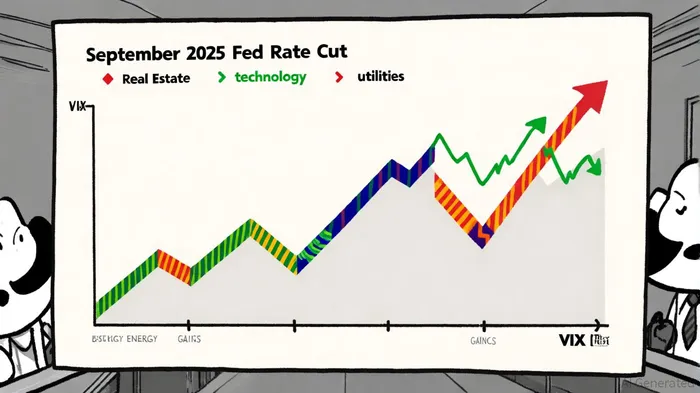
The Federal Reserve's 0.25 percentage point rate cut in September 2025 has sent ripples through global markets, reshaping equity valuations and triggering a recalibration of sector rotation dynamics. This move, framed as a “risk management” strategy by Chair Jerome Powell, reflects a delicate balancing act between cooling labor market pressures and persistent inflationary headwinds[4]. With the federal funds rate now targeting 4.00% to 4.25%, investors are recalibrating their portfolios to navigate the new monetary landscape.
Sector Rotation: Winners and Losers in a Dovish Pivot
The rate cut has amplified sector-specific divergences, with interest-sensitive industries emerging as key beneficiaries. Real estate and utilities, which thrive in lower discount rate environments, have seen renewed investor appetite. For instance, commercial real estate markets—particularly multifamily and industrial sectors—are witnessing a revival as borrowing costs decline, spurring refinancing activity and development pipelines[3]. Similarly, utilities, often favored during periods of low volatility, are gaining traction due to their stable cash flows and defensive appeal[2].
Technology stocks, however, face a more nuanced outlook. While companies like MicrosoftMSFT-- (MSFT) and AppleAAPL-- (AAPL) historically benefit from accommodative monetary policy, the post-rate cut period has seen intraweek declines in tech-heavy names such as NVIDIANVDA-- and Meta[4]. This suggests a temporary shift in investor sentiment toward economically sensitive sectors like energy and materials, which outperformed technology in the immediate aftermath of the Fed's decision[4]. Conversely, traditional banks are grappling with compressed net interest margins, as the 25-basis-point reduction threatens profitability in a low-rate environment[2].
Market Volatility: The VIX's Mixed Signals
Despite the Fed's measured approach, market volatility remains a critical wildcard. The CBOE Volatility Index (VIX) currently stands at 16.36, signaling relatively low near-term expectations of turbulence[2]. However, October VIX futures trading at a 2.2% premium to September futures reveal a stark disconnect between current complacency and anticipated future risks[3]. This widening spread suggests that traders are underestimating immediate uncertainties while bracing for a potential volatility spike once the rate cut is fully priced in.
The inverse relationship between the VIX and equities adds another layer of complexity. A post-Fed rate cut surge in volatility could coincide with downward pressure on stock prices, particularly if inflationary concerns resurface or global economic headwinds intensify[3]. For now, the S&P 500 and Nasdaq Composite have shown mixed responses, with the Dow Jones Industrial Average rising 0.6% on the back of industrial and financial sector gains[3].
Strategic Implications for Investors
The Fed's dovish pivot underscores the importance of dynamic portfolio adjustments. Defensive sectors like utilities and real estate offer downside protection, while cyclical plays in energy and materials may capitalize on a potential economic rebound[4]. Investors should also remain vigilant about the Fed's forward guidance, which hints at further rate cuts in 2025 and 2026[1].
In conclusion, the September rate cut has catalyzed a reordering of market priorities. While growth-oriented sectors face near-term headwinds, the broader equity market remains anchored by the Fed's commitment to managing downside risks. As volatility looms on the horizon, a diversified approach—balancing income-focused investments with strategic exposure to economically sensitive assets—will be critical for navigating the evolving landscape.





Comentarios
Aún no hay comentarios