
Federal Reserve Policy Shifts and Market Implications: Investor Preparedness for a Delayed Rate-Cutting Cycle
The Federal Reserve's September 2025 rate cut-its first in a projected series of gradual reductions-marks a pivotal shift in monetary policy. By lowering the benchmark rate by 25 basis points to a range of 4.00%-4.25%, the Fed signaled its intent to address a cooling labor market and moderating inflation while maintaining a cautious stance on financial stability risks Fed rate decision. This decision, coupled with the FOMC's economic projections, underscores a complex landscape for investors navigating a delayed rate-cutting cycle.
The Fed's Balancing Act: Growth, Inflation, and Employment
The FOMC's latest projections paint a nuanced picture of the U.S. economy. Officials now anticipate 1.6% GDP growth for 2025, with unemployment expected to decline gradually to 4.2% by 2028. Inflation, while still above the 2% target, is projected to trend downward, with core PCE inflation reaching 2.0% by 2028 according to those projections. These forecasts reflect a delicate balancing act: the Fed aims to stimulate growth without reigniting inflationary pressures, particularly as services prices remain sticky and fiscal stimulus from policies like "Trump's Big Beautiful Bill" could complicate its inflation outlook (as noted in the CNBC report).
The Fed's "dot plot" further clarifies its path, projecting two additional 25-basis-point cuts in 2025, bringing the total to 75 basis points by year-end. This gradual approach aligns with the preferences of officials like John Williams and Christopher Waller, who emphasize data-dependent decisions and a return to a "neutral" policy stance, though dissenting voices within the FOMC highlight risks, including the potential for inflation to persist above target and the need to monitor financial stability metrics.
Market Reactions: Volatility and Asset Reallocation
Financial markets have already priced in much of the Fed's anticipated easing, with Treasury yields reflecting a flatter yield curve as long-term rates remain anchored. This dynamic has created divergent opportunities for investors. For instance, gold and silver prices are poised for short-term adjustments depending on the magnitude of rate cuts and forward guidance. A 25-basis-point cut without further easing signals could trigger a temporary pullback, while a 50-basis-point cut might spark a stronger rally in precious metals, per the FOMC projections.
According to a JPMorgan analysis, the S&P 500 has averaged 14.1% gains in the 12 months following the start of a rate-cutting cycle since 1980, but initial months often feature volatility. That analysis also finds that in a non-recessionary environment, returns tend to be more subdued, averaging 20.6% a year after the first cut. Lisa Shalett of Morgan StanleyMS-- cautions that the sensitivity of economic entities to interest rates has diminished, urging investors to avoid overestimating the immediate impact of rate cuts in a Markets.com piece.
Strategic Positioning for a Delayed Cycle
Investors navigating this environment must adopt a multi-faceted approach. First, short-duration fixed income (2–3 years) offers a compelling balance of income and duration risk as cash-like rates decline, a point emphasized by JPMorganJPM--. Second, equity allocations should prioritize quality and profitability, favoring large-cap and secular growth stocks over smaller or cyclical ones, consistent with the same analysis. International equities also present opportunities as the U.S. dollar weakens amid the Fed's easing cycle and tighter monetary policy elsewhere, according to that guidance.
For bond investors, managing duration risk is critical. A delayed rate-cutting cycle often leads to higher yields during pauses, as seen in previous Fed pauses in a Morningstar review. Staggering maturities of CDs, bonds, and Treasuries can help mitigate rate fluctuations, while actively adjusting portfolio durations-shortening when rates rise and extending as cuts loom-can optimize returns (per the CNBC report).
Alternative strategies, such as Long/Short Equity and Systematic Diversified Macro, have historically outperformed during economic downturns, offering downside protection, though strategies like Relative Value and Merger Arbitrage may underperform, underscoring the need for diversified exposure.
Navigating Uncertainties
The Fed's path remains fraught with uncertainties. Persistent inflation risks, particularly from tariff-related costs and fiscal stimulus, could delay further cuts. Additionally, the 2024 precedent-where rate cuts coincided with rising Treasury yields due to market fears of premature easing-serves as a cautionary tale highlighted in the Markets.com piece. Investors must remain vigilant, monitoring the Fed's tone during press conferences and speeches for clues about its policy trajectory (as covered in the CNBC report).
Conclusion
The Federal Reserve's delayed rate-cutting cycle demands a strategic, adaptive approach from investors. By focusing on quality assets, managing duration risk, and staying attuned to evolving economic signals, investors can position themselves to capitalize on opportunities while mitigating risks. As the Fed navigates its path toward a neutral policy stance, preparedness-and flexibility-will be key to long-term success.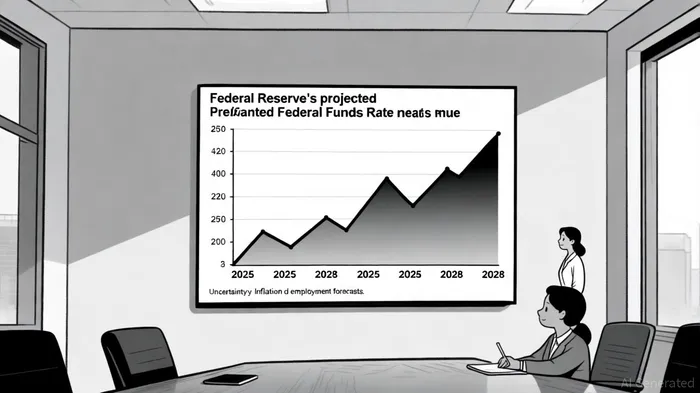





Comentarios
Aún no hay comentarios