
Federal Reserve Policy Risks and Tactical Asset Reallocation: Navigating Central Bank Missteps in a Volatile Market
The Federal Reserve's policy decisions have long served as a cornerstone for global financial stability. However, recent years have underscored the risks of policy missteps, with market volatility and investor behavior increasingly shaped by central bank actions-or inaction. As of September 2025, the U.S. market faces a unique confluence of challenges: a government shutdown, unresolved labor market data gaps, and aggressive monetary tightening cycles. These factors have forced investors to adopt tactical asset reallocation strategies to mitigate risks and capitalize on emerging opportunities.
The Fed's Policy Tightrope and Market Reactions
The Federal Reserve's 2022–2023 rate-hiking campaign, aimed at curbing inflation, has left a lasting imprint on investor behavior. According to CNBC, the surge in interest rates has driven a shift toward conservative strategies, including dollar-cost averaging (DCA) and diversified portfolios. For instance, a Reddit analysis of BitcoinBTC-- (BTC) DCA strategies over three years found that daily purchases outperformed weekly or monthly approaches in volatile markets. This underscores a broader trend: investors are prioritizing frequency and diversification to hedge against unpredictable rate cycles.
Yet, the Fed's recent policy environment is not without precedent. The 2008 financial crisis, marked by accommodative policies that failed to anticipate systemic risks, offers a cautionary tale. While detailed academic case studies on the 2022–2023 hikes remain scarce, historical parallels suggest that delayed or overcorrected policy responses can amplify market instability.
Tactical Reallocation: Safe Havens and Sectoral Shifts
Market volatility in Q3 2025 has been exacerbated by macroeconomic uncertainty. A U.S. government shutdown and missing jobs reports have eroded investor confidence, pushing capital into safe-haven assets. CNN Markets notes that gold has reached record highs, reflecting reduced risk appetite amid policy ambiguity. This trend mirrors the 2008 crisis, when gold surged as investors fled equities.
Conversely, equities like the S&P 500 and Dow Jones Industrial Average have defied pessimism, hitting record highs despite the shutdown. This resilience highlights the role of sector-specific dynamics. For example, strategic partnerships in technology-such as Hitachi and OpenAI collaborations-have driven momentum in growth stocks, CNBC reported. Investors are thus balancing defensive allocations (e.g., gold, Treasury bonds) with selective exposure to high-growth sectors.
Visualizing the Impact of Policy Uncertainty
Lessons for Investors: Adapting to a New Normal
The current environment demands agility. Investors must:
1. Diversify across asset classes: Balancing equities, gold, and fixed income can cushion against policy-driven shocks.
2. Leverage tactical DCA strategies: Frequent, smaller investments mitigate volatility risks, particularly in crypto and high-beta assets.
3. Monitor sectoral momentum: Sectors with strong fundamentals (e.g., AI-driven tech firms) may outperform during periods of central bank uncertainty.
While the Fed's policy playbook continues to evolve, the 2022–2023 rate hikes and recent shutdown-related turbulence underscore a critical truth: tactical reallocation is no longer optional-it is a necessity. As markets grapple with the aftermath of policy missteps, investors who prioritize adaptability and diversification will be best positioned to navigate the volatility ahead.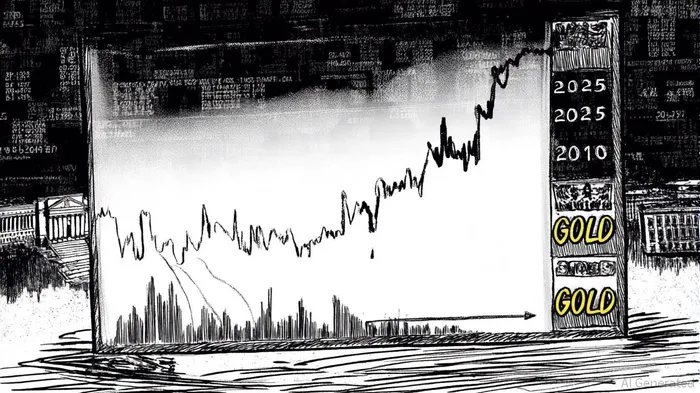






Comentarios
Aún no hay comentarios