
Federal Reserve's Inflation Surprise: A New Era of Rate Cuts?
The Federal Reserve's August 2025 policy statements have sent ripples through global markets, signaling a cautious but pivotal shift in the central bank's approach to inflation and employment. With core PCE inflation at 2.9% and a labor market teetering between resilience and fragility, the Fed faces a delicate balancing act. This article examines the implications of potential rate cuts, the global central bank response, and how investors should recalibrate their asset allocation strategies in this evolving landscape.
The Fed's Tightrope: Inflation, Tariffs, and Policy Flexibility
The Fed's revised policy framework, unveiled in August 2025, underscores a commitment to flexibility in addressing its dual mandate. While inflation remains above the 2% target, the central bank has acknowledged structural factors—such as Trump-era tariffs—that are pushing up goods prices. The July 2025 FOMC minutes revealed internal debate over the persistence of these inflationary pressures, with some policymakers warning of a “one-time price shock” and others fearing a prolonged inflationary spiral.
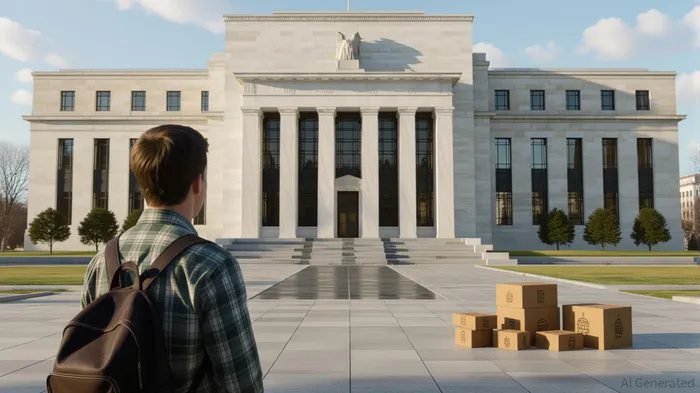
The Fed's current stance—maintaining a federal funds rate of 4.25–4.5%—reflects a “moderately restrictive” policy, but market expectations are shifting. Financial indicators suggest a 93% probability of a 25-basis-point rate cut in September 2025, with further reductions likely by year-end. However, the Fed's caution is evident: policymakers stress that “monetary policy must remain vigilant against the risk of inflation expectations becoming unanchored.”
Global Central Bank Responses: Divergence and Consequences
The Fed's potential rate cuts are not occurring in isolation. Other major central banks are recalibrating their policies in response to shifting economic dynamics:
- European Central Bank (ECB): The ECB has paused its rate-cut cycle, citing inflationary risks from U.S. tariffs on European exports. With the Eurozone's core inflation at 2.4% in July 2025, the ECB is unlikely to ease policy until 2026, creating a widening yield differential with the U.S.
- Bank of England (BoE): The BoE has already cut rates in August 2025 but faces a split outlook. While inflation in the UK stands at 3.8%, employment data remains weak, increasing the likelihood of further cuts by year-end.
- Bank of Japan (BoJ): Japan's core inflation stabilized at 3.1% in July 2025, prompting discussions about policy normalization. However, the BoJ remains cautious, wary of U.S. trade policies that could disrupt its export-dependent economy.
This divergence in central bank policies is reshaping global capital flows. A weaker U.S. dollar—down 10.7% in the first half of 2025—has made emerging markets more attractive, while European and Japanese bonds face pressure from narrowing yield spreads.
Asset Allocation in a Fragmented World
The Fed's rate cuts and global policy divergence demand a strategic rethink of asset allocation. Here's how investors should position their portfolios:
- Equities: The S&P 500 and Nasdaq Composite have benefited from accommodative monetary policy, but valuations are stretched. A shift toward value stocks and small-cap equities—historically more resilient in higher-rate environments—could offer better risk-adjusted returns.
- Bonds: U.S. Treasury yields are expected to decline with rate cuts, but global bond markets present opportunities. Inflation-protected securities (TIPS) and EM bonds with currency hedges are gaining traction.
- Commodities: Gold, now trading above $3,600 per ounce, remains a safe-haven asset amid dollar weakness and geopolitical tensions. Industrial metals and energy commodities could also benefit from global growth broadening.
- Currencies: The dollar's depreciation is likely to continue, favoring EM currencies and the yen if the BoJ signals normalization. Investors should monitor cross-currency pairs like EUR/USD and USD/JPY for tactical opportunities.
Investment Advice: Navigating Uncertainty
The Fed's rate cuts are not a signal to chase risk but a call for disciplined, active portfolio management. Key strategies include:
- Diversification: Allocate across asset classes and geographies to mitigate sector-specific risks.
- Duration Management: Shorten bond durations to reduce sensitivity to rate volatility.
- Hedging: Use currency forwards and options to protect against FX swings, particularly in EM exposures.
- Active Equity Selection: Focus on companies with strong balance sheets and pricing power, especially in sectors like energy, materials, and financials.
The Fed's inflation surprise—once a harbinger of tightening—now signals a potential new era of easing. However, the path forward is fraught with uncertainty. Investors must remain agile, leveraging insights from central bank communications and macroeconomic data to stay ahead of the curve.
In this new era, the mantra is clear: adapt, diversify, and act with precision. The Fed's rate cuts may mark the beginning of a broader global policy shift, and those who position their portfolios accordingly will be best poised to thrive.







Comentarios
Aún no hay comentarios