
Federal Reserve Independence and Trump's Influence on Monetary Policy in 2026: Risks to Credibility and Market Stability
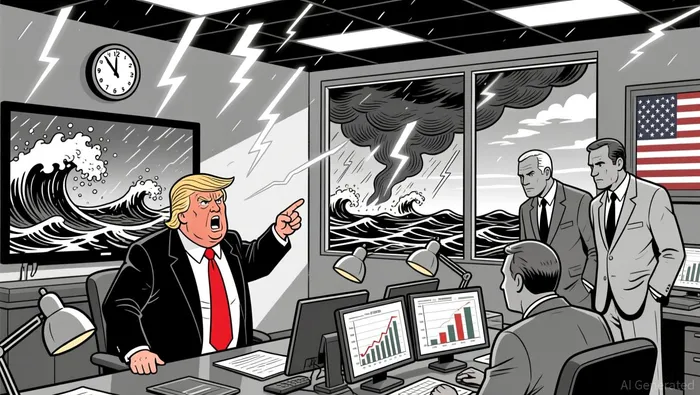
The Federal Reserve's independence has long been a cornerstone of U.S. economic policy, ensuring decisions are made based on data rather than political expediency. However, as 2026 unfolds, this independence faces unprecedented challenges from a resurgent Donald Trump, whose aggressive push to reshape the Fed's mandate risks destabilizing both the institution and global markets.
The Erosion of Fed Independence
Trump's campaign to politicize the Federal Reserve began in earnest in 2024, with public demands for rate cuts and threats to fire Fed officials who resisted his agenda. His "THE TRUMP RULE" policy, which advocates for rate cuts even in strong markets, directly contradicts the Fed's dual mandate. By 2025, Trump allies had drafted proposals to erode the Fed's autonomy, signaling a broader strategy to subordinate monetary policy to political goals. These actions have already introduced uncertainty into the Fed's decision-making process, with analysts warning of long-term damage to the institution's credibility according to a report.
Trump's 2026 Playbook
With Jerome Powell's term set to end in May 2026, Trump has made it clear that his next Fed chair nominee will be a "litmus test" for aggressive rate cuts according to analysis. Potential candidates like Kevin Hassett or Christopher Waller, both aligned with Trump's economic vision, could shift the Federal Open Market Committee (FOMC) toward a more politically driven approach. Trump's recent attempt to remove Fed Governor Lisa Cook-halted by the Supreme Court-further illustrates his willingness to test legal boundaries to assert control. If successful, such moves could create a Fed more responsive to political pressures than economic realities, increasing the risk of inflationary surges and market volatility.
Market Implications: Inflation, the Dollar, and Global Confidence
The stakes for markets are high. A loss of Fed independence could trigger higher inflation, a weaker U.S. dollar, and reduced economic growth. According to a September 2025 CNBC survey, 68% of respondents believe Trump's pressure will lead to upward inflationary pressure, while 74% anticipate a decline in the dollar's value. International leaders, including European Central Bank President Christine Lagarde and Bank of England Governor Andrew Bailey, have echoed these concerns, warning of broader global instability.
The Fed's own projections, however, suggest a cautiously optimistic outlook for 2026, with moderate growth and controlled inflation. Yet this optimism is tempered by internal divisions within the FOMC, reminiscent of the stagflationary 1970s. A new chair navigating this polarized environment may struggle to maintain consensus, particularly if inflationary pressures resurge amid Trump's tariffs and fiscal policies.
Structural Safeguards and Lingering Risks
Despite Trump's efforts, institutional checks remain in place. The reappointment of 11 of 12 regional bank presidents has reinforced the Fed's independence according to analysis, while Senate confirmation requirements for the next chair add a layer of political accountability. Powell himself may serve as a governor for two additional years, providing continuity. However, these safeguards may not be enough to counteract the broader erosion of trust. The New York Fed estimates a 25% probability of a 2026 recession, with rising fiscal deficits and political interference compounding risks according to a 2025 review.
Conclusion: Navigating the Uncertainty
For investors, the path forward requires vigilance. A politicized Fed could lead to abrupt policy shifts, creating volatility in equities, bonds, and commodities. Diversification and hedging against inflation and currency risks will be critical. While the Fed's structural independence offers some protection, the long-term consequences of Trump's interference-should it succeed-could reverberate far beyond 2026, reshaping the global economic landscape.







Comentarios
Aún no hay comentarios