
Federal Reserve's Delicate Balancing Act: Rate Cuts, Market Reactions, and Investment Strategies in 2025
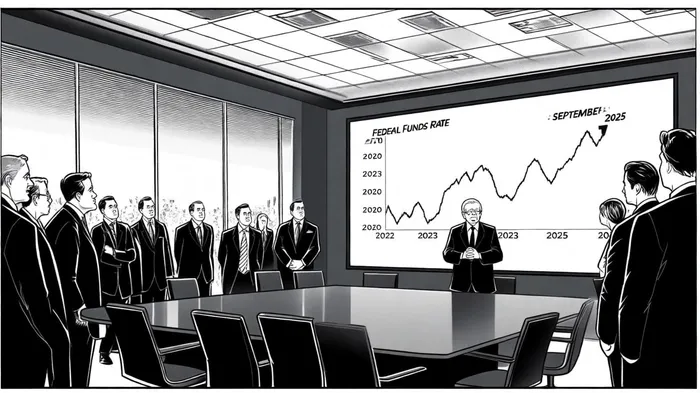
The Federal Reserve's September 2025 decision to cut interest rates by 25 basis points—marking the first reduction since December 2024—has reignited debates about the central bank's policy timing. With the federal funds rate now targeting 4.00%-4.25%, the Fed's move was framed as a “risk management cut” to address a cooling labor market and persistent inflationary pressures[1]. Yet, as investors and analysts dissect the implications, a critical question emerges: Has the FOMC lagged in responding to economic shifts, and how does this delay reshape investment strategies?
Fed's Policy Shift and Economic Rationale
The September rate cut followed a summer of mixed signals. While the labor market showed signs of softening—unemployment rose to 4.3% in August 2025 from 4.2% in July—and GDP growth rebounded to 3.8% in Q2 2025 after a 0.6% contraction in Q1, inflation remained stubbornly above the 2% target, with core PCE at 3.1%[2]. Fed Chair Jerome Powell emphasized the central bank's dual mandate, stating, “We are navigating a delicate balance between supporting employment and managing inflation risks”[3]. The decision to ease policy, despite inflationary pressures, reflects a shift toward prioritizing labor market stability, a stance echoed in the FOMC's updated Summary of Economic Projections, which now forecasts a 4.5% unemployment rate by year-end 2025[4].
However, the Fed's response to inflation has drawn scrutiny. Critics argue that the central bank's delayed tightening in 2021-2022—when PCE inflation peaked at 9.1% in June 2022—allowed inflation to embed itself more deeply in the economy[5]. This historical lag, coupled with the current easing cycle, raises concerns about whether the Fed is repeating past mistakes.
Assessing the Lag in Policy Response
The FOMC's timing has always been a double-edged sword. In 2025, the Fed's rate cuts followed a labor market slowdown that began in early 2025, with unemployment rising steadily from 4.1% in Q1 to 4.3% in Q3. While the central bank projected two more cuts by year-end, the divergence among FOMC members—nine favored one additional cut, while ten supported two—highlights internal uncertainty[1].
Comparing this to the 2021-2022 inflation surge, the Fed's delayed response to transitory supply-side pressures allowed inflation to become more persistent. As one analyst noted, “The Fed's 2022 tightening was reactive rather than proactive, and history suggests that reactive policies often come at a higher cost”[5]. Today, the Fed appears to be adopting a more preemptive approach, but the question remains: Is this shift sufficient to avoid another cycle of prolonged economic imbalances?
Investment Implications and Strategic Adjustments
The Fed's easing cycle has already triggered a reallocation of capital across asset classes. Fixed-income investors are advised to extend duration in the belly of the yield curve (3- to 7-year Treasuries) to capture higher yields while avoiding long-dated bonds, which may underperform in a non-recessionary environment[6]. Equities, particularly growth and technology sectors, are benefiting from lower discount rates, with the S&P 500 hitting new highs as investors bet on AI-driven growth[7].
For global portfolios, a weaker U.S. dollar—a byproduct of Fed easing—is boosting emerging markets and non-dollar assets. “The 'Anything But the Dollar' (ABD) strategy is gaining traction as foreign investors seek diversification,” noted a JPMorgan report[8]. Meanwhile, commodities like gold have surged as a safe-haven asset, reflecting uncertainty about the pace of rate cuts and inflation's trajectory[9].
Cash and short-term instruments, however, are losing their luster. With yields declining, investors are shifting toward alternatives such as market-neutral funds and high-yield credit to generate alpha[10]. Small-cap stocks, sensitive to financing costs, have also shown strength but remain contingent on the depth of future rate cuts.
Conclusion: Navigating a Complex Landscape
The Fed's September 2025 rate cut underscores its evolving approach to balancing growth and inflation. While the central bank has moved swiftly to address labor market risks, its historical lag in responding to inflationary surges casts a shadow over its current strategy. For investors, the key lies in active management and sector-specific positioning. As Powell acknowledged, “The path ahead is uncertain, and flexibility will be essential”[3]. In this environment, diversification, duration management, and a focus on global opportunities may prove critical to navigating the Fed's next chapter.







Comentarios
Aún no hay comentarios