
Federal Reserve's Data Dilemma: Navigating Misperceptions in a Fractured Labor Market
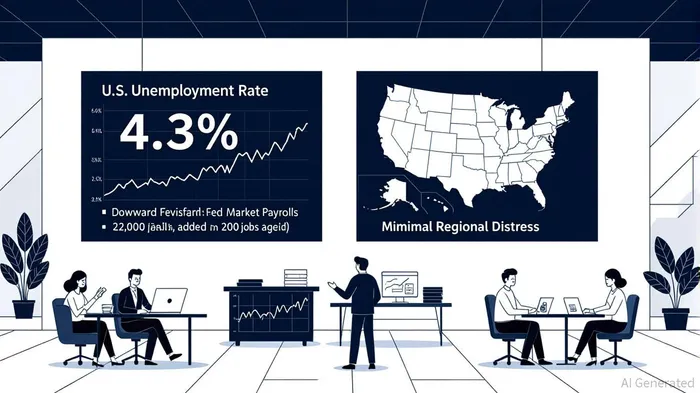
The Federal Reserve's recent decision to hold interest rates steady—despite a labor market that now appears to be cooling—has exposed a critical flaw in its data-driven approach: the signals it relies on are increasingly distorted by policy-driven distortions, statistical revisions, and structural shifts. This misalignment between official metrics and underlying economic reality is reshaping central bank strategy and creating new risks for investors.
The Illusion of a "Solid" Labor Market
For months, the Fed clung to the narrative of a "broadly balanced" labor market. The unemployment rate remained near historic lows, . , . This volatility masked deeper structural issues. President 's aggressive import tariffs and immigration crackdowns have reduced labor supply and disrupted hiring, while the (BLS) faced credibility crises after its commissioner was fired over alleged data manipulation.
The result? A labor market in "low churn," where job growth depends heavily on the net creation of new firms—a metric prone to revision. The BLS's "birth-and-death" model, which estimates job gains from business openings and closures, has led to massive downward revisions. By September 2025, , revealing a far weaker labor market than initially reported.
The Fed's Data-Dependent Paralysis
The Federal Reserve's reliance on flawed data has created a dangerous policy lag. While the labor market has weakened, the Fed remains cautious about cutting rates, . This hesitation is compounded by the uncertainty surrounding Trump's tariffs, which have raised input costs but whose long-term inflationary impact remains unclear.
The July 2025 FOMC meeting highlighted this tension. Two governors, and , dissented in favor of a 25-basis-point cut, signaling growing internal dissent. Yet Chair emphasized the need to wait for "evolving data," even as the labor market's fragility became evident. The Fed's new (LMSI), developed by the , offers a more nuanced view: as of June 2025, . . But this tool is still untested in a policy crisis.
Investment Risks in a Policy Vacuum
For investors, the Fed's data dilemma creates a double-edged sword. On one hand, delayed rate cuts could prolong inflationary pressures, harming sectors like and . On the other, a sudden policy pivot—triggered by revised data or a sharper labor market downturn—could spark market volatility. , it may signal a shift toward accommodative policy, but the lag between data revisions and policy action could leave markets exposed to mispriced risks.
Strategic Positioning for Uncertainty
- Defensive Sectors: Prioritize industries insulated from labor market volatility, such as healthcare and utilities, which offer stable cash flows.
- Inflation Hedges: Maintain exposure to (TIPS) and commodities like gold, which could benefit from persistent inflation.
- Short-Dated Bonds: Given the Fed's potential for abrupt rate cuts, short-duration bonds reduce interest rate risk.
- Regional Diversification: The 's LMSI suggests localized stress, so consider geographically diversified portfolios to mitigate regional downturns.
The Path Forward
The Fed's next move hinges on whether it can reconcile conflicting data signals. , it will mark a shift from its "data-dependent" stance to a more proactive approach. However, investors should brace for continued volatility as the Fed grapples with policy lag and data revisions.
In this environment, agility—not just in portfolio construction but in interpreting emerging indicators—will be key. The labor market's "illusion" of strength has already reshaped central bank strategy; now, it's up to investors to anticipate the next twist.







Comentarios
Aún no hay comentarios