
The Federal Reserve's Autonomy: A Cornerstone of Market Stability and Investment Strategy
In an era marked by geopolitical tensions and fiscal uncertainty, JPMorgan ChaseJPM-- CEO Jamie Dimon's recent defense of Federal Reserve (Fed) independence has taken center stage. During the bank's second-quarter 2025 earnings call, Dimon emphasized that political interference with the Fed's autonomy could lead to “adverse consequences, the absolute opposite of what you might be hoping for.” His remarks underscore a broader debate over central bank credibility, a linchpin for investor confidence and economic resilience. This article examines the risks of politicizing monetary policy, analyzes historical correlations between Fed independence and market stability, and outlines investment strategies to capitalize on sectors that thrive under predictable policy frameworks.
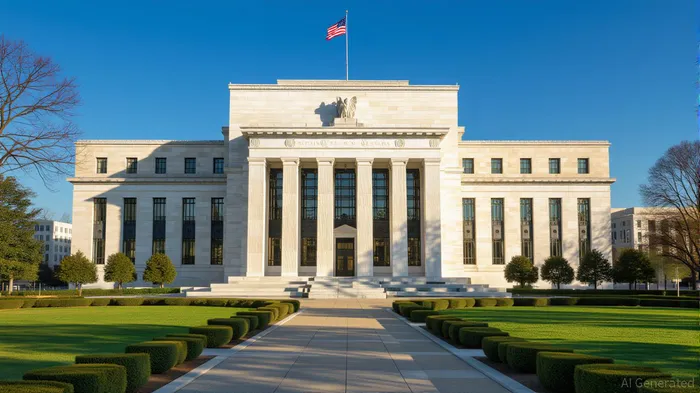
Why Fed Autonomy Matters: Historical Context and Economic Resilience
Central bank independence has long been tied to economic stability. Historically, periods of Fed autonomy—such as Paul Volcker's aggressive rate hikes in the 1980s to curb inflation—were followed by prolonged growth cycles. Conversely, instances where political pressures eroded policy credibility, such as the 1970s “Great Inflation,” led to market volatility and stagflation.
Today's challenge arises from persistent political pressures. President Trump's public criticism of Fed Chair Jerome Powell—termed “very dumb” and a “major loser”—has raised concerns about the Fed's ability to operate free from short-term political whims. While Trump claims no intention to remove Powell, the administration's push to begin selecting his successor ahead of his 2026 term expiration signals a dangerous erosion of institutional norms.
The Political Risk to Market Stability
Dimon's warnings are not theoretical. Political interference risks destabilizing two pillars of market confidence: predictability and credibility.
- Predictability: When central banks are perceived as partisan actors, long-term planning by businesses and investors becomes impossible.
- Credibility: The Fed's ability to control inflation and stabilize markets hinges on trust. Dimon noted that inflation had already risen to 2.7% in June 2025, partly fueled by tariff-driven cost pressures—a risk exacerbated by policy uncertainty.
Markets have already begun pricing in these risks. The CBOE Volatility Index (VIX), a measure of investor anxiety, spiked 15% in the weeks following Trump's public clashes with Powell. Meanwhile, the U.S. dollar index, often a haven in uncertain times, weakened 3% as geopolitical and policy risks mounted.
Investment Implications: Sectors Thriving Under Stable Monetary Policy
Investors seeking resilience in an era of Fed credibility risks should focus on sectors insulated from policy volatility. Historically, consumer staples, utilities, and healthcare have thrived during periods of monetary stability. These sectors exhibit low sensitivity to interest rates and benefit from steady demand even in slowing economies.
Key Sectors to Consider:
- Consumer Staples: Defensive stocks like Procter & Gamble (PG) and Coca-ColaKO-- (KO) offer stable cash flows and dividends.
During the last Fed tightening cycle, XLP outperformed the broader market by 8%, shielded by inelastic demand for essentials.
Utilities: Regulated utilities like NextEra EnergyNEE-- (NEE) and Dominion EnergyD-- (D) provide predictable revenue streams and high dividends. Their performance is less tied to interest rate fluctuations compared to cyclical sectors.
Rate-Resistant Equities: Companies with strong balance sheets and pricing power, such as Johnson & Johnson (JNJ) or MicrosoftMSFT-- (MSFT), can navigate Fed policy shifts with minimal disruption.
Avoid:
- Cyclical Sectors: Financials (e.g., JPMorganJPM-- itself) and industrials may face headwinds if political interference triggers erratic policy shifts.
- High-Yield Debt: The Fed's inflationary pressures and potential rate volatility make lower-quality bonds riskier.
The Bottom Line: Prioritize Stability, Not Speculation
Jamie Dimon's advocacy for Fed independence is not just about central bank governance—it's a call to preserve the bedrock of market stability. Investors would be wise to heed this warning. By allocating capital to sectors that thrive under predictable monetary policy—consumer staples, utilities, and healthcare—portfolios can weather political turbulence while capitalizing on steady growth.
As Dimon noted, “Everything is on the table” for capital allocation, but prudence demands prioritizing sectors with defensive profiles. In an era of uncertainty, stability is the ultimate investment.
The data reveals a clear inverse relationship: as policy uncertainty rises, JPM's stock underperforms. This underscores the broader market's sensitivity to Fed credibility—a lesson for all investors.
The views expressed here are based on publicly available information and do not constitute financial advice. Always consult a licensed professional before making investment decisions.





Comentarios
Aún no hay comentarios