
Federal Reserve's 2025 Rate Cut and Its Impact on Risk Assets
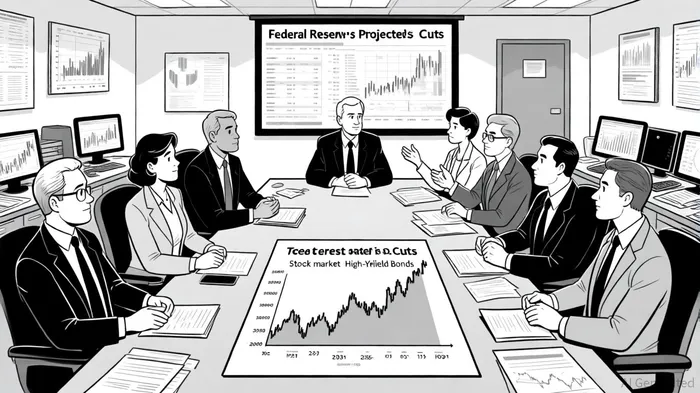
The Federal Reserve's September 2025 rate cut—its first reduction since December 2024—marks a pivotal shift in monetary policy. By lowering the federal funds rate by 0.25 percentage points to a range of 4.00%-4.25%, the Fed signaled its intent to address a softening labor market and inflation risks[1]. This move, coupled with expectations of two more cuts in 2025 and further reductions in 2026, has reshaped the investment landscape. For investors, the question is no longer if to reallocate but how to capitalize on the opportunities emerging in equities and high-yield bonds.
Equities: A Tailwind for U.S. Large Caps and Cyclical Sectors
Historically, equities have thrived during Fed easing cycles, particularly in non-recessionary environments. Since 1980, the S&P 500 has averaged a 14.1% return in the year following the start of a rate-cut cycle[2]. However, the 2025 context is nuanced. While the Fed's rate cuts aim to stimulate growth, the labor market's weakening—evidenced by a rising unemployment rate to 4.3%—introduces volatility[1].
Key sectors to watch:
1. Small-cap stocks: These are particularly sensitive to rate cuts, as lower borrowing costs improve capital availability. The Russell 2000 has already rallied on dovish signals[3].
2. Consumer discretionary: Reduced rates boost consumer spending, benefiting retailers and travel/leisure firms. Historical data shows this sector outperforms post-easing cycles[4].
3. Technology and growth stocks: Lower rates increase the present value of future earnings, favoring high-growth names like MicrosoftMSFT-- and Apple[3].
4. Financials: While net interest margins may narrow, reduced credit risk and increased loan activity could benefit regional banks like Wells Fargo[3].
Investors should maintain an overweight in U.S. large caps, which have historically outperformed during rate cuts, while selectively rotating into cyclical sectors as economic data stabilizes[5].
High-Yield Bonds: A Strategic Shift Toward Income and Active Management
High-yield bonds have emerged as a compelling alternative to cash, offering yields of ~7.2% in the U.S. as of September 2025[6]. The Fed's rate cuts have compressed spreads between high-yield bonds and Treasuries, making riskier debt more attractive. For instance, the U.S. High Yield Index delivered an 8.2% total return in 2024, driven by tighter spreads and strong investor demand[7].
Industries to target:
1. Industrials and energy: These sectors benefit from pro-growth policies and M&A activity, particularly under the Trump administration's deregulation agenda[8].
2. Consumer services: Insulated from global trade risks, these firms align with domestic demand trends[8].
3. Active multi-sector funds: Instruments like the iShares Flexible Income Active ETF (BINC) outperformed passive benchmarks by accessing high-yield credit and non-agency mortgages[9].
However, caution is warranted. While high-yield bonds offer income, dispersion among issuers is growing, with some credits showing signs of stress. Active management is critical to avoid overexposure to weaker names[10].
Strategic Reallocation: Balancing Duration and Yield
The Fed's easing cycle creates a unique opportunity to rebalance portfolios. Investors should:
- Reduce cash allocations: With yields falling, cash underperforms both equities and high-yield bonds[5].
- Extend duration selectively: Intermediate-term bonds (3–7 years) offer a balance of yield and risk mitigation[11].
- Diversify credit exposure: Actively managed funds provide access to non-agency mortgages and commercial debt, which are excluded from passive indexes like the Bloomberg U.S. Aggregate[9].
For equities, a tactical overweight in U.S. large caps and cyclical sectors, paired with a defensive tilt in dividend-paying stocks (e.g., Starbucks), can hedge against volatility[3].
Conclusion
The 2025 Fed rate cuts are reshaping the risk-asset landscape. While equities and high-yield bonds present compelling opportunities, success hinges on strategic reallocation. Investors must balance income-seeking in high-yield bonds with sector-specific equity rotations, all while maintaining active oversight to navigate credit dispersion and macroeconomic uncertainties. As the Fed continues its easing path, the key is to align portfolios with both the direction of policy and the fundamentals of individual assets.







Comentarios
Aún no hay comentarios