
Federal Reserve's 2% Inflation Target: Market Implications and the Credibility Conundrum in 2025
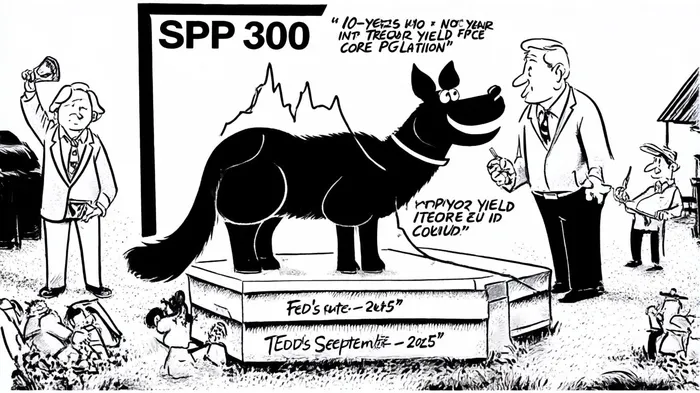
The Federal Reserve's 2025 reaffirmation of its 2% long-run inflation target, despite persistent inflationary pressures and shifting economic dynamics, has sparked intense debate among investors, policymakers, and economists. While the updated Statement on Longer-Run Goals and Monetary Policy Strategy emphasizes flexibility and a balanced approach to the dual mandate of maximum employment and price stability[1], the Fed's credibility—and its implications for market stability—remain under scrutiny. This analysis examines how the unchanged inflation target, coupled with recent policy adjustments, is shaping investor behavior, asset valuations, and broader financial market trends.
The Evolution of the Fed's Framework: Flexibility Amid Rigidity
The 2025 framework update, approved by the FOMC in August, builds on the 2020 adoption of average inflation targeting (AIT) but retains the 2% PCE inflation goal[1]. This approach allows the Fed to tolerate temporary inflation overshoots to offset prior undershoots, a strategy designed to anchor long-term expectations. However, critics argue that the rigidity of the 2% target—especially in an era of frequent supply shocks and structural inflationary forces—risks undermining the Fed's ability to adapt[2]. For instance, core PCE inflation remained at 2.9% in July 2025, well above the target, while labor market cooling and global uncertainties prompted the first rate cut of the year in September[3].
The Fed's balancing act is evident in its dual mandate challenges. As Minneapolis Fed President Neel Kashkari noted, “The central bank's tools remain effective, but the economic landscape has fundamentally changed”[3]. This tension between inflation control and employment support has led to mixed market signals. While the September rate cut boosted the S&P 500 by 1.8% month-over-month[4], investor confidence remains cautious, with the VIX volatility index averaging 15.75—a 3.6% decline from August but still elevated relative to pre-pandemic levels[4].
Market Reactions: Dovish Shifts and Sectoral Divergence
The Fed's pivot toward accommodative policy in 2025 has had uneven effects across asset classes. The September rate cut, which reduced the federal funds rate to 4.00–4.25%, was interpreted as a dovish signal, encouraging risk-taking and boosting equities. Large-cap U.S. stocks, particularly in materials and communications sectors, outperformed broader indices[4], while fixed-income markets grappled with the implications of prolonged inflation.
Investors are also recalibrating portfolios to account for the Fed's flexibility. BlackRockBLK-- analysts note that “the 2% target is no longer a hard ceiling but a guidepost, prompting a reevaluation of duration strategies and alternative allocations”[5]. For example, real estate and growth stocks have gained favor due to lower borrowing costs, whereas financial institutions face margin compression from flattening yield curves[5]. Meanwhile, the 10-year breakeven inflation rate—a market-based measure of inflation expectations—remains at 2.7%, reflecting lingering skepticism about the Fed's ability to sustainably return to 2%[6].
Credibility Challenges: Political Pressures and Public Trust
The Fed's credibility, a cornerstone of its policy effectiveness, faces dual threats: persistent inflation and political interference. Despite Kashkari's assertion that the Fed's “credibility on inflation remains intact”[3], public sentiment surveys and Google Trends data reveal that inflation remains a top concern for Americans, with search interest in “inflation” twice pre-pandemic levels[7]. This erosion of trust is compounded by the Fed's delayed response to rate-cut expectations, which initially saw markets pricing in an 80% probability of easing before settling at 50-50 due to robust GDP and employment data[5].
Political pressures further complicate the Fed's mandate. Former President Donald Trump's public criticism of Chair Jerome Powell and calls for early replacement have raised concerns about institutional independence[8]. Analysts warn that such interference could politicize monetary policy, undermining the Fed's ability to manage inflation expectations without triggering market panic[8]. Emi Nakamura, a former Fed economist, emphasized that “the Fed's credibility is its most valuable asset—any perceived erosion risks destabilizing financial markets”[8].
The Path Forward: Navigating Uncertainty
As the Fed navigates this complex environment, investors must weigh several key factors:
1. Policy Flexibility: The 2025 framework's emphasis on balancing employment and inflation suggests further rate cuts in 2026 if inflation remains sticky but growth weakens[3].
2. Sectoral Opportunities: Sectors benefiting from lower rates, such as real estate and technology, may outperform, while financials and long-duration bonds face headwinds[5].
3. Credibility Risks: Political pressures and unanchored inflation expectations could force the Fed into a more aggressive tightening cycle, increasing volatility[8].
In conclusion, the Fed's 2% inflation target remains a focal point for markets, but its credibility—and the Fed's ability to adapt—will determine its long-term effectiveness. While the 2025 framework update provides a degree of flexibility, investors must remain vigilant to evolving risks, from structural inflationary forces to political interference. As the Fed's next moves unfold, the interplay between policy credibility and market dynamics will continue to shape global financial landscapes.





Comentarios
Aún no hay comentarios