
Federal Intervention and Its Implications for Key Industries in Crisis: Assessing the Fiscal and Long-Term Economic Impact on Investment Portfolios
Government bailouts have long been a contentious tool for stabilizing economies during crises. From the 2008 financial collapse to the pandemic-induced downturns of 2020–2025, federal interventions have reshaped industries, altered market dynamics, and left lasting fiscal and economic footprints. For investors, understanding these interventions-and their ripple effects-is critical to navigating evolving portfolio risks and opportunities.
Fiscal Impacts: A Double-Edged Sword
Government bailouts often come with immediate fiscal costs but can also yield long-term benefits. For instance, the U.S. airline industry received over $54 billion in direct payments during the pandemic to prevent mass job losses and operational collapse. While this averted short-term bankruptcies, it also created inefficiencies, such as widespread flight cancellations and delays in 2022, as airlines faced reduced flexibility in workforce adjustments. Similarly, bailouts in the financial sector-such as equity injections during the 2008 crisis and the 2020–2025 pandemic-stimulated aggregate demand and improved labor market conditions, disproportionately benefiting lower-income households through increased investment and job creation.
However, the fiscal toll of such interventions is staggering. Global public debt has surged to unprecedented levels, with Japan's debt-to-GDP ratio exceeding 230%, the U.S. at 125%, and China near 115%. Rising interest rates have further strained budgets, the Congressional Budget Office projecting U.S. federal debt to reach 156% of GDP by 2055 under current policies. These trends underscore a growing tension between crisis management and fiscal sustainability.
Sector-Specific Effects: Winners, Losers, and Systemic Risks
The impact of bailouts varies sharply across industries. In the U.S. airline sector, restrictions on furloughs and share repurchases limited long-term operational flexibility, while only a small portion of bailout funds will be repaid. Conversely, bailouts in the financial sector have historically enhanced market stability by reducing agency costs and encouraging innovation. A study of Chinese listed companies from 2014–2019 found that local government bailouts increased corporate patent output, particularly in regions with strong economic fundamentals.
Small businesses, meanwhile, faced a paradox: rapid government support during the pandemic helped many survive initial closures, but it also risked propping up unviable firms, distorting market efficiency. This highlights a broader challenge for policymakers: balancing speed with precision in crisis response.
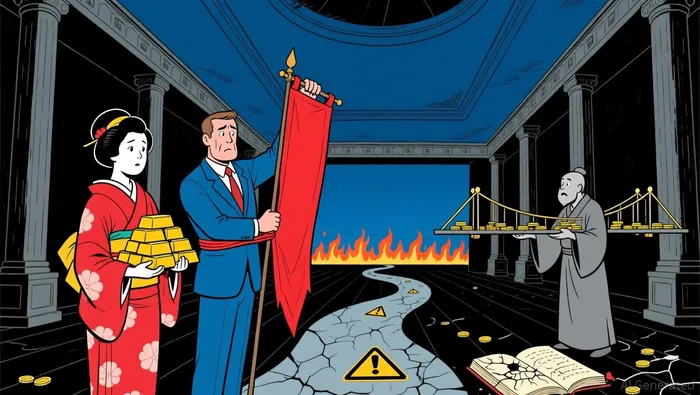
Long-Term Economic Consequences: Efficiency, Inequality, and Innovation
Government bailouts can have enduring effects on economic structures. The 1990s Japanese bank bailouts, for example, led to prolonged public ownership of bank assets, favoring less efficient firms and stifling productivity growth. Similarly, the 2008 financial crisis revealed how bailouts can distort lending decisions, with political considerations often outweighing market efficiency.
Yet bailouts can also drive innovation. By alleviating financing constraints, they enable firms to invest in R&D and scale operations. This was evident in the U.S. financial sector, where bailouts indirectly boosted corporate innovation by improving capital intermediation. However, these benefits are unevenly distributed. A 2023 analysis found that asset holders like private equity firms and hedge funds disproportionately benefited from Federal Reserve interventions, with Apollo Group and Blackstone shares surging by 80% and 50%, respectively.
Investment Portfolio Implications: Reallocating for a New Regime
For investors, the post-bailout landscape demands a reevaluation of traditional asset allocation strategies. The weakening of historical correlations-such as the negative relationship between stocks and bonds-has increased portfolio volatility, prompting a shift toward alternatives like commodities, digital assets, and liquid alternatives. Fixed-income strategies have also evolved, with a focus on short-duration instruments and high-quality credit to mitigate interest rate risks.
Trade policy uncertainties and AI-driven economic shifts further complicate portfolio construction. The first quarter of 2025 saw the S&P 500 approach bear-market territory amid aggressive tariff announcements, only to rebound when a 90-day pause on tariffs was introduced. Such volatility underscores the need for dynamic, adaptive strategies that account for geopolitical and policy-driven shocks.
The Role of Fiscal Policy in Shaping Long-Term Strategies
Rising debt levels and interest rates have forced investors to prioritize resilience over growth. The U.S. Federal Reserve's projected rate-cutting cycle, with the federal funds rate settling in the 3.5%–4% range by 2025, offers some relief, but inflation remains a wildcard. Portfolio managers are increasingly factoring in macroeconomic risks, favoring defensive equities and inflation-protected securities, and international diversification to hedge against U.S.-centric imbalances.
Conclusion: Balancing Immediate Relief and Long-Term Resilience
Government bailouts are a necessary but imperfect tool for crisis management. While they can stabilize economies and stimulate innovation, they also risk creating inefficiencies, inequality, and fiscal vulnerabilities. For investors, the key lies in balancing short-term gains with long-term resilience-adapting portfolios to navigate a world where bailouts are both a lifeline and a catalyst for systemic change.







Comentarios
Aún no hay comentarios