
U.S. Federal Debt Growth and the Limited Impact of DOGE's Budget Cuts
Tariff Revenue and the Persistent Deficit
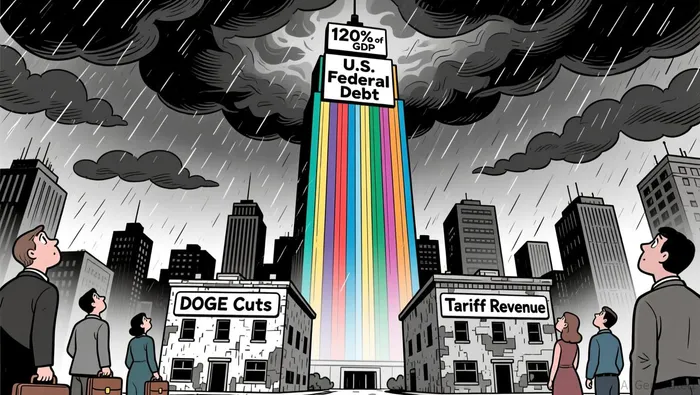
In fiscal year 2025, the U.S. Treasury collected $195 billion in customs duties, a 250% increase compared to 2024, driven by Trump's trade tariffs. This surge in revenue has been touted as a potential offset for the $1.8 trillion budget deficit projected for 2025. However, analysts caution that the long-term sustainability of this revenue stream is uncertain. The depletion of local importer inventories has temporarily forced businesses to pay tariffs on a broader range of goods, but this effect is likely to wane as supply chains adjust. Moreover, the Committee for a Responsible Federal Budget estimates that tariffs will generate only $3 trillion through 2035-a fraction of the deficit-assuming no legal or economic disruptions.
DOGE's Budget Cuts: Claims vs. Reality
DOGE, established under the Trump administration, claimed to have saved over $214 billion in fiscal year 2025 through staff reductions, contract terminations, and program cuts. However, independent analyses reveal significant gaps between these assertions and verifiable outcomes. For instance, DOGE's $2.9 billion savings from canceling a contract to house unaccompanied migrant children was based on speculative figures, with actual documented savings amounting to just $153 million according to BBC reports. Similarly, the administration's $1.9 billion claim for an IRS IT contract was invalidated by the Biden administration's prior cancellation of the same contract according to BBC reports.
Another contentious claim involved a $1.75 billion savings from terminating a USAID grant to Gavi for global health initiatives. Gavi confirmed that only $880 million had been paid, and no formal termination notice was received, rendering the savings claim unsubstantiated according to Gavi's confirmation. These examples highlight a pattern of overstatement and legal vulnerability. A federal judge recently ruled that DOGE's use of a "pocket rescission" to withhold $5 billion in foreign aid was unconstitutional, further undermining the credibility of its fiscal strategies.
Structural Challenges in Fiscal Reform
The limited impact of DOGE's cuts reflects deeper structural challenges in curbing U.S. federal debt. First, the sheer scale of the federal budget-$7 trillion in 2025-means that even substantial savings from individual programs are negligible in the broader context. Only $2.51 billion of DOGE's claimed $214 billion in savings had been formally de-obligated from contracts, illustrating the modest fiscal impact of its actions. Second, political and legal constraints hinder sustained budget discipline. The recent judicial rebuke of the "pocket rescission" tactic demonstrates the fragility of unilateral executive actions in a system designed to require legislative approval for major fiscal decisions.
Implications for Fiscal Policy Investing
For investors, the U.S. debt trajectory and the limited efficacy of DOGE's cuts suggest a need to focus on long-term structural reforms rather than short-term administrative fixes. Key considerations include:
1. Interest Rate Sensitivity: With federal debt at 120% of GDP, rising interest rates pose a significant risk to fiscal sustainability. Investors should monitor central bank policies and inflation trends, which directly influence borrowing costs.
2. Asset Allocation: Defensive assets such as Treasury securities and inflation-protected bonds may offer relative safety in a high-debt environment. Conversely, equities in sectors benefiting from fiscal stimulus (e.g., infrastructure, defense) could outperform if policymakers prioritize growth over austerity.
3. Geopolitical Risks: The U.S. debt situation is intertwined with global capital flows. A loss of confidence in U.S. fiscal credibility could trigger capital flight, impacting currency stability and international trade dynamics.
Conclusion
The U.S. federal debt crisis is not a problem that can be solved by aggressive budget cuts or temporary revenue surges. Structural reforms-such as entitlement modernization, tax code simplification, and bipartisan fiscal frameworks-are essential to address the root causes of fiscal imbalance. For now, DOGE's efforts, while symbolically significant, have done little to alter the trajectory of a debt-to-GDP ratio that continues to climb. Investors must remain vigilant, recognizing that the true risks to fiscal stability lie not in the headlines but in the systemic inertia of a system resistant to change.







Comentarios
Aún no hay comentarios