
The Fed's Tightrope Walk: How Delayed Rate Cuts Could Shake Markets
The Federal Reserve is playing a dangerous game of “wait-and-see,” and investors are getting caught in the crossfire. The central bank's June decision to keep rates at 4.25%–4.5%—despite clear signs of a slowing economy—has created a powder keg of uncertainty. Stagflation is looming, political pressure is mounting, and markets are now pricing in a delayed rate-cut timeline that could reshape bond yields, corporate bonds, and equity sectors tied to labor costs. Let's break down the risks and opportunities.
The Fed's Dilemma: Stagflation or Soft Landing?
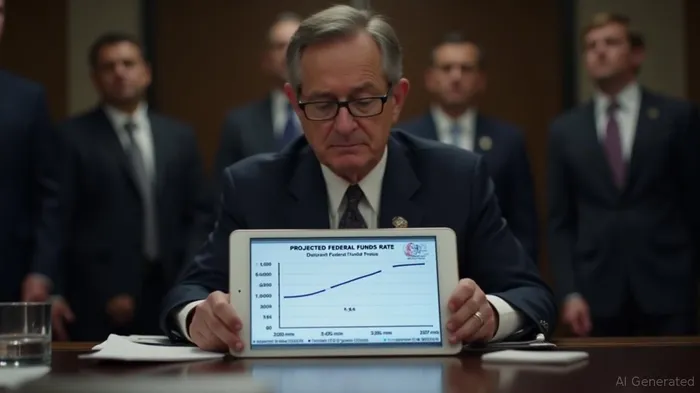
The Fed's June statement revealed a stark reality: inflation remains stubbornly elevated (projected at 3% for 2025), while GDP growth was slashed to 1.4%. Unemployment, now expected to hit 4.5%, signals a labor market cooling but not collapsing. Fed Chair Powell insists they'll “wait for clearer signals” before cutting rates, but the dot plot shows only two cuts by year-end—far fewer than markets had hoped.
This hesitation is fueling fear of stagflation: an economy choked by high prices but stagnant growth. The Fed's hands are tied by Middle East energy tensions, tariff-driven inflation, and a White House demanding lower rates to ease debt costs. The result? A policy tightrope that could tip markets into chaos.
Bond Markets: Bracing for a Yield Volatility Spike
The bond market is already screaming. 10-year Treasury yields have surged to 3.8%, while 2-year notes sit at 4.4%, a stark inversion signaling recession fears. The Fed's delayed cuts mean this yield curve could stay inverted for months, punishing bond investors.
Corporate bonds, meanwhile, face a double whammy. High-yield (junk) bonds with weak credit ratings are at risk as defaults rise in a slowing economy. But investment-grade bonds—especially those with shorter maturities—could offer a safer haven.
Equity Markets: Labor Costs and the Sectors to Watch
Equity investors need to focus on sectors tied to labor costs, as the Fed's stance directly impacts hiring and wage pressures.
- Consumer Discretionary Stocks (e.g., Amazon, Walmart): These companies are squeezed by rising wages and weak consumer spending. If the Fed delays cuts too long, their margins could shrink further.
- Industrial Firms (e.g., Caterpillar, Boeing): Labor costs here are critical. Slower growth and high rates could hit their order books.
- Healthcare and Utilities (e.g., Johnson & Johnson, NextEra Energy): These defensive sectors thrive in uncertain environments. Their stable cash flows and inelastic demand make them recession-proof.
Action Alert: Play the Volatility, Not the Narrative
The Fed's hesitation isn't a reason to panic—yet. Here's how to navigate this mess:
- Shorten Bond Duration: Move into short-term Treasuries (1–3 years) to avoid interest rate risk. Avoid long-dated bonds unless you're a contrarian.
- Rotate into Defensives: Utilities and healthcare stocks offer stability. Consider ETFs like XLU (Utilities Select Sector SPDR Fund) or XLV (Health Care Select Sector SPDR Fund).
- Pick Labor-Friendly Stocks: Look for companies with automated processes or offshore labor (e.g., Apple's overseas factories) to mitigate wage pressures.
- Stay Cautious on Tech and Growth Stocks: High rates and low growth are a toxic mix for high-multiples names. Wait for a Fed pivot before diving back in.
The Fed's delayed cuts are a test of investor patience. Stick to quality, avoid over-leveraged companies, and prepare for volatility. This isn't a time to bet big—it's a time to bet smart.
In the end, the Fed's tightrope walk could end in a soft landing—or a crash. Investors who stay nimble will survive either outcome.







Comentarios
Aún no hay comentarios