
Fed's Tariff Concerns: A Rate Hold, Market Uncertainty
Generado por agente de IATheodore Quinn
jueves, 20 de febrero de 2025, 2:45 am ET1 min de lectura
The Federal Reserve (Fed) has expressed concerns over President Trump's tariff policies, which could impact inflation and economic growth. In its January 2025 meeting, the Fed decided to hold interest rates steady, citing uncertainty about the economic outlook and the potential impact of tariffs on inflation. This decision has left investors and market participants wondering about the future trajectory of interest rates and the broader economy.
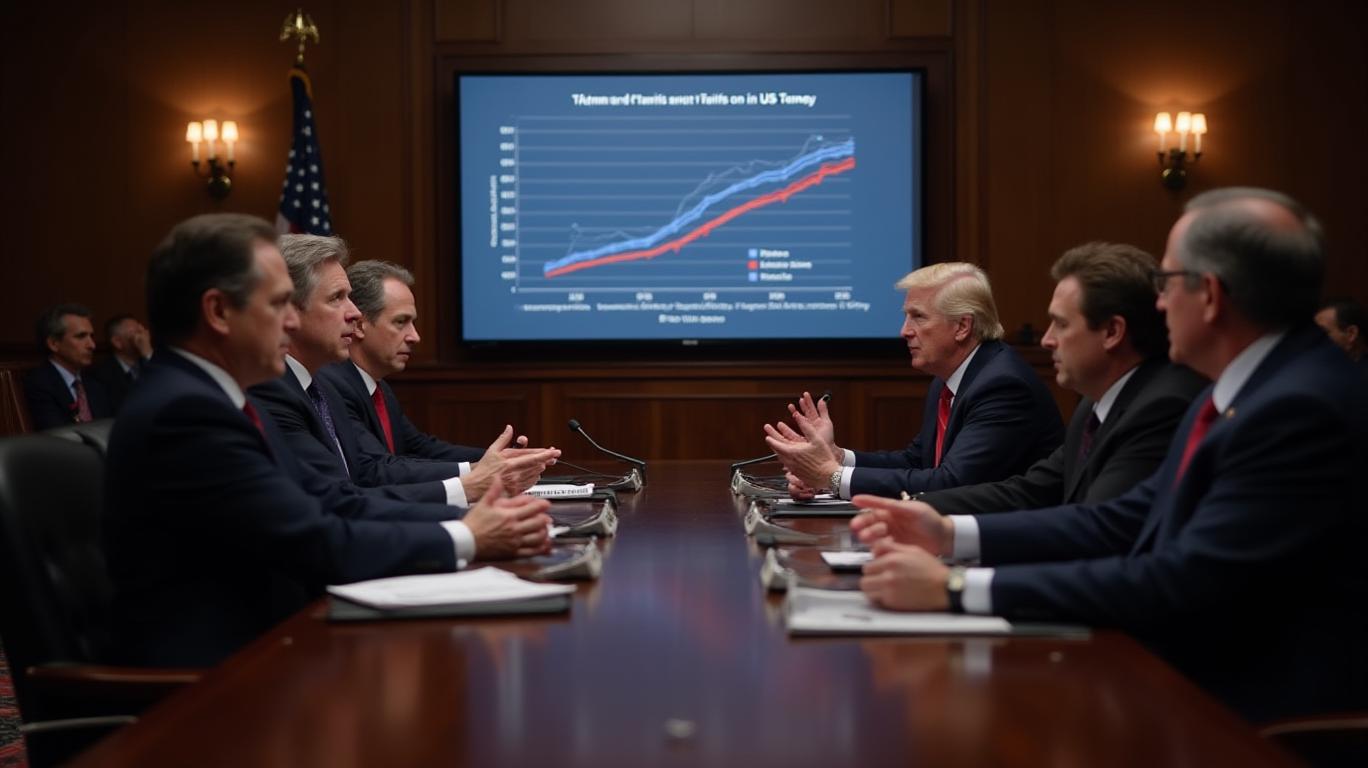
The Fed's decision to hold rates steady comes as a surprise, given the recent uptick in inflation and the strong labor market. However, the uncertainty surrounding Trump's tariff policies and their potential impact on the economy has led the Fed to adopt a wait-and-see approach. Fed Chair Jerome Powell has stated that the Fed will need to see more evidence of inflation before lowering interest rates further, indicating that the central bank is taking a cautious stance on monetary policy.
The Fed's concerns about Trump tariffs are well-founded, as these policies could lead to higher prices for consumers and businesses, which in turn could increase inflation. Additionally, tariffs can disrupt supply chains, particularly in industries like autos, which rely heavily on cross-border trade. This can lead to increased costs, inflation, and potential plant stoppages. Furthermore, retaliatory tariffs from other countries could escalate into trade wars, further disrupting global supply chains and negatively impacting economic growth.
The uncertainty generated by Trump's tariffs and the Fed's response to them could also lead to volatility in financial markets and make it more difficult for businesses to plan for the future. This uncertainty could impact investor behavior, particularly in sectors like Big Tech and insurance, which are sensitive to interest rate changes.
In conclusion, the Fed's decision to hold interest rates steady in January 2025 reflects its concerns about the potential impact of Trump's tariff policies on inflation and economic growth. The uncertainty generated by these policies could lead to volatility in financial markets and make it more difficult for businesses to plan for the future. As the situation evolves, investors and market participants will be closely watching the Fed's actions and communications regarding interest rates, as well as the broader economic outlook, to make informed decisions about their portfolios.



Divulgación editorial y transparencia de la IA: Ainvest News utiliza tecnología avanzada de Modelos de Lenguaje Largo (LLM) para sintetizar y analizar datos de mercado en tiempo real. Para garantizar los más altos estándares de integridad, cada artículo se somete a un riguroso proceso de verificación con participación humana.
Mientras la IA asiste en el procesamiento de datos y la redacción inicial, un miembro editorial profesional de Ainvest revisa, verifica y aprueba de forma independiente todo el contenido para garantizar su precisión y cumplimiento con los estándares editoriales de Ainvest Fintech Inc. Esta supervisión humana está diseñada para mitigar las alucinaciones de la IA y garantizar el contexto financiero.
Advertencia sobre inversiones: Este contenido se proporciona únicamente con fines informativos y no constituye asesoramiento profesional de inversión, legal o financiero. Los mercados conllevan riesgos inherentes. Se recomienda a los usuarios que realicen una investigación independiente o consulten a un asesor financiero certificado antes de tomar cualquier decisión. Ainvest Fintech Inc. se exime de toda responsabilidad por las acciones tomadas con base en esta información. ¿Encontró un error? Reportar un problema




Comentarios
Aún no hay comentarios