
The Fed's Stealth Moves: How 2025 Bond Purchases and Policy Shifts Reshape Market Stability
The Federal Reserve's 2025 monetary policy maneuvers have underscored a delicate balancing act between maintaining market stability and navigating economic uncertainties. From unannounced bond purchases to a revised policy framework, the Fed's actions have sent ripples through global markets, reshaping investor sentiment and asset allocation strategies. This analysis dissects how these interventions-often cloaked in subtlety-have influenced financial landscapes and what they signal for the future.
Stealth QE: A New Era of Discreet Interventions
In May 2025, the Fed executed $43.6 billion in unannounced Treasury bond purchases, including $8.8 billion in 30-year bonds, a move dubbed "stealth QE" by a Money Politics analysis. Unlike traditional quantitative easing, these operations bypassed public announcements, allowing the central bank to inject liquidity without overtly signaling a policy shift. This approach was further amplified when the Fed absorbed $20 billion of unsold bonds during a $72 billion Treasury auction shortfall, stabilizing markets amid liquidity strains, according to that analysis.
Such stealth measures reflect a strategic pivot toward flexibility. By avoiding explicit balance sheet expansions, the Fed aims to manage bond yields discreetly while sidestepping perceptions of prolonged accommodative policy. However, these actions have not gone unnoticed. Investors, attuned to the Fed's operational nuances, have interpreted stealth QE as a tacit easing of monetary policy, prompting shifts in portfolio allocations, according to a Fed implementation note.
Policy Framework Overhaul: From FAIT to Flexibility
The August 2025 revision of the Fed's monetary policy framework marked a pivotal departure from its 2020 "flexible average inflation targeting" (FAIT) approach. The updated framework reaffirmed a 2% inflation target but abandoned the notion of averaging inflation over time, instead emphasizing consistent price stability. Simultaneously, the Fed removed references to "shortfalls" in employment, acknowledging that labor markets can exceed maximum estimates without triggering inflationary risks.
This recalibration signals a return to a more traditional inflation-targeting model, prioritizing balanced decision-making between employment and price stability. As stated by the Brookings Institution, the changes aim to enhance clarity and reduce uncertainty for markets, particularly after the 2021–2022 inflation surge exposed gaps in the previous framework.
Investor Sentiment and Asset Allocation: Adapting to the New Normal
The Fed's dual approach of stealth QE and policy revisions has directly influenced investor behavior. With cash yields declining amid rate-cut expectations, financial advisors have urged clients to reduce high cash allocations and pivot toward bonds with higher yield potential, as noted in the Fed implementation note. Intermediate-term Treasuries (3–7 years) have emerged as a favored segment, offering a favorable risk-reward profile compared to long-dated bonds, the implementation note adds.
Equity markets have also responded asymmetrically. Large-cap growth stocks, particularly in the technology sector, have thrived under lower discount rates tied to rate cuts, as Brookings noted. Conversely, value stocks and short-duration bonds have gained traction during tightening phases, reflecting a hedging strategy against potential volatility, the Money Politics analysis observed.
Alternative assets have seen renewed interest as inflationary pressures persist. Gold prices surged in early 2024, with falling real rates and geopolitical tensions reinforcing its safe-haven appeal, according to Brookings. Similarly, BitcoinBTC-- and other commodities have attracted investors seeking hedges against fiat currency devaluation, a trend amplified by the Fed's stealth interventions.
Market Volatility and Sentiment Indices: A Tale of Two Forces
The Fed's actions have not been without turbulence. In early 2025, the VIX volatility index spiked following President Trump's announcement of broad tariffs, reaching the 99th percentile of historical volatility measures, per the Fed implementation note. This surge coincided with a sharp rise in 10-year Treasury yields, which hit 4.82% by December 2024 as investors reassessed inflation risks and the neutral rate, Brookings reports.
Investor sentiment indices further illustrate this duality. While investment-grade corporate bond spreads remained tight, high-yield spreads widened, reflecting divergent risk appetites, the Money Politics analysis reports. A BlackRock investment directions report highlights a preference for active yield curve management, with investors favoring intermediate-term bonds to navigate a range-bound bond market.
Conclusion: Navigating the Fed's Hidden Hand
The Fed's 2025 strategies-stealth QE and policy framework revisions-reveal a central bank walking a tightrope between market stability and economic resilience. For investors, the takeaway is clear: adaptability is key. Portfolios must balance traditional fixed-income strategies with alternative assets, while closely monitoring policy signals that often speak louder than words.
As the Fed continues to refine its approach, one thing remains certain: the interplay between central bank actions and market psychology will remain a defining force in shaping financial outcomes.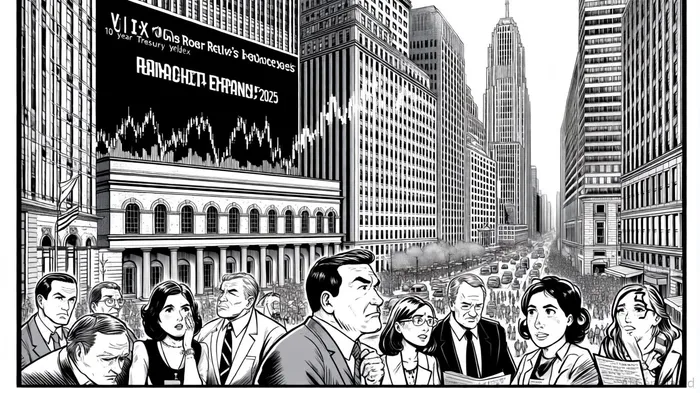






Comentarios
Aún no hay comentarios