
The Fed's Shallow Easing Cycle and Its Implications for Treasury Yields and Equities
The Federal Reserve's approach to monetary policy in early 2026 has taken on a distinctly cautious tone, shaped by a confluence of delayed economic data, mixed labor market signals, and persistent inflationary pressures. As the central bank navigates this uncertain landscape, its shallow easing cycle-projected to deliver only one or two rate cuts by year-end-is reshaping investor positioning in both fixed-income and equity markets. The interplay between these factors underscores a delicate balancing act: supporting growth while avoiding a resurgence of inflation, all amid a fog of incomplete data.
A Cautious Fed in a Data-Scarce Environment
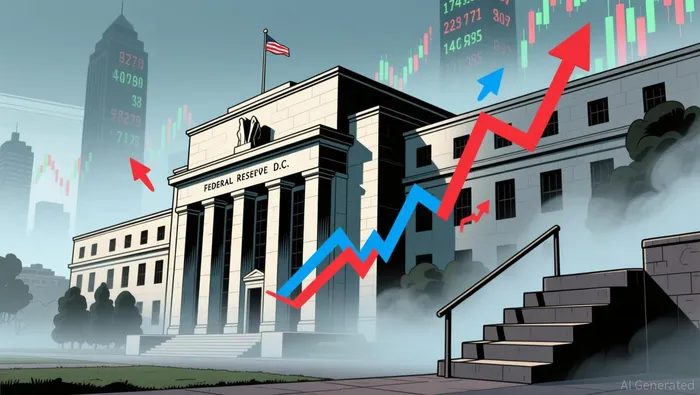
The December 2025 rate cut, which reduced the federal funds rate to 3.50–3.75%, marked the third consecutive reduction but came amid a backdrop of distorted economic data. A government shutdown delayed the release of October and November 2025 employment and inflation reports, leaving policymakers with an incomplete picture of the labor market and price trends. Fed Chair Jerome Powell emphasized the need for a "wait-and-see" approach, acknowledging that the central bank was operating in a "foggy" environment.
The labor market, a key focus for the Fed, has shown signs of softening. Payroll growth averaged 40,000 jobs per month since April 2025, but Powell cautioned that this figure might be overstated by 60,000 jobs, suggesting actual job creation could be negative. Meanwhile, the unemployment rate rose to 4.4%, and metrics like hires and quits in the Job Openings and Labor Turnover Summary (JOLTS) hit multi-year lows according to PIMCO analysis. These signals, albeit partial, have pushed the Fed toward further easing, though policymakers remain divided. The December 2025 FOMC statement reflected this tension, projecting only one additional rate cut for 2026, while market expectations priced in two.
Inflation: A Persistent Headwind
Inflation remains a critical constraint on the Fed's easing path. While core PCE inflation is expected to decline from 2.8% in September 2025 to 2.3% by year-end, the Conference Board warns that it could peak slightly above 3% in the first half of 2026. This trajectory reflects lingering effects of tariffs and structural challenges in disinflation. For bond investors, the persistence of inflation has tempered enthusiasm for long-duration assets. Instead, positioning has shifted toward intermediate maturities, such as five-year U.S. Treasuries, as a hedge against uncertain inflation outcomes.
The Fed's "neutral" policy stance-neither aggressively easing nor tightening-has created a tug-of-war between market participants and policymakers. Goldman Sachs Research forecasts two rate cuts in 2026, bringing the fed funds rate to 3–3.25% by year-end, but this optimism hinges on a noticeable labor market slowdown and continued inflation moderation according to Goldman Sachs analysis. The divergence between the Fed's cautious outlook and market expectations highlights the uncertainty surrounding the data vacuum.
Market Reactions: Treasuries and Equities in a Dovish Climate
The Fed's December 2025 rate cut initially spurred a rally in equities and Treasuries. The S&P 500 hit a record high of 6,900, while the 10-year Treasury yield fell to 4.19% and the 2-year note to 3.52% according to market analysis. However, these gains proved fleeting, as investors grappled with the Fed's signal of limited further easing. The market's pricing of two additional rate cuts in 2026-despite the Fed's official projection of one-reflects a belief that the labor market will weaken further and that inflation will remain stubbornly above target.
For equities, the Fed's dovish tilt has provided a supportive backdrop, particularly for growth sectors like technology and financials. Lower borrowing costs and accommodative financial conditions have buoyed risk assets, though stretched valuations and a K-shaped recovery-where wealthier households benefit disproportionately-have introduced caution according to PIMCO research. In fixed income, investors are prioritizing high-quality issuers and intermediate-term durations, balancing the potential for modest returns with the risk of inflation-driven yield volatility according to Schwab analysis.
The Path Forward: Data-Dependent Policy and Investor Adaptability
The Fed's January 2026 meeting will hinge on the release of delayed economic data, particularly October and November employment figures. If these reports confirm a weakening labor market, the case for additional rate cuts will strengthen, potentially reigniting equity gains and pushing Treasury yields lower. Conversely, signs of inflationary acceleration or labor market stabilization could prompt a more cautious-or even hawkish-stance according to RBC analysis.
Investors must also contend with structural shifts in the bond market. The shift toward intermediate maturities reflects a broader recognition that long-duration assets carry heightened inflation risk, even as the Fed signals easing. For equities, the focus on value-oriented stocks-priced attractively relative to growth peers-suggests a recalibration of risk preferences amid macroeconomic uncertainty according to Nationwide analysis.
Conclusion
The Fed's shallow easing cycle in 2026 is a product of its dual mandate to balance growth and inflation, complicated by a data-scarce environment. While the central bank remains committed to a data-dependent approach, its cautious stance has created a tug-of-war between market expectations and policy reality. For investors, the key to navigating this landscape lies in flexibility: hedging against inflation in fixed income while selectively capitalizing on equity sectors poised to benefit from lower borrowing costs. As the year unfolds, the release of delayed economic data will be pivotal in determining whether the Fed's easing path deepens-or falters.







Comentarios
Aún no hay comentarios