
The Fed's September Rate Cut: Implications for Equity Sectors and Bond Markets
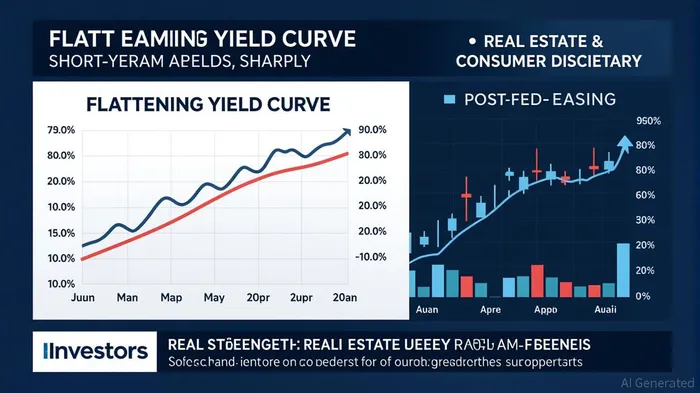
The Federal Reserve's anticipated 25-basis-point rate cut at its September 2025 meeting marks a pivotal shift in monetary policy, driven by a confluence of weakening labor market data and the inflationary pressures from President Donald Trump's expansive tariffs [4]. This decision, while primarily economic in nature, carries profound implications for equity sectors and bond markets, necessitating a strategic reevaluation of asset allocation.
The Rationale Behind the Rate Cut
According to a report by USA Today, the Fed's move reflects growing concerns over slowing job gains and rising unemployment, particularly in long-term categories [4]. Despite inflation remaining above the 2% target, the Board of Governors—now including Stephen Miran, a Trump appointee confirmed just before the meeting—has prioritized labor market conditions over inflationary risks [4]. Miran's dual role as an unpaid White House employee has sparked debates about the Fed's independence, yet the decision underscores a policy pivot toward stimulating growth amid tariff-driven uncertainty [4].
Sector-Specific Equity Market Responses
Equity markets are likely to experience divergent reactions. Sectors sensitive to borrowing costs, such as real estate and consumer discretionary, are poised to benefit from lower interest rates. Reduced mortgage rates could spur demand for housing, indirectly boosting real estate investment trusts (REITs) and construction-related stocks [2]. Similarly, consumer discretionary firms—ranging from luxury goods to travel services—may see improved profit margins as households allocate more spending to non-essential items [2].
However, the housing market's response remains ambiguous. While lower rates typically drive homebuyer activity, the interplay with broader economic conditions, such as the 10-year Treasury yield, could temper gains [2]. Investors should monitor regional housing data post-rate cut to gauge sector-specific momentum.
Bond Market Dynamics and Yield Curve Flattening
Bond markets are expected to react swiftly to the Fed's easing cycle. Short-term Treasury yields, particularly the 2-year note, may decline as investors price in reduced borrowing costs and dimmed growth expectations [4]. This trend could accelerate a flattening of the yield curve, a historical precursor to economic slowdowns. As noted by Kiplinger, the flattening reflects market skepticism about future rate hikes and a reevaluation of inflation risks amid Trump's tariffs [4].
Investors in fixed income should prioritize short-duration bonds to mitigate interest rate volatility. Municipal bonds, which often outperform during easing cycles due to tax advantages, may also attract capital inflows [2].
Strategic Asset Reallocation in an Easing Cycle
The Fed's rate cut signals the onset of a broader easing cycle, prompting a strategic rebalancing of portfolios. Equity allocations should favor sectors with high sensitivity to lower rates, such as utilities and consumer discretionary, while underweighting defensive sectors like healthcare [2]. In fixed income, a barbell strategy—combining short-term Treasuries with high-quality corporate bonds—could optimize returns amid yield curve flattening [4].
For investors seeking alternative exposures, real assets like commodities and real estate may offer inflation hedging, particularly as Trump's tariffs introduce supply-side risks [3]. However, these allocations require careful monitoring of geopolitical developments.
Conclusion
The September 2025 rate cut represents a critical inflection point for markets. By aligning asset allocation with sector-specific dynamics and bond market trends, investors can position portfolios to capitalize on an easing cycle while mitigating risks from policy uncertainty. As the Fed navigates the delicate balance between growth and inflation, agility in rebalancing will remain paramount.







Comentarios
Aún no hay comentarios