
The Fed's September Rate Cut: A Buying Opportunity Amid Inflation and Labor Market Clarity
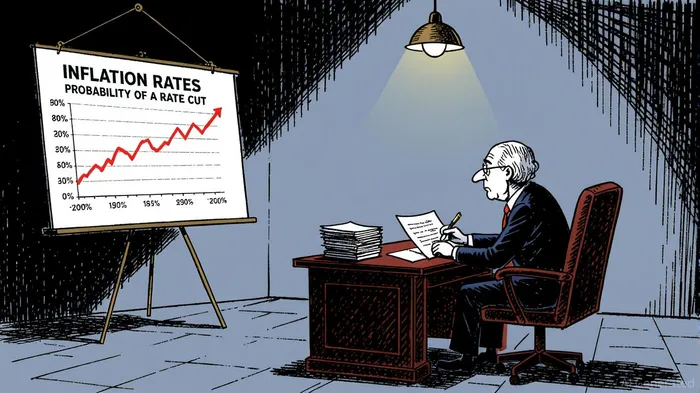
The Federal Reserve’s September 2025 policy decision has become a focal point for investors, with market expectations of a rate cut surging to 96% as of August 2025 [3]. This shift reflects a delicate balancing act: inflation remains stubbornly above the 2% target, yet labor market softness and slowing consumer spending have pushed the Fed toward accommodative action. For strategic investors, this juncture presents a nuanced opportunity to position portfolios for both short-term volatility and long-term growth.
Inflation: Persistent but Easing
The latest inflation data underscores a mixed picture. Annual CPI held steady at 2.7% in July 2025, while core CPI—a key Fed metric—rose to 3.1%, its highest level in five months [4]. Meanwhile, the PCE price index, which the Fed prioritizes, showed headline inflation at 2.6% and core PCE at 2.8% annually [3]. These figures, though elevated, mark a gradual cooling from the 9.1% peak in 2022. August data, estimated at 2.86% CPI and 3.02% core CPI [3], further suggests inflation is stabilizing but not yet under control.
The Fed’s dual mandate—price stability and maximum employment—now faces a critical test. While inflation remains a concern, the labor market’s deterioration has shifted focus. August’s nonfarm payrolls grew by just 22,000, far below forecasts, and the unemployment rate climbed to 4.3%, the highest since October 2021 [1]. Youth unemployment spiked to 10.5%, signaling fragility in a segment critical to long-term economic health [3]. These trends have intensified calls for a rate cut to avert a sharper slowdown.
Historical Lessons: Rate Cuts and Market Dynamics
Historical patterns offer guidance for investors. Over the past decade, the S&P 500 has averaged a 14.1% return in the 12 months following the first rate cut in a cycle [2]. Defensive sectors like utilities and real estate, which thrive on stable cash flows, have historically outperformed during easing cycles [1]. For example, during the 2000–2003 period, consumer staples and utilities gained 18% and 15%, respectively, as investors sought safety amid market uncertainty [1].
Bonds, too, have historically benefited from rate cuts. The “belly” of the yield curve (3–7 years) has outperformed in past easing cycles, offering a balance between yield and risk [1]. Investment-grade corporate bonds and Treasury Inflation-Protected Securities (TIPS) are particularly attractive in high-inflation environments [2]. Commodities, including gold and energy, have also served as hedges against inflation and currency devaluation [1].
Strategic Positioning: Balancing Growth and Defense
For investors, the September rate cut represents a pivotal moment to rebalance portfolios. Here’s how to approach key asset classes:
Equities: Prioritize sectors with strong cash flows and low sensitivity to interest rates. Utilities and real estate investment trusts (REITs) are prime candidates, given their historical resilience during rate cuts [1]. Industrial and healthcare REITs, in particular, could benefit from lower borrowing costs [1]. Large-cap tech stocks, supported by improved financing conditions, may also outperform [2].
Fixed Income: Short-term bonds are likely to outperform as yields fall. Intermediate-duration fixed-income investments, such as investment-grade corporate bonds and municipal bonds, offer a balance between yield and risk [1]. TIPS remain a critical hedge against inflation [2].
Commodities: Gold and energy assets should be included for diversification. Energy, in particular, could gain traction amid geopolitical tensions and trade policy shifts [4].
Alternatives: Managed futures funds and international equities can enhance portfolio resilience, especially in a “soft landing” scenario where inflation is controlled without a recession [2].
Risks and Cautions
While the case for a rate cut is compelling, investors must remain vigilant. Persistent inflation, though cooling, still poses risks to economic stability. Additionally, unanticipated geopolitical shocks or a sharper-than-expected slowdown could disrupt the Fed’s trajectory. For instance, during the 2007–2008 crisis, energy and materials outperformed while financials underperformed, highlighting the need for sector-specific risk assessments [1].
Conclusion
The Fed’s September rate cut is not merely a policy adjustment but a strategic inflection point for markets. By aligning portfolios with historical trends—favoring defensive equities, high-quality bonds, and inflation-hedging commodities—investors can capitalize on the Fed’s pivot while mitigating downside risks. As the September meeting approaches, the key will be to remain agile, leveraging both macroeconomic clarity and tactical flexibility.
Source:
[1] Strategic Asset Allocation 2025: A 3-to-5-Year Perspective [https://www.lpl.com/research/blog/strategic-asset-allocation-2025-a-3-to-5-year-perspective-of-markets.html]
[2] The Historical Implications of Federal Reserve Rate Cuts on Stock, Bond, and Gold Markets [https://centraltrust.net/the-historical-implications-of-federal-reserve-rate-cuts-on-stock-bond-and-gold-markets/]
[3] Inflation Data Reinforces September Rate Cut Outlook [https://hightoweradvisors.com/blogs/well-th-blog/inflation-data-reinforces-september-rate-cut-outlook]
[4] August 2025 Inflation Data: Will It Drive the Fed Toward a ... [https://certuity.com/insights/inflation-data-august-2025/]







Comentarios
Aún no hay comentarios