
Fed Rate Hold Implied: 91.7% Probability for April 29
Markets are placing a near-certain bet on a Fed hold. The CME FedWatch tool shows a 92.8% probability that the Federal Reserve will keep its benchmark rate unchanged at the April 29 meeting. This implies a near-zero chance of a rate cut, with the odds for a 25-basis-point hike standing at just 7.2%.
This conviction reflects a dovish tilt in the market's view. The dominant pricing suggests traders expect the Fed to maintain its data-dependent, patient stance rather than pivot under political pressure. The setup is for a continuation of the status quo, with liquidity and betting activity reinforcing the expectation of no change.
The Disconnect: Market Expectations vs. Fed Stance
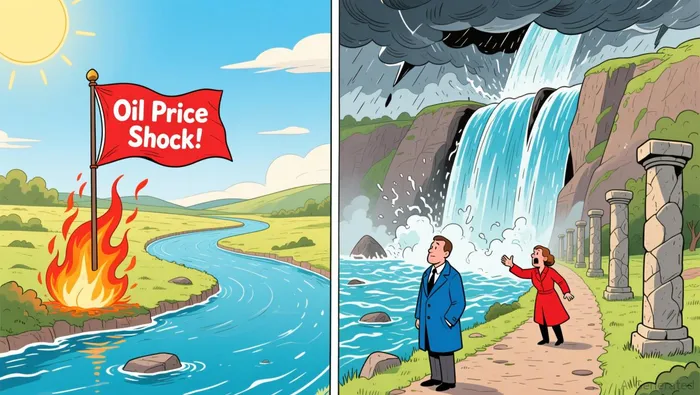
The Fed's official stance is one of patient data-dependence, not a hawkish pivot. The committee voted 11-1 to hold rates at 3.5%-3.75%, emphasizing that it will adjust policy only if new risks emerge. Its statement explicitly noted that the implications of developments in the Middle East for the U.S. economy are uncertain, and Chair Powell stated it was "too soon to know" the impact of the war. The median forecast still points to just one cut this year.
Markets, however, are repricing risk more aggressively. Just two days after the Fed meeting, futures pricing showed a 10.3% chance of a hike at the April 29 meeting, a level that was zero a month ago. This repricing reflects traders pricing in external pressures that the Fed is treating as a near-term uncertainty. The primary driver is the surge in oil prices above $111 per barrel, which the Fed acknowledged is likely reflecting the substantial rise in oil prices caused by the supply disruptions.
The disconnect is clear. The Fed is waiting for inflation data to confirm whether the oil shock is temporary or persistent, maintaining a patient, data-dependent approach. Markets, by contrast, are pricing in a more hawkish reaction function, betting that the energy price spike will force an earlier and more aggressive tightening cycle than the central bank's current projections suggest.
Catalysts and Risks: What Could Break the 92% Probability
The market's 92% conviction is a bet on stability. It assumes the Fed's data-dependent calculus will remain unchanged. That bet hinges on a few critical inputs.
The primary catalyst is incoming economic data. The Fed's own statement highlights that it will carefully assess incoming data to guide future moves. A surprise in the Producer Price Index (PPI) or a sharp deterioration in labor market reports could force a reassessment. If inflation pressures prove more persistent than expected, it would directly challenge the dovish market view that sees no near-term need for a hike.
Political pressure adds a layer of uncertainty not priced in. President Trump has persistently pressed Powell to lower interest rates, asking publicly when "Too Late" the Fed will act. While markets currently assign a near-zero probability to a cut, sustained political noise can influence the Fed's communication and market psychology, creating a risk of a policy pivot that isn't fully reflected in current probabilities.
Geopolitical developments, particularly the Iran conflict, pose the most immediate threat to the consensus. The conflict has already driven oil prices above $111 per barrel, a key input the Fed acknowledged as a potential inflationary risk. If the conflict escalates further, spiking energy costs and reigniting inflation fears, it would force the Fed to confront a scenario it is currently treating as a near-term uncertainty. This could trigger a rapid repricing of the market's outlook, breaking the current 92% hold probability.







Comentarios
Aún no hay comentarios