
The Fed's Rate-Cutting Cycles: Market Patterns, Sector Winners, and Investor Opportunities
The Federal Reserve's rate-cutting cycles have long been a focal point for investors, shaping market dynamics through their influence on liquidity, inflation, and economic growth. Historical analysis reveals a nuanced picture: while two out of 10 rate-cut cycles since the 1970s avoided recession, the 2024 cycle may now join this rare group if a soft landing materializes[1]. For investors, understanding these cycles' patterns—sectoral shifts, volatility trends, and asset-class performance—is critical to positioning portfolios for both near-term turbulence and long-term gains.
Historical Market Patterns: Volatility and Resilience
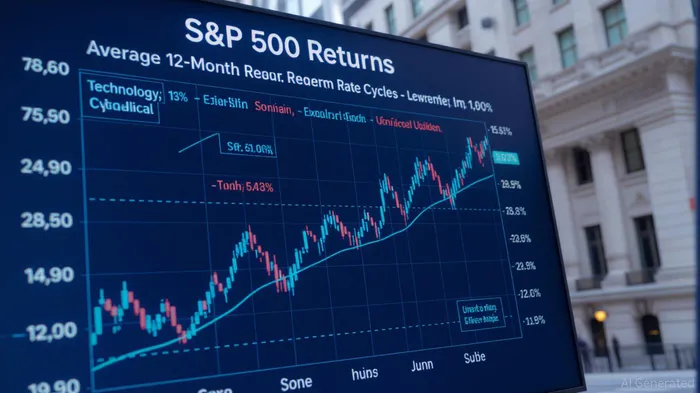
The U.S. stock market has historically delivered 14.1% average returns in the 12 months following the start of a Fed rate-cut cycle since 1980[2]. However, this optimism is tempered by short-term volatility. In the three months before and after the first rate cut, volatility often spikes to 22.5%, far exceeding the average of 15%[2]. This turbulence reflects market uncertainty about the Fed's intent—whether cuts are preemptive (e.g., 1995, 2019) or reactive to a recession. For instance, during the 2024 cycle, the S&P 500 initially dipped but rebounded sharply, signaling a potential soft landing[2].
Inflation dynamics further complicate the picture. While rate cuts typically suppress inflation during the easing phase, consumer spending often rebounds post-cut, pushing inflation upward again within a year[2]. This reflationary risk underscores the need for investors to balance defensive and cyclical assets.
Sector Winners and Losers: Cyclical vs. Defensive Shifts
Sector performance during rate-cut cycles is far from uniform. Technology has historically outperformed due to its sensitivity to lower borrowing costs and secular growth drivers like AI adoption[1]. Similarly, Consumer Cyclical and Financial sectors benefit from improved consumer spending and margin expansion[1]. For example, during the 2019 easing cycle, the Financial sector's average return exceeded 20% in the 12 months post-cut[2].
Conversely, Health Care and Consumer Staples often exhibit mixed results. While these sectors offer stability, regulatory headwinds or sluggish demand can drag performance. Defensive sectors like Utilities and Health Care tend to lead in the early stages of a cycle, but their outperformance wanes as growth sectors gain momentum[2].
Small and mid-cap stocks also show a distinct edge. Cheaper financing boosts their earnings growth potential, historically outperforming large-cap counterparts by 5–10% in the first year of a rate-cut cycle[2]. This dynamic was evident in the 2024 cycle, where mid-cap REITs and tech firms surged as capital costs fell[2].
Investor Strategies: Diversification and Tactical Positioning
Navigating rate-cut cycles requires a dual focus on risk mitigation and opportunity capture. Fixed-income investors should prioritize intermediate- and long-term government and corporate bonds, which historically appreciate as rates decline[2]. However, reflation risks—particularly in strong economies—warrant caution with long-duration bonds. Mortgage-backed securities and short-term Treasuries offer a balanced alternative[2].
Equity investors can adopt a phased approach:
1. Early Cycle: Overweight defensive sectors (Health Care, Utilities) and high-quality stocks, which tend to hold up during volatility[2].
2. Mid to Late Cycle: Shift toward cyclical sectors (Technology, Consumer Discretionary) and small/mid-cap equities as economic momentum builds[2].
Gold and real estate also play a role. Gold historically outperforms during easing cycles, acting as a hedge against inflation and uncertainty[2], while real estate gains from lower borrowing costs and improved occupancy rates[2].
Global Opportunities and the Role of Currency
The Fed's rate cuts can reshape global markets. A weaker U.S. dollar, often a byproduct of easing, boosts non-U.S. equities by improving export competitiveness and reducing foreign debt burdens[2]. For instance, emerging-market stocks historically outperformed during the 1995 and 2019 cycles[2]. Investors should consider diversifying geographically to capitalize on these dynamics.
Conclusion: Preparing for the Next Cycle
The 2024–2025 rate-cut cycle has already demonstrated the potential for a soft landing, with the S&P 500 rebounding after initial volatility[2]. While historical patterns provide guidance, investors must remain agile. A diversified portfolio—blending defensive equities, high-quality bonds, and global exposure—can weather short-term turbulence while positioning for long-term gains. As the Fed's next moves unfold, strategic sector rotation and active risk management will be paramount.







Comentarios
Aún no hay comentarios