
Fed Rate Cuts and Sectoral Opportunities: High-Conviction Stock Picks in 2025
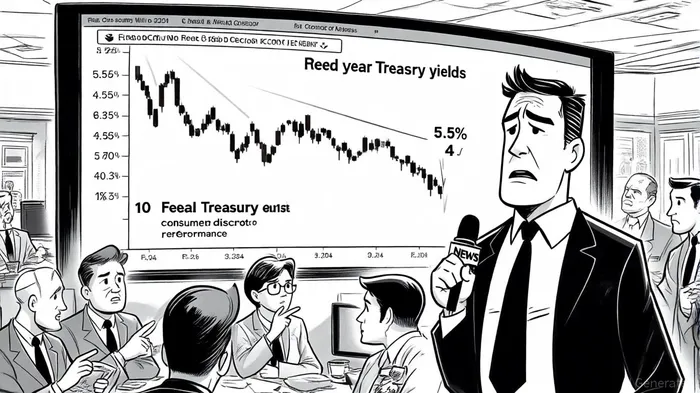
The Federal Reserve's aggressive rate-cutting cycle since 2023 has reshaped the investment landscape, unlocking new opportunities in sectors historically sensitive to borrowing costs. As of September 2025, the Fed's policy pivot has driven the 10-year Treasury yield below 4%, pushing 30-year mortgage rates to 6.35%—a level that, while still elevated, signals a thawing in sectors like real estate and consumer discretionary. This analysis identifies high-conviction stock picks across financials, real estate, and consumer discretionary, leveraging recent fundamentals, analyst ratings, and macroeconomic trends.
Financials: Capital One and D.R. Horton Lead the Charge
The financial sector's response to rate cuts has been mixed. While the Financial Services sector posted a 15.65% YTD return on Yahoo Finance, Bloomberg data shows broader financials lagging with a -0.66% decline as of September 10, 2025[3]. However, two names stand out: Capital One Financial (COF) and D.R. Horton (DHI).
Capital One has emerged as a top pick following its acquisition of Discover Financial Services, creating the largest U.S. credit card issuer. Goldman SachsGS-- projects 34% earnings growth over the next two years, driven by scale and a recovering capital markets environment[1]. With a P/E ratio of 12.3x and a dividend yield of 2.1%, COF offers both growth and income potential.
D.R. Horton, the nation's largest homebuilder, faces a cautious outlook. Analysts at Wells FargoWFC-- and UBSUBS-- upgraded their price targets to $190 and $215, respectively, citing improved free cash flow and Fitch's upgraded credit profile[4]. Despite a “Hold” consensus rating, DHI's low leverage and exposure to a potential housing rebound make it a compelling long-term play.
Real Estate: REITs and Housing Market Catalysts
Real estate stocks have historically underperformed during high-rate environments, but the 2025 rate cuts have sparked optimism. The Real Estate Select Sector SPDRXLRE-- ETF (XLRE) remains 12% below its 2024 peak, but technical indicators suggest a potential breakout if the 10-year yield stays below 4%[1].
Digital Realty Trust (DLR) is a standout in the REIT space. With a 10.5% average price target increase to $182.62, analysts like UBS's John Hodulik ($205 target) and Wells Fargo's Eric Luebchow ($210 target) highlight its exposure to AI-driven data center demand[4]. Digital Realty's 2.8% dividend yield and 15% revenue growth from cloud infrastructure make it a defensive-growth hybrid.
For housing market catalysts, Brookfield and Opendoor Technologies are gaining traction. Brookfield's stock surged 60% year-to-date, reflecting its pivot to alternative assets like renewable energy and infrastructure. OpendoorOPEN--, a digital real estate platform, has seen a 460% rally in 2025, capitalizing on streamlined homebuying processes[1].
Consumer Discretionary: Tesla and Best Buy Ride the Rate-Cut Wave
The consumer discretionary sector's resilience in 2025 has defied early-year pessimism. The Consumer Discretionary Select Sector SPDR Fund (XLY) reclaimed its 200-day moving average in August, with support near $220[3]. Two names—Tesla (TSLA) and Best Buy (BBY)—are positioned to benefit from lower borrowing costs and pent-up demand.
Tesla faces a -26.1% downside from its current price of $410, per a $303 average price target from 41 analysts[4]. However, Morgan Stanley's “Overweight” rating and Wedbush's $500 target reflect confidence in its FSD (Full Self-Driving) software monetization and global EV adoption. Tesla's 15% revenue growth in Q2 2025 underscores its structural tailwinds.
Best Buy offers a more conservative play. With a 14.75% upside potential from its $73.59 price (average target: $84.44), analysts highlight its omnichannel strategy and margin expansion in home tech services[2]. The stock's 10 “Buy” ratings out of 20 reflect optimism about its ability to outperform in a rate-cut environment.
Risks and Watchpoints
While the Fed's rate cuts create tailwinds, investors must remain cautious. For real estate, mortgage rates may only dip to 6.7% by year-end, leaving affordability challenges unresolved[5]. In consumer discretionary, a dip in University of Michigan's consumer sentiment index to 71.1 in January 2025 signals lingering fragility[3].
Conclusion
The 2025 rate-cut cycle has created asymmetric opportunities in sectors tied to borrowing costs. Capital One and Digital Realty offer growth and income, while Tesla and Best Buy capitalize on consumer spending tailwinds. For housing, D.R. Horton and Opendoor provide exposure to a potential market thaw. As always, monitor the Fed's next moves and sector-specific catalysts—like AI infrastructure demand or housing inventory trends—to time entries effectively.





Comentarios
Aún no hay comentarios