
Fed Rate Cuts and Regional Manufacturing Vulnerabilities: Strategic Sector Rotation in Late-Cycle Markets
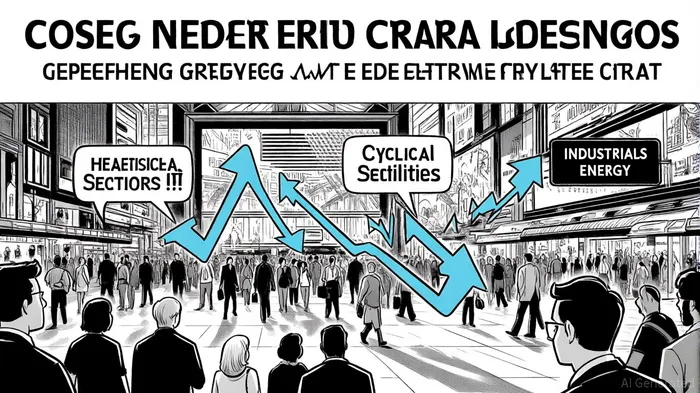
The Federal Reserve's September 2025 rate cut—lowering the federal funds rate to 4.00%-4.25%—marks a pivotal shift in monetary policy, signaling a cautious pivot toward economic stimulus amid cooling labor markets and easing inflation[2]. While the move aims to bolster growth, its impact on the U.S. manufacturing sector remains uneven, particularly as regional vulnerabilities and sub-sector dynamics complicate the broader narrative. For investors, understanding these nuances is critical to navigating late-cycle markets through strategic sector rotation.
The Fed's Rate Cut and Manufacturing Sector Dynamics
The first rate cut of 2025, accompanied by the FOMC's Summary of Economic Projections (SEP), projects two additional cuts by year-end, with the federal funds rate expected to reach 3.6% by December[3]. However, the manufacturing sector's response to these cuts is far from uniform. Small and medium-sized enterprises (SMEs) stand to benefit from reduced borrowing costs, enabling reinvestment in hiring or expansion[2]. Conversely, sub-sectors like construction materials face structural headwinds, as affordability challenges and housing market imbalances limit the immediate impact of lower rates[4].
Regional disparities further amplify this complexity. According to CBRE's Economic Watch, gateway markets with strong professional services and logistics demand are poised for moderate leasing growth, while rural and nonmetro areas—historically reliant on manufacturing—struggle with automation-driven job losses and lower educational attainment[5]. The September 2025 Manufacturing Business Outlook Survey also highlights uneven regional performance, with firms in Texas and Florida reporting optimism about production growth, while Midwest manufacturers express caution due to inventory overhangs[6].
Strategic Sector Rotation: Balancing Defensive and Cyclical Bets
Historical data from past Fed rate-cutting cycles offers a roadmap for investors. Defensive sectors such as healthcare, utilities, and consumer staples have historically outperformed in late-cycle environments, as markets shift toward risk-off positioning[7]. For example, the SPDR S&P Biotech ETF (XBI) and the Vanguard Real Estate ETF (VNQ) have demonstrated resilience during periods of monetary easing, offering downside protection through dividend yields and inflation hedging[8].
Conversely, cyclical sectors like industrials and energy require careful timing. While energy and materials sectors often thrive in late-cycle environments due to inflation-linked demand[9], manufacturing firms tied to these industries may face margin pressures from rising input costs. A disciplined approach—rotating into energy ETFs while reducing exposure to capital-intensive manufacturing—can mitigate these risks.
Actionable Insights for Investors
To address regional manufacturing vulnerabilities, investors should adopt a dual strategy:
1. Defensive Positioning: Allocate to sectors with inelastic demand, such as healthcare and utilities, to buffer against economic slowdowns. The iShares Russell 2000 ETF (IWM) also offers exposure to small-cap stocks, which historically benefit from Fed easing[8].
2. Regional Diversification: Prioritize regions with resilient manufacturing ecosystems, such as Texas and Florida, while hedging against nonmetro vulnerabilities through ETFs like the Aptus Collared Investment Opportunity ETF (ACIO), which provides downside protection[8].
Additionally, leveraging macroeconomic indicators—such as the ISM PMI and yield curve inversions—can refine sector rotation timing. For instance, a narrowing yield curve often precedes economic slowdowns, prompting a shift toward defensive sectors[10].
Conclusion
The Federal Reserve's 2025 rate cuts present both opportunities and challenges for the manufacturing sector. While lower borrowing costs may stimulate SMEs and gateway markets, regional disparities and sub-sector headwinds necessitate a nuanced approach. By integrating historical sector rotation strategies with real-time economic signals, investors can navigate late-cycle volatility while capitalizing on emerging growth areas. As the Fed's policy trajectory unfolds, agility and diversification will remain paramount.







Comentarios
Aún no hay comentarios