
Why Further Fed Rate Cuts Are Not a Given – and Why Investors Should Prepare for a Prolonged Tight Policy Regime
Inflation Persistence: A Reluctant Victory Over Price Stability
The Fed's battle against inflation has entered a new phase. Core CPI for September 2025 rose 0.3% month-over-month, maintaining a 3.0% year-over-year rate, while core PCE is projected to inch up 0.26% in the same period, according to Seeking Alpha. These figures, though lower than the peak of 2022-2023, remain significantly above the 2% target. The Atlanta Fed's inflation dashboard underscores this reality: the central bank is overshooting its target in all nine key measures, with core CPI and PCE each exceeding the threshold by 0.9-1.0 percentage points, according to MishTalk.
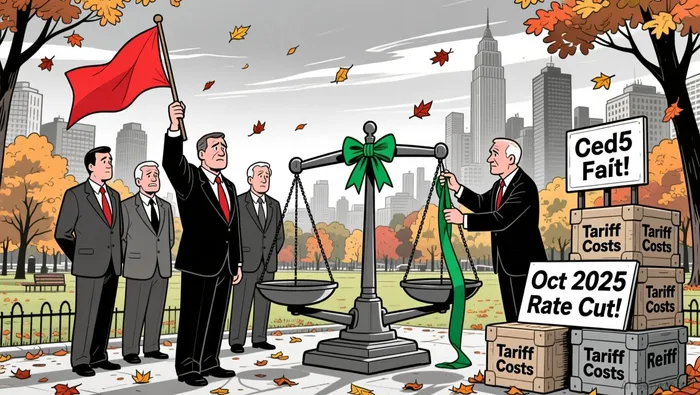
Fed Governor Lisa Cook has acknowledged that inflation is on track to trend toward 2% once the effects of tariffs subside, but she has warned of "forceful" action if these pressures persist, as noted in a Bitcoin News report. This caution is warranted. Tariffs, which have artificially inflated costs for goods and services, remain a wildcard. UBS analysts note that a Supreme Court ruling against Trump-era tariffs could force the government to refund $140 billion, potentially easing inflationary pressures-but only if the legal uncertainty is resolved swiftly, according to a Bitget report. Until then, the Fed is unlikely to gamble on aggressive rate cuts.
Labor Market Fragility: A Delicate Rebalancing
The labor market, once a pillar of resilience, now shows cracks. Job creation has slowed to approximately 30,000 new positions per month, a pace consistent with a rebalancing economy but far below the explosive growth of 2021-2022, according to a MarketMinute report. The unemployment rate, at 4.3% in August 2025, remains below the Congressional Budget Office's non-cyclical estimate of 4.4%, suggesting the market is still near full employment, as noted in a Coinotag article. However, wage growth has moderated, with average hourly earnings rising 3.7% year-over-year-a decline from 4.1% in January 2025, according to a MarketMinute report. Real earnings, adjusted for inflation, have even dipped slightly, eroding purchasing power for workers, as noted in a MarketMinute report.
This moderation is not a sign of weakness but a recalibration. The labor market is adjusting to a lower breakeven rate of job creation, driven by demographic shifts, reduced immigration, and cyclical participation trends, as noted in a MarketMinute report. Yet, the Fed remains wary. As Governor Cook noted, the employment landscape is "solid, though gradually cooling," with growing risks for vulnerable households, as noted in a Bitcoin News report. This duality-strength in employment metrics but fragility in wage dynamics-complicates the Fed's calculus.
Policy Implications: A Data-Driven, Cautious Approach
The Fed's recent actions reflect this cautious stance. On October 29, 2025, the central bank cut the federal funds rate by 25 basis points, bringing it to a range of 3.75–4%, according to a WIMA report. This marked the second cut of the year but was accompanied by a pause in balance sheet reduction, signaling a shift toward policy stability, according to a Yahoo Finance report. The FOMC emphasized that future decisions will hinge on incoming data, with the next meeting scheduled for December 10, as noted in a WIMA report.
However, the path forward is far from clear. The Fed's reliance on alternative data sources-such as real-time hiring rate estimates and layoff metrics-highlights its preparedness for disruptions like potential government shutdowns, according to a Fox Business report. This underscores a broader theme: the central bank is prioritizing flexibility over predictability. Investors should expect a policy regime where rate cuts are contingent on specific thresholds being met, rather than a preordained easing cycle.
Conclusion: Preparing for a Prolonged Tight Regime
For investors, the message is clear: further rate cuts are not a given. The Fed's dual mandate dilemma-balancing inflation control with labor market support-has created a policy environment where caution prevails. Inflation persistence, coupled with a labor market in delicate rebalancing, means that prolonged tight policy is likely. This could weigh on sectors sensitive to higher borrowing costs, such as housing and small-cap equities, while favoring defensive assets like utilities and Treasury bonds.
As the Fed navigates this complex landscape, investors must remain agile. The key is to avoid overreacting to short-term volatility and instead focus on the structural forces shaping monetary policy. After all, in a world where inflation is a stubborn adversary and labor markets are fragile allies, the Fed's patience may prove to be the ultimate policy tool.






Comentarios
Aún no hay comentarios