
Fed Rate Cuts and the Implications for Equity and Bond Markets
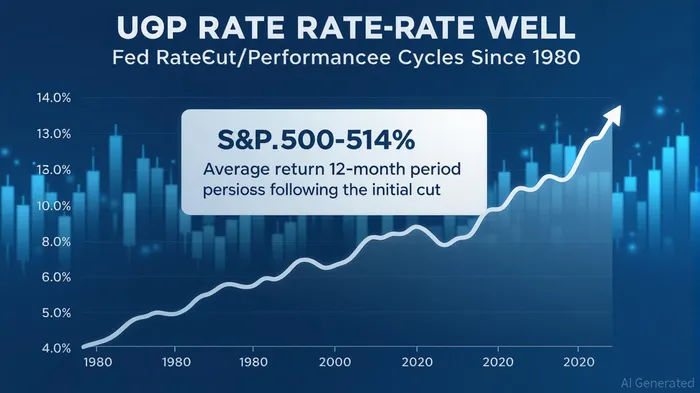
The Federal Reserve's anticipated easing of monetary policy in 2025 has sparked a strategic shift in global capital markets. With a 25 basis point rate cut expected in September 2025, followed by further reductions in October and December, investors are recalibrating portfolios to capitalize on the implications of lower borrowing costs [1]. This shift, driven by weaker labor market data and persistent inflation above the 2% target, marks a pivotal moment for asset allocation strategies.
Equity Market Implications: Sector Rotation and Volatility
Historical patterns suggest equities will outperform cash in the wake of rate cuts, though sector performance will diverge. Defensive sectors such as healthcare, consumer staples, and utilities have historically led in the early stages of easing cycles, buoyed by stable cash flows and reduced discounting pressures [3]. For instance, during the 1995 rate-cut cycle, healthcare and telecommunications outperformed despite the nascent internet boom, which initially hurt tech stocks [3].
Small-cap stocks and regional banks also stand to benefit. Lower rates reduce financing costs for smaller businesses and stimulate demand for housing, which could lift homebuilders and regional banks whose portfolios were strained by prior rate hikes [3]. However, investors must remain cautious: the initial three months post-rate cut often see heightened volatility as markets digest policy shifts [1].
Bond Market Dynamics: Yield Prioritization and Duration Management
In bond markets, the focus is shifting from duration to yield. Short- and intermediate-term bonds are expected to outperform as falling rates drive up prices, while long-dated bonds may lag in a non-recessionary environment [1]. BlackRockBLK-- highlights that investors are increasingly prioritizing income generation over duration risk, leveraging high-quality, short-maturity bonds to capture historically elevated yields at the front end of the yield curve [1].
Municipal bonds and European fixed income are emerging as strategic allocations. Tax-exempt munis offer steady returns with low inflation exposure, while European bonds provide diversification amid global uncertainties [1]. Schwab's Fixed Income Outlook notes that term premiums have risen due to policy uncertainty and U.S. debt dynamics, making international bonds an attractive hedge against domestic volatility [2].
Strategic Asset Reallocation: Balancing Growth and Income
For investors, the key lies in balancing growth and income opportunities. Reducing high cash allocations in favor of higher-yielding fixed-income instruments aligns with the Fed's easing trajectory. Equities should be weighted toward sectors with strong cash flow resilience, while small-cap and regional bank stocks offer growth potential [3].
Duration management requires nuance. With long-term rates decoupling from Fed policy, investors should focus on short-term maturities and global markets to mitigate risk [1]. Diversification across asset classes—including real estate and REITs—can further capitalize on lower borrowing costs, which improve financing conditions for property developers [3].
Conclusion: Navigating the New Normal
The Fed's 2025 rate cuts signal a structural shift in monetary policy, demanding proactive portfolio adjustments. By leveraging historical sector performance, prioritizing income-generating bonds, and diversifying across geographies, investors can position themselves to thrive in an era of easing rates. As Chair Powell emphasized, the path forward remains cautious, but the tools to navigate it are clear.







Comentarios
Aún no hay comentarios