
Fed Rate Cuts on the Horizon: Cyclical Sectors Poised for a Comeback
The August 2025 U.S. jobs report delivered a stark warning: the labor market is cooling, and the Federal Reserve is likely to respond with a 50-basis-point rate cut in September. Nonfarm payrolls rose by just 22,000 jobs, far below expectations, while the unemployment rate climbed to 4.3%, the highest since 2021 [1]. The report underscored a broader slowdown, with manufacturing shedding 12,000 jobs and federal employment declining by 15,000 positions. These trends, coupled with the Fed’s Beige Book highlighting “widespread economic and labor market challenges,” have shifted the central bank’s focus from inflation to growth [2].
The Fed’s Dovish Pivot: A 50bps Cut in the Cards?
Market expectations for a September rate cut have crystallized, with two-year Treasury yields dropping to reflect a near-certainty of easing [3]. The Fed’s dilemma is clear: while inflation remains stubbornly above 3%, the labor market’s fragility—evidenced by a declining labor force participation rate and shrinking average workweek—has forced a recalibration. As stated by Bloomberg analysts, “The Fed is now prioritizing labor market stability over inflation control, with a 50bps cut seen as a necessary stimulus to avert a deeper slowdown” [4].
Cyclical Sectors: Winners in a Rate-Cut Regime
Historical patterns suggest that aggressive monetary easing disproportionately benefits cyclical sectors. Here’s how key industries could fare:
1. Small-Cap Stocks: The Forgotten Engine of Growth
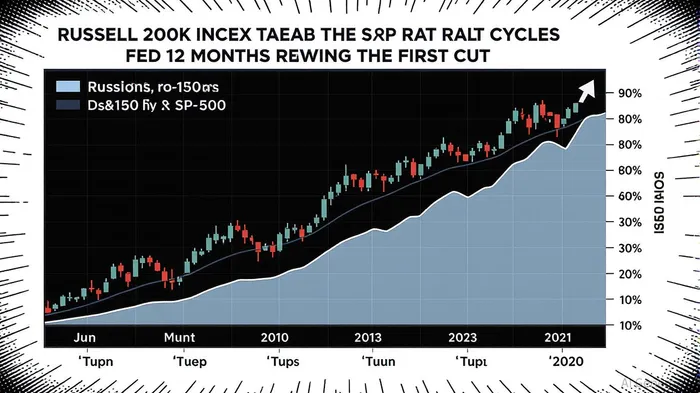
Small-cap equities, particularly in industrials and construction, have historically outperformed during rate-cut cycles. For example, the Russell 2000 surged 8% in the 12 months following the 2020 rate cuts, outpacing the S&P 500’s 16% gain [5]. Lower borrowing costs reduce debt servicing burdens for small-cap firms, many of which rely on variable-rate debt. With valuations trading at multi-decade discounts to large-cap peers, the sector is primed for a rebound [6].
2. Autos: Refinancing the Road to Recovery
The automotive sector, which lost 12% of its value during the 2009 recession, has shown resilience in recent cycles. Lower rates make auto loans more affordable, boosting demand for new vehicles. In 2020, the sector gained 40% as stimulus checks and low financing rates spurred consumer spending [7]. With mortgage rates already trending downward, automakers like Ford and TeslaTSLA-- could see a surge in sales.
3. Airlines: Fueling a Post-Rate-Cut Boom
Airlines are uniquely sensitive to interest rates due to their capital-intensive nature. Reduced rates lower financing costs for fleet upgrades and debt restructuring. During the 2020 easing cycle, the sector gained 25% as travel demand rebounded [8]. With business travel expected to rebound in 2026, carriers like DeltaDAL-- and American AirlinesAAL-- could see improved margins.
4. Homebuilders: Building on a Foundation of Low Rates
Homebuilders stand to benefit from lower mortgage rates, which could alleviate the housing affordability crisis. In 2024–2025, the sector saw a 14% rebound as rate cuts began to take hold [9]. Companies like LennarLEN-- and D.R. HortonDHI-- are already seeing improved buyer confidence, with the National Association of Home Builders’ index hitting a 12-month high in August [10].
5. Industrials: The Backbone of a Dovish Economy
Industrials, including machinery and logistics firms, thrive in low-rate environments. The sector gained 18% in 2020 as manufacturing activity rebounded [11]. With the Fed’s easing likely to spur infrastructure spending and corporate investment, industrials could outperform as a proxy for broader economic recovery.
Risks and Considerations
While the case for cyclical sectors is compelling, risks remain. A 50bps cut could reignite inflation if supply chain bottlenecks persist or if global tariffs drive up input costs [12]. Additionally, geopolitical tensions—such as the ongoing U.S.-China trade war—could disrupt sector-specific gains. Investors should also monitor the Fed’s October and December meeting minutes for clues on the pace of future cuts.
Conclusion: Positioning for the Dovish Cycle
The August jobs report has set the stage for a Fed pivot toward easing. Cyclical sectors, particularly small-cap stocks, autos, airlines, homebuilders861160--, and industrials, are best positioned to capitalize on lower borrowing costs and renewed economic optimism. However, a balanced approach—combining sector rotation with defensive holdings—remains prudent in a landscape where inflation and geopolitical risks linger.
Source:
[1] U.S. Labor Market Stalled This Summer, With August Data [https://www.nytimes.com/live/2025/09/05/business/jobs-report-august-economy]
[2] The Fed - Monetary Policy: Beige Book (Branch) [https://www.federalreserve.gov/monetarypolicy/beigebook202508-summary.htm]
[3] US Jobs Market Stalls in August While Unemployment Rises [https://www.bloomberg.com/news/live-blog/2025-09-05/us-employment-report-for-august]
[4] Dismal August Jobs Report Offers Rate-Cut Relief [https://www.kiplinger.com/investing/economy/dismal-august-jobs-report-rate-cuts-fed]
[5] Fed's Rate Cut Window to Open: A Comprehensive Analysis [https://news.futunn.com/en/post/60553433/fed-s-rate-cut-window-to-open-a-comprehensive-analysis]
[6] The Fed's Dovish Pivot and Small Cap Outperformance [https://www.ainvest.com/news/fed-dovish-pivot-small-cap-outperformance-tactical-shift-equities-2508/]
[7] 7 Types of Stocks to Buy if Interest Rates Decline [https://money.usnews.com/investing/articles/interest-rate-cut-stocks]
[8] Weak US Jobs Data Strengthens Case for Fed Rate Cuts [https://www.investing.com/analysis/weak-us-jobs-data-strengthens-case-for-fed-rate-cuts-200666467]
[9] The Fed's September Rate Cut: A Strategic Inflection PointIPCX-- [https://www.ainvest.com/news/fed-september-rate-cut-strategic-inflection-point-equity-fixed-income-markets-2509/]
[10] Buffett Bets Nearly $1B on Homebuilder Stocks LEN, DHI [https://www.marketbeat.com/stock-ideas/with-rate-cuts-ahead-buffett-backed-builders-look-like-a-buy/]
[11] Fed's Rate Cut Window to Open: A Comprehensive Analysis [https://news.futunn.com/en/post/60553433/fed-s-rate-cut-window-to-open-a-comprehensive-analysis]
[12] The Fed's Dilemma: Recessionary Signals vs. Rate-Cut Optimism [https://www.ainvest.com/news/fed-dilemma-recessionary-signals-rate-cut-optimism-2509]







Comentarios
Aún no hay comentarios