
Fed Rate Cuts and Cryptocurrency Volatility: How Dovish Policy Fuels Bitcoin's Inflation Hedge Narrative
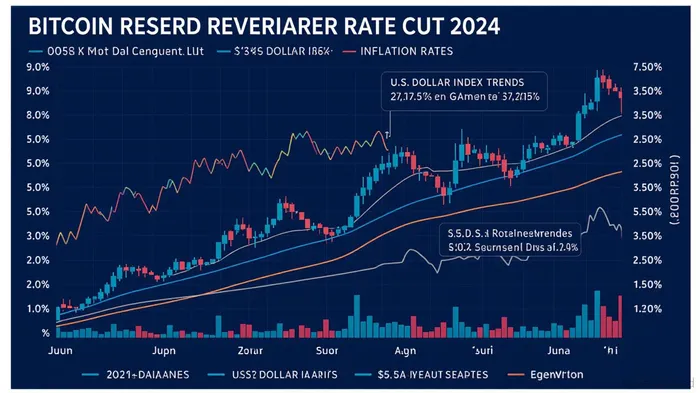
The Federal Reserve's dovish pivot in 2025 has reignited debates about Bitcoin's role as an inflation hedge and a beneficiary of accommodative monetary policy. With two rate cuts already enacted in 2025—reducing the federal funds rate to 3.50–3.75% by year-end—and projections of further reductions in 2026, the central bank's strategy reflects a growing emphasis on stabilizing a weakening labor market and managing inflation risks[2]. This shift has created a fertile environment for cryptocurrencies, particularly BitcoinBTC--, which has historically thrived under low-interest-rate regimes.
Dovish Policy and Capital Reallocation
Lower interest rates reduce the opportunity cost of holding non-yielding assets like Bitcoin, incentivizing investors to reallocate capital from traditional safe havens (e.g., bonds) to riskier, inflation-protected assets. According to a report by MarketBeat, the September 2025 rate cut is expected to weaken the U.S. dollar and boost liquidity, directly benefiting Bitcoin as a store of value[1]. This dynamic aligns with historical patterns: during the 2020 pandemic-driven rate cuts, Bitcoin surged from $4,000 to nearly $30,000 as liquidity injections and stimulus measures fueled risk-on sentiment[4]. Similarly, a 50-basis-point cut in 2024 coincided with a 5% price jump, reinforcing the asset's sensitivity to monetary easing[5].
Empirical studies further underscore this relationship. A 2025 white paper by Cognac suggests that a 1% reduction in the federal funds rate could correlate with a 13.25–21.20% rise in Bitcoin's price, driven by its inelastic supply and high-beta characteristics[2]. While Bitcoin's correlation with inflation metrics like the CPI remains inconsistent, its strong positive relationship with equity indices (e.g., S&P 500) during market stress highlights its role as a proxy for risk appetite[4].
Institutional Adoption and Macro Trends
Institutional investors have amplified Bitcoin's appeal during rate cut cycles. The 2024–2025 Fed easing spurred increased allocations to Bitcoin ETFs and mining infrastructure, with firms like CleanSparkCLSK-- gaining traction as inflation hedges[1]. Analysts note that lower rates reduce the cost of capital for crypto projects and make Bitcoin more attractive to international investors seeking dollar diversification[3]. However, this optimism is tempered by stagflation risks—where high inflation persists alongside economic stagnation—which could limit Bitcoin's upside if growth forecasts falter[2].
Risks and Nuances
While dovish policy supports Bitcoin, the Fed's communication tone remains critical. A “hawkish” pivot—such as signaling premature tightening—could trigger volatility, as seen in 2019 when rate cuts failed to catalyze a sustained Bitcoin rally[5]. Additionally, regulatory uncertainties and macroeconomic headwinds (e.g., a potential 2026 recession) may dampen investor confidence, even in a low-rate environment[4].
Conclusion
The interplay between Fed rate cuts and Bitcoin's performance underscores the cryptocurrency's evolving role in modern portfolios. As central banks prioritize inflation control and labor market stability, Bitcoin's appeal as a digital inflation hedge—and a beneficiary of liquidity-driven capital flows—remains compelling. However, investors must balance this potential with macroeconomic risks and the Fed's evolving policy narrative.





Comentarios
Aún no hay comentarios