
The Fed's Rate Cut Path Amid a Stalling U.S. Labor Market
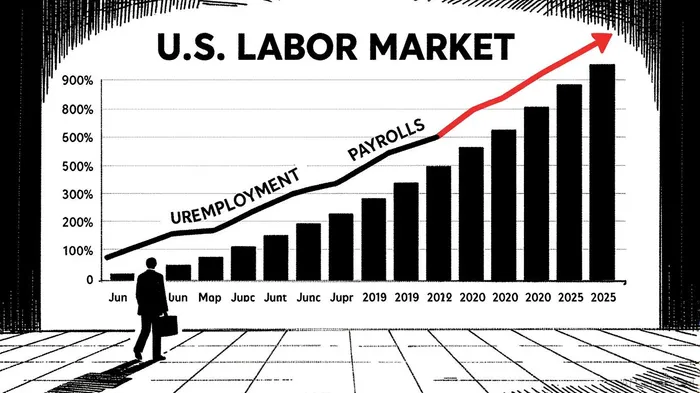
The U.S. labor market is flashing red. August 2025’s nonfarm payrolls report revealed a mere 22,000 jobs added—far below the 75,000 forecast—and marked the second consecutive month of subpar growth, with June’s data revised to show a net loss of 13,000 jobs [2]. The official unemployment rate climbed to 4.3%, the highest since 2021, while a broader measure of labor underutilization hit 8.1%, signaling deeper structural strains [2]. These numbers have crystallized a critical inflection point: the Federal Reserve is now squarely focused on easing monetary policy to avert a protracted slowdown.
The Fed’s Balancing Act: Inflation vs. Employment
Federal Reserve Chair Jerome Powell’s August 22 speech underscored a pivotal shift in the central bank’s calculus. “The current policy rate is 100 basis points closer to neutral compared to a year ago,” he noted, acknowledging that the labor market’s fragility has tilted the balance of risks toward recession [3]. Market pricing reflects this pivot: traders are now pricing in a 100% probability of a 25-basis-point rate cut at the September 17 meeting, with a 14% chance of a 50-basis-point move [2]. By December, expectations for cumulative cuts of 75 basis points (three 25-basis-point reductions) have surged, per the CME FedWatch tool [4].
The Fed’s dilemma is stark. While inflation remains stubbornly above 2%, the labor market’s deterioration—exacerbated by tariff-driven supply chain disruptions and weak consumer spending—has forced officials to prioritize employment [5]. The Beige Book, released ahead of the September meeting, highlighted “hesitant hiring” and “slowing demand” across most districts, with manufacturing and government sectors contracting [5]. This creates a textbook case for accommodative policy, even if it risks reigniting inflationary pressures.
Strategic Asset Reallocation: Preparing for Easing
Investors should position portfolios to capitalize on the Fed’s pivot. Here’s how:
Extend Duration in Fixed Income
Treasury yields have already begun to reflect rate-cut expectations, with the 10-year yield dipping below 3.5% in early September [6]. However, the magnitude of the Fed’s easing cycle suggests further declines. Allocating to long-duration bonds or Treasury ETFs (e.g., TLT) could generate alpha as yields compress.Overweight Cyclical Sectors
A rate-cut cycle typically boosts sectors sensitive to economic growth. Healthcare, which added 31,000 jobs in August [3], and consumer discretionary—benefiting from lower borrowing costs—are prime candidates. Avoid defensive sectors like utilities and consumer staples, which thrive in high-rate environments.Hedge Against Dollar Weakness
A dovish Fed could pressure the U.S. dollar, which has been a safe-haven asset during the tightening cycle. Positioning in non-U.S. equities (e.g., EEM) or dollar-weak currencies (e.g., EUR, JPY) may offset domestic underperformance.Short Financials
Banks have benefited from the Fed’s rate hikes, with net interest margins expanding. A rate-cut cycle will erode this advantage. Shorting regional bank stocks or using inverse ETFs (e.g., FNCL) could capitalize on this dynamic.
Risks and Watchpoints
The Fed’s path is not without pitfalls. Tariff-driven inflation could persist, forcing a half-hearted easing that fails to stimulate growth. Additionally, a “wage-price spiral” could reignite if the labor market rebounds too quickly post-cuts. Investors should monitor the PCE price index (due September 12) and regional employment data for signs of policy recalibration.
Conclusion
The Fed’s September rate cut is no longer a question of if but how much. With the labor market stalling and Powell signaling a “careful” policy pivot, strategic asset reallocation is essential. By extending duration, overweighting cyclical sectors, and hedging against dollar weakness, investors can position themselves to thrive in a lower-rate world. As always, agility will be key—monetary policy is a moving target, and the next chapter of the Fed’s journey is about to unfold.
Source:
[1] Jobs report August 2025: Payrolls rose 22000 in [https://www.cnbc.com/2025/09/05/jobs-report-august-2025.html]
[2] Employment Situation News Release - 2025 M08 Results [https://www.bls.gov/news.release/archives/empsit_09052025.htm]
[3] Speech by Chair Powell on the economic outlook and ... [https://www.federalreserve.gov/newsevents/speech/powell20250822a.htm]
[4] Markets Bet on More Fed Interest Rate Cuts After Another ... [https://www.morningstarMORN--.com/economy/markets-bet-more-fed-interest-rate-cuts-after-another-weak-jobs-report]
[5] The Fed - Monetary Policy: Beige Book (Branch) [https://www.federalreserve.gov/monetarypolicy/beigebook202508-summary.htm]
[6] White House expects Fed to weigh larger rate cut after ... [https://www.ksl.com/article/51370747/white-house-expects-fed-to-weigh-larger-rate-cut-after-disappointing-jobs-data]







Comentarios
Aún no hay comentarios