
Fed Rate Cut Implications for Crypto Markets: Risk-On Behavior and Digital Asset Recovery
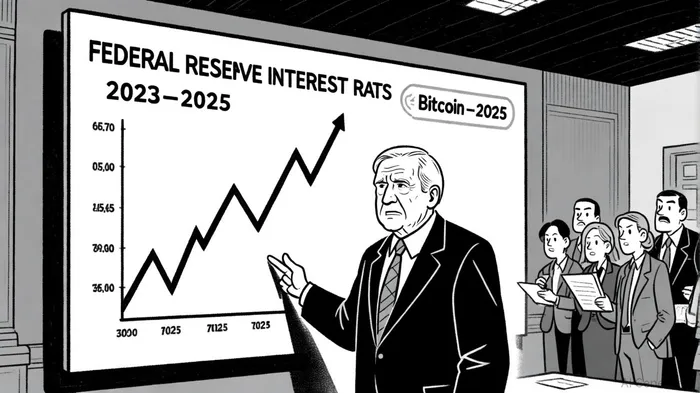
The U.S. Federal Reserve's monetary policy decisions have long served as a barometer for global financial markets. In 2023–2025, a series of rate cuts aimed at mitigating inflationary pressures and stabilizing economic growth have reshaped investor behavior, particularly in the cryptocurrency sector. As central banks pivot toward accommodative policies, the interplay between risk-on sentiment and digital asset dynamics has become a focal point for investors and institutions alike. This analysis explores how Fed rate cuts influence crypto markets, the mechanisms driving risk-on behavior, and the evolving landscape of digital asset recovery in a post-hack environment.
Risk-On Behavior and Liquidity Inflows
Lower interest rates reduce the opportunity cost of holding non-yielding assets like BitcoinBTC-- and EthereumETH--, making them more attractive to investors seeking capital appreciation. According to an Analytics Insight report, the September 2025 rate cut-reducing the federal funds rate to 3.75%–4.00%-coincided with Bitcoin surging to $117,000 and Ethereum surpassing $4,600. This trend reflects a broader shift in institutional and retail capital toward riskier assets, as investors capitalize on the Fed's easing stance.
The weakening U.S. dollar, a typical byproduct of rate cuts, has historically benefited Bitcoin, which is often viewed as a hedge against fiat devaluation, as an XT.com analysis notes. Additionally, the launch of spot Bitcoin ETFs in 2024–2025 has amplified inflows, with institutional investors treating crypto as a strategic allocation akin to traditional assets, according to Cointelegraph notes. For example, Coin Telegraph notes that the Fed's dovish signals in late 2024 spurred a 20% increase in ETF inflows, further fueling bullish momentum.
However, the impact of rate cuts is not uniform across the crypto ecosystem. Altcoins, which lack the liquidity and institutional backing of Bitcoin, face heightened volatility. A Bitrue analysis warns that smaller tokens are more susceptible to sharp corrections, particularly during events like equity market "triple witching" or unexpected macroeconomic shocks; a detailed Baker and Partners analysis underscores these vulnerabilities. This divergence underscores the importance of asset selection in a risk-on environment.
Digital Asset Recovery and Market Resilience
The surge in illicit activity-exemplified by $45 billion in crypto-related crimes in 2024, as Baker and Partners reported-has necessitated innovative recovery mechanisms. Traditional prevention-based models have proven inadequate against the speed of modern hacks, prompting the development of real-time resilience tools. For instance, Circuit's Automatic Asset Extraction (AAE) enables pre-signed transactions to be executed instantly upon detecting a breach, sweeping stolen funds into secure recovery wallets. This shift from reactive to proactive recovery aligns with the Fed's broader goal of stabilizing financial systems amid macroeconomic uncertainty.
The September 2025 crypto crash, which erased $300 billion in market value over ten days, highlighted the fragility of leveraged positions. Over $7.3 billion in forced liquidations triggered a self-reinforcing sell-off, exacerbated by mixed messaging from central banks about inflation trends. Yet, the crisis also accelerated adoption of recovery-first strategies, with platforms like XT.com reporting a 40% increase in AAE usage post-crash.
Challenges and Future Outlook
While rate cuts and ETF inflows have bolstered crypto markets, structural vulnerabilities persist. High leverage in futures trading remains a double-edged sword, with retail investors exposed to sudden margin calls during volatile periods, as noted by Analytics Insight. Regulatory clarity, however, offers a potential catalyst for sustained growth. The SEC's streamlined approval of crypto ETFs in late 2025 has already drawn institutional capital, with analysts projecting a 15% rebound in Q4 2025 if inflation trends remain stable, according to XT.com reporting.
The Fed's future policy path will be critical. A continuation of rate cuts could extend Bitcoin's bullish trajectory, while a reversal or hawkish pivot could reignite sell-offs. As Baker and Partners emphasizes, the decentralized nature of crypto assets complicates recovery efforts, but technological advancements in real-time asset extraction are narrowing this gap.
Conclusion
The Fed's rate cuts have catalyzed a risk-on environment in crypto markets, driving liquidity into digital assets while exposing structural weaknesses. As investors navigate this duality, the interplay between monetary policy, regulatory developments, and technological innovation will define the sector's trajectory. For those prioritizing resilience, the rise of real-time recovery tools offers a glimpse into a future where crypto markets can withstand-and recover from-systemic shocks.






Comentarios
Aún no hay comentarios