
Fed Rate-Cut Expectations and Market Complacency: Navigating the Risks of Delayed Investor Reactions
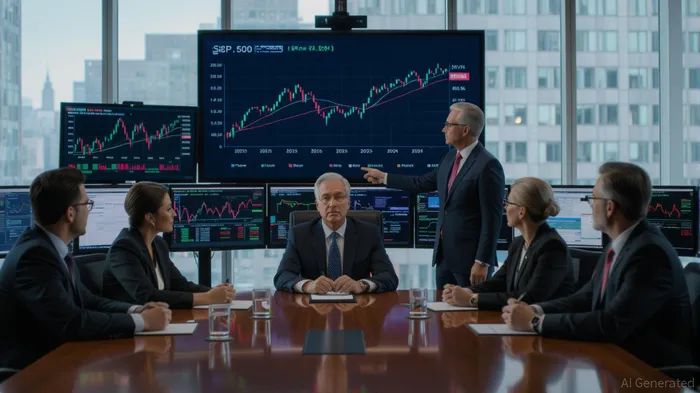
The Federal Reserve's September 2025 rate cut—marking the first easing since December 2024—has reignited debates about market complacency and the risks of delayed investor reactions to monetary policy shifts. While the 25-basis-point reduction to a target range of 4.00%-4.25% was widely anticipated, the decision underscores a critical tension: the Fed's dual mandate to balance inflation control with labor market stability. With unemployment rising to 4.3% and inflation stabilizing near 2.6%, the Fed has pivoted toward a more dovish stance, signaling two additional cuts in 2025 and a slower pace in 2026 [1]. However, historical patterns and current market dynamics suggest that complacency in response to these cuts could mask significant risks.
Historical Precedents: Complacency and Market Volatility
Historically, Fed rate cuts have often coincided with mixed investor reactions. A review of 13 rate-cut cycles since 1965 reveals that 11 led to recessions, while exceptions like 1998 and 1984 occurred during periods of robust economic health [2]. For example, the 1998 rate cuts, initiated amid a softening economy but not a full-blown recession, spurred a stock market rally. Yet, this period also saw the dot-com bubble inflate, leading to underperformance in low-volatility stocks [3]. Similarly, the 2008 financial crisis demonstrated how delayed Fed action—despite near-zero rates—initially failed to arrest market declines before liquidity injections eventually catalyzed a multi-year recovery [4].
These cases highlight a recurring theme: while rate cuts can stimulate growth, their efficacy depends on the broader economic context. During the 2001 and 2007 cycles, the Fed was perceived as either too late or insufficiently aggressive, resulting in S&P 500 declines of 29% and 37%, respectively [5]. Such outcomes underscore the risks of delayed investor reactions, where market optimism may outpace economic fundamentals, creating vulnerabilities for sharp corrections.
Current Complacency: A Double-Edged Sword
The September 2025 rate cut has already triggered a surge in risk assets, with the S&P 500 and Nasdaq Composite hitting record highs. Gold prices, too, have spiked as investors seek safe havens, reflecting concerns about inflation and political pressures on the Fed [6]. Yet, this optimism may obscure underlying fragilities. Morgan StanleyMS-- analysts caution that the market's high probability pricing of a September cut—96% via futures—could mask overvaluation risks, particularly in large-cap stocks [7].
Market complacency is further evident in the VIX volatility index, which fell to multi-year lows in early 2025 despite geopolitical tensions and tariff-related uncertainties [8]. This disconnect between policy expectations and economic realities raises concerns about a potential “buy the rumor, sell the fact” scenario, where initial gains reverse if data fails to justify prolonged easing. For instance, a strong Non-Farm Payroll report in September 2024 initially dampened rate-cut expectations, only for tariffs announced in April 2025 to reignite fears of a slowdown [9]. Such volatility underscores the challenges of aligning investor sentiment with the Fed's data-driven approach.
Risks of Delayed Reactions: Lessons for 2025
The Fed's September decision, while addressing a cooling labor market, also introduces new risks. For one, the concentration of market gains in sectors like technology and real estate could exacerbate systemic vulnerabilities. Additionally, the Fed's own projections—two more 2025 cuts and a gradual path in 2026—hinge on continued economic moderation. If inflationary pressures resurge or GDP growth accelerates, the Fed may face a credibility crisis, akin to the 1970s stagflation era [10].
Investors must also contend with the Fed's political challenges. The appointment of Stephen Miran, a Trump ally, and ongoing scrutiny of the central bank's independence, have raised questions about policy consistency. As noted by Morgan Stanley, this politicization could distort capital allocation and weaken the dollar's long-term strength [11].
Strategic Implications for Investors
Given these risks, investors should adopt a nuanced approach. While rate cuts typically boost asset prices, the current environment demands caution. Historical data shows that the S&P 500 averaged 14.1% returns in the 12 months following rate cuts, but this was accompanied by elevated volatility [12]. Diversification into bonds, alternatives, and defensive sectors—such as utilities and consumer staples—could mitigate downside risks.
Moreover, monitoring leading indicators like the 5-Year Breakeven Inflation Rate and the University of Michigan's inflation expectations will be critical. These metrics, currently signaling disinflation, could shift if tariffs or supply chain disruptions reignite inflation [13]. Investors should also remain wary of leverage in equity markets, as overextended positions may amplify corrections.
Conclusion
The September 2025 rate cut reflects the Fed's balancing act between inflation control and economic stability. While markets have reacted positively, historical precedents and current complacency indicators suggest that delayed investor reactions could amplify risks. By learning from past cycles and maintaining a disciplined, diversified strategy, investors can navigate the uncertainties of 2025 and beyond.







Comentarios
Aún no hay comentarios