
The Fed's Rate Cut Dilemma: Navigating Divergent Views and Inflation Risks
A Fractured Fed: Divergent Views on Rate Cuts
The Fed's internal discord is stark. Christopher Waller, a vocal dove, argues that labor market cooling justifies further cuts, while Lorie Logan and Beth Hammack demand clearer evidence of inflation's retreat before easing policy, according to a ScanX trade report. Lael Brainard, meanwhile, strikes a middle path, acknowledging inflation progress but cautioning against complacency, as reported by a Mufg Research commentary. This lack of consensus is reflected in the recent 10-2 FOMC vote for a rate cut, underscoring the fragility of the Fed's decision-making process, as noted in the ScanX report.
Markets, pricing in a 70% chance of a December cut, remain skeptical. Jerome Powell's insistence that such a move is "not guaranteed" highlights the uncertainty, as reported in the Mufg commentary. For fixed-income investors, this volatility demands agility. A rate-cutting cycle with inconsistent signals is a recipe for mispriced assets, particularly in long-duration bonds, which are vulnerable to sudden policy reversals.
The Data Blackout: A Fog Over Inflation Assessments
The U.S. government shutdown has exacerbated the Fed's challenges by creating a "data fog." Key metrics like the Consumer Price Index (CPI) and nonfarm payrolls have been delayed or canceled, forcing the Fed to rely on less reliable private-sector data, as described in a Chatham Financial insight. Chicago Fed President Austan Goolsbee has warned that this blackout risks delaying the detection of inflationary pressures, according to a ActionForex live comment.
This uncertainty has forced the Fed into a reactive stance. Without timely data, policymakers are left guessing whether inflation is trending toward 2% or lingering stubbornly. For investors, this means the Fed's next move is less about macroeconomic fundamentals and more about the availability of data-a factor outside the central bank's control.
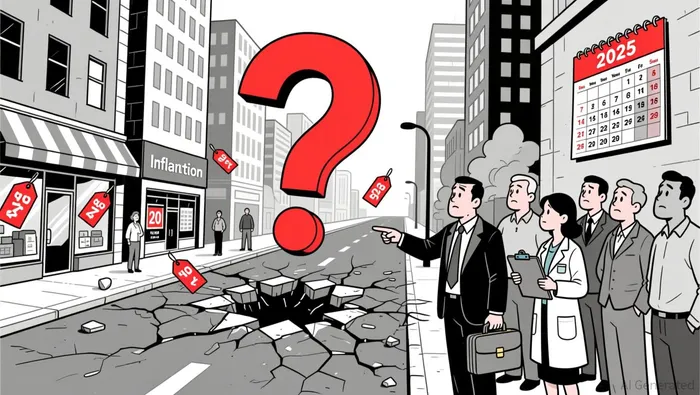
Defensive Strategies: Short-Duration Bonds and TIPS Take Center Stage
In this environment, fixed-income investors are pivoting to defensive strategies. Short-duration bonds, particularly those in the 3- to 7-year segment of the yield curve, have gained favor, as noted in a BlackRock investment direction. BlackRock has explicitly recommended short-dated Treasury Inflation-Protected Securities (TIPS) as a hedge against near-term inflation risks, per the same BlackRock report.
The shift is evident in market flows. The Bloomberg Aggregate Bond Index rose 2% in Q3 2025 as investors moved away from long-duration bonds, as reported in a RiverBridge commentary. Meanwhile, TIPS allocations have surged, with BlackRock noting that these securities provide "attractive all-in yields with limited duration risks," as described in the BlackRock report. The bond market's calm-reflected in a four-year low for the MOVE volatility index-suggests investors are betting on Fed easing, but the risks of a policy misstep remain, as noted in a Reuters article.
The Path Forward: Balancing Caution and Opportunity
While the Fed's easing cycle offers yield opportunities, the data blackout and divergent official views necessitate caution. Short-duration bonds and TIPS provide a buffer against both inflation surprises and policy errors. For instance, the Federal Reserve's decision to reinvest mortgage-backed securities into short-term Treasuries during the shutdown has signaled a preference for liquidity, as reported in a LookOnChain analysis, reinforcing the case for shorter maturities.
However, investors must remain vigilant. Persistent inflation risks-exacerbated by tariffs and fiscal deficits-could force the Fed to pivot abruptly. A tactical approach, favoring intermediate-term bonds and active sector rotation, is likely to outperform in this fragmented landscape, as noted in a Nasdaq article.
Conclusion
The Fed's rate-cut dilemma is a microcosm of broader economic uncertainty. With conflicting signals from officials and a data blackout clouding inflation assessments, fixed-income investors are justified in adopting a defensive posture. Short-duration bonds and TIPS offer a pragmatic solution, balancing yield, liquidity, and inflation protection. As the Fed navigates its path forward, flexibility will be key-both in portfolio construction and in expectations for policy clarity.







Comentarios
Aún no hay comentarios