
The Fed's Rate Cut Decision and Its Market Implications: Tactical Asset Reallocation in Anticipation of Easing Cycles
The Federal Reserve's November 2025 decision to cut the federal funds rate by 25 basis points,
according to Reuters, marks a pivotal moment in its ongoing balancing act between inflation control and labor market stability. While the cut reflects growing concerns over a flattening labor market and persistent affordability challenges
as per Reuters, the accompanying policy statement signaled a "" tilt, with officials divided on the path forward
according to the NY Times. This nuanced stance-cutting rates but raising the bar for further reductions-has significant implications for investors seeking to reallocate assets in anticipation of an extended easing cycle.
The Fed's Dual Dilemma: Inflation and Labor Market Risks
The November 2025 meeting minutes underscored the Fed's internal debate: while inflation has moderated slightly, it remains above the 2% target, with
. Meanwhile, the labor market, though still robust by historical standards, has shown signs of softening,
according to CNBC. This duality has forced the Fed into a cautious posture. As stated by a report from Reuters, the December meeting may mark the end of the current rate-cutting cycle, with policymakers prioritizing inflation risks over further easing
according to Reuters.
This environment creates a unique challenge for investors. A ""-where the Fed reduces rates but signals limited future reductions-typically leads to mixed market reactions. Historically, such signals have caused short-term volatility in equities and bonds, as investors parse the Fed's conflicting priorities
according to CNBC.
Tactical Reallocation: Lessons from Historical Easing Cycles
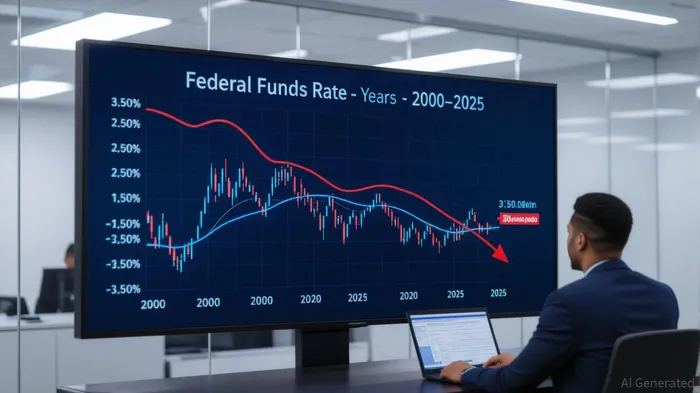 Historical data from 2000-2025 provides a roadmap for tactical asset reallocation during Fed easing cycles. According to a BlackRockBLK-- analysis, investors have traditionally shifted toward bonds with higher yield potential and alternatives like gold and BitcoinBTC-- during rate-cutting periods
according to BlackRock. However, the current cycle differs in key ways. For instance,
according to BlackRock.
U.S. large-cap growth stocks, particularly in technology,
according to JPMorgan. The S&P 500's recent performance aligns with this pattern,
according to JPMorgan. Investors should also consider international equities, which have historically outperformed during U.S. dollar weakness. Europe and emerging markets,
according to JPMorgan), offer compelling diversification opportunities.
Navigating the Fed's Balance Sheet Strategy
The Fed's decision to end its balance sheet runoff by December 1, 2025
according to Wells Fargo, adds another layer to the investment calculus. By halting , the Fed aims to stabilize financial markets amid lingering volatility. This shift could indirectly benefit asset classes reliant on liquidity, such as high-yield bonds and emerging market equities. However, investors must remain cautious: the Fed's focus on inflation means further easing is unlikely unless labor market risks escalate
according to Reuters.
Strategic Recommendations for Investors
- Duration Management in Fixed Income: Prioritize short- to intermediate-term bonds to mitigate inflation risks while capturing yield. Avoid overexposure to long-duration assets,
according to BlackRock. - Equity Diversification: Maintain overweight positions in U.S. large-cap growth stocks but complement with international equities, particularly in Asia-Pacific markets (e.g., India,
according to JPMorgan. - Alternatives for Hedging: Allocate a portion of portfolios to gold and Bitcoin, though treat the latter as a high-risk, speculative asset
according to iShares. - Active Cash Management: Reduce cash allocations to offset income loss from lower yields, , which benefit from
according to JPMorgan.
Conclusion
The Fed's November 2025 rate cut, while a step toward easing, is tempered by a hawkish outlook that complicates traditional investment strategies. Investors must adopt a tactical, flexible approach, leveraging historical insights while remaining agile in response to evolving policy signals. By prioritizing duration management, global diversification, and strategic allocations to growth sectors, portfolios can navigate the Fed's dual mandate of inflation control and labor market stability.





Comentarios
Aún no hay comentarios