
The Fed's QT Exit: Strategic Repositioning in Fixed Income and High-Quality Equities for 2025
The End of QT and Market Liquidity
The Fed's official termination of QT on December 1, 2025, follows a gradual reduction in monthly bond redemption caps, with Treasury runoff at $5 billion and mortgage-backed securities (MBS) at $35 billion, as described in the Bitget article. By ceasing QT, the Fed aims to ease financial conditions while maintaining price stability. Starting in Q1 2025, the central bank plans to reinstate monthly Treasury purchases of $35 billion, a move expected to stabilize yields and inject liquidity into markets, as detailed in a Coinotag report.
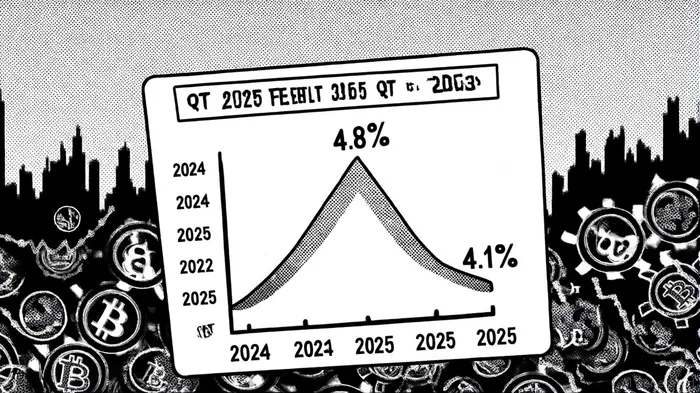
This policy shift has already influenced market dynamics. Treasury yields, which peaked at 4.8% in mid-2024, have declined to under 4.1% in early 2025, reflecting improved risk-on sentiment, according to the Coinotag report. Analysts suggest this liquidity infusion could bolster risk assets, including cryptocurrencies, with BitcoinBTC-- experiencing a 20% rally following similar easing signals in late 2024, per the Coinotag report.
Fixed Income Repositioning: Duration and Credit Quality
Post-QT, fixed income strategies must balance duration risk with credit quality. The Fed's balance sheet expansion will likely ease pressure on Treasury yields, but investors must remain cautious about longer-duration bonds, which remain sensitive to inflation and fiscal policy shifts, as highlighted in a BlackRock insight.
BlackRock emphasizes that the traditional focus on the Fed's balance sheet size is less relevant than its evolving asset and liability composition, a point echoed in the BlackRockBLK-- insight. Investors are increasingly prioritizing high-quality, shorter-duration bonds to mitigate volatility. For example, TCW Group's Flexible Income ETF (FLXR) has attracted inflows by offering a 3.5% yield with a focus on credit stability, according to a DiscoveryAlert article. Similarly, SCOR SE's high-quality fixed income portfolio has delivered consistent returns, underscoring the appeal of defensive strategies, as noted in a Reuters report.
High-Quality Equities: Sector Selection and Growth Potential
The Fed's easing cycle has amplified demand for high-quality equities, particularly in sectors with resilient cash flows and low sensitivity to interest rates. Tech and utilities have emerged as top performers, with global equity funds attracting $10.58 billion in inflows in October 2025, led by Asian markets and U.S. tech funds, as reported in a Newsmax article.
Analysts recommend overweighting sectors like artificial intelligence, consumer staples, and utilities, which benefit from lower borrowing costs and stable demand, as discussed in a Bitget analysis. For instance, companies leveraging AI-driven efficiency gains have seen strong earnings growth as capital costs decline, a theme explored in the Bitget analysis. Meanwhile, consumer staples remain a safe haven in a slowing economy, with T. Rowe Price reporting robust demand for its target date funds, based on the Newsmax article.
Strategic Considerations for Investors
As the Fed transitions from QT to balance sheet expansion, investors should adopt a dual approach:
1. Fixed Income: Extend duration cautiously, favoring high-quality corporate bonds and short-to-intermediate Treasuries. Avoid overexposure to long-duration assets amid potential inflationary surprises, as advised by BlackRock.
2. Equities: Focus on sectors with strong cash flow generation and pricing power, such as tech and utilities. Diversify across geographies, particularly in Asia, where inflows have surged ahead of rate cuts, a trend noted in the Newsmax article.
The Fed's December 2025 QT exit represents a structural shift in monetary policy. By aligning portfolios with these dynamics, investors can capitalize on the liquidity tailwinds while mitigating risks in a post-QT world.





Comentarios
Aún no hay comentarios