
Fed Policy Uncertainty and Asymmetric Market Impacts: Navigating Crypto and Traditional Asset Divergence
The Federal Reserve's policy decisions have long served as a barometer for global financial markets. However, the asymmetric responses of traditional assets (equities, bonds) and cryptocurrencies to monetary policy shifts reveal divergent risk profiles and behavioral dynamics. As the Fed navigates a complex economic landscape in 2025, understanding these asymmetries is critical for investors seeking to optimize risk allocation strategies.
Historical Context: Divergent Reactions to Fed Interventions
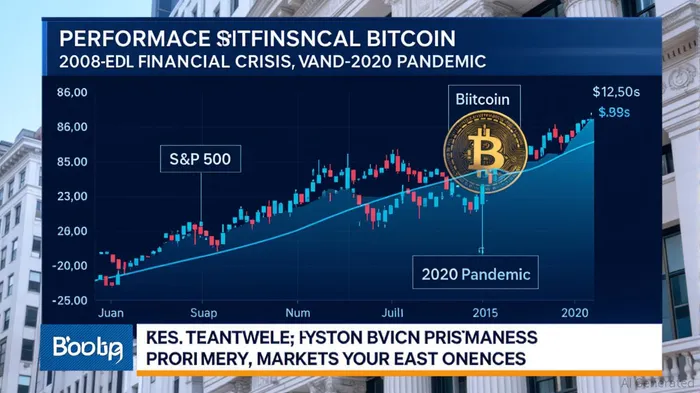
During the 2008 financial crisis and the 2020 pandemic-induced downturn, the Fed deployed aggressive liquidity injections and near-zero interest rates to stabilize traditional markets. Equities and bonds benefited directly from these measures, with the S&P 500 surging 27% in 2009 and 53% in 2021, respectively. Cryptocurrencies, however, exhibited mixed responses. While BitcoinBTC-- (BTC) saw short-term rallies during periods of monetary expansion, its volatility and lack of regulatory clarity led to sharp corrections when macroeconomic sentiment shifted. For instance, BTC's price collapsed by 80% in 2018 despite the Fed's accommodative stance, underscoring the role of speculative sentiment in crypto markets.
This divergence stems from structural differences: traditional assets are priced with predictable discount rates tied to Fed policy, while crypto's value proposition hinges on decentralized narratives and speculative demand. As a result, Fed-driven liquidity often amplifies crypto's volatility rather than stabilizing it.
2025: A Pivotal Policy Shift and Market Uncertainty
The September 2025 Federal Open Market Committee (FOMC) meeting has become a focal point for investors. With a 96.4% probability of a 25-basis-point rate cut (per CME FedWatch data[3]), the Fed faces pressure to ease policy amid slowing job gains and inflation stubbornly above 2%. Political rhetoric, including President Donald Trump's public calls for rate cuts, has further muddied expectations, creating a feedback loop between policy uncertainty and market behavior[3].
Historical patterns suggest traditional markets will likely rally on rate-cut expectations, as lower borrowing costs boost corporate earnings and bond yields. Conversely, crypto markets may experience a bifurcated response. While reduced interest rates could spur inflows into high-yield crypto protocols, regulatory scrutiny and macroeconomic risks (e.g., inflation persistence) may cap upside potential. This asymmetry mirrors 2020, when BTC surged 300% amid Fed stimulus but later corrected as inflationary pressures emerged.
Predictive Behavior Models and Risk Allocation Strategies
Quantifying asymmetric impacts requires analyzing behavioral models. Traditional assets tend to follow mean-reverting patterns tied to Fed policy, with equities and bonds exhibiting strong positive correlations to liquidity expansions. In contrast, crypto markets display regime-switching behavior—shifting between high-growth and panic-driven phases based on macroeconomic signals and regulatory news.
For risk allocation, investors must balance these dynamics:
1. Traditional Markets: Position for Fed-driven liquidity, favoring sectors sensitive to rate cuts (e.g., technology, real estate).
2. Crypto Markets: Allocate selectively to high-liquidity pairs (e.g., BTC/USD) while hedging against volatility via options or stablecoin-backed derivatives.
A diversified portfolio might overweight equities during easing cycles but maintain a small crypto exposure to capitalize on liquidity-driven rallies, while using traditional assets to offset crypto's inherent volatility.
Conclusion: Navigating the Asymmetric Landscape
Fed policy uncertainty in 2025 demands a nuanced approach. While traditional markets offer predictable, liquidity-driven returns, crypto's asymmetric response to policy shifts requires disciplined risk management. Investors who recognize these divergent dynamics—rooted in historical precedent and behavioral models—can better navigate the evolving interplay between centralized and decentralized asset classes.






Comentarios
Aún no hay comentarios