
Fed Policy Normalization Risks: The Threat of Mission Creep and Political Influence
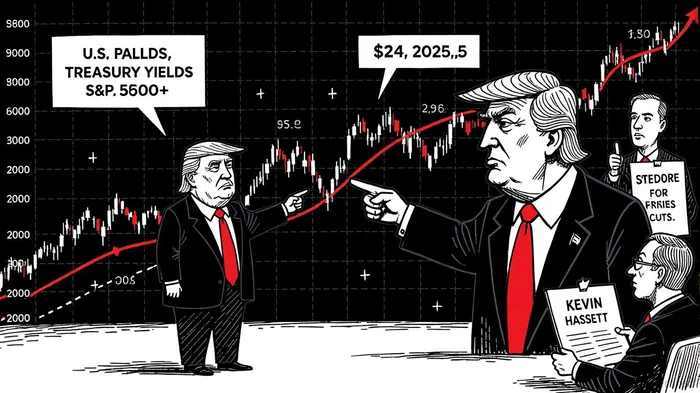
The Federal Reserve’s credibility and the stability of global markets hang in the balance as political pressures and institutional overreach threaten to redefine its core mandate. The concept of “mission creep”—where the Fed’s role expands beyond its original charge of price stability and maximum employment—has gained urgency in 2025. Critics argue that the central bank’s interventions in areas like climate policy, social equity, and regulatory oversight have eroded its focus and invited accusations of politicization [4]. Now, with President Donald Trump and his economic team pushing for aggressive policy normalization, the risk of further mission creep—and its consequences for investors—has never been more acute.
The Politicalization of Monetary Policy
Kevin Hassett, the White House’s National Economic Council director and a potential successor to Federal Reserve Chair Jerome Powell, has emerged as a pivotal figure in this unfolding drama. A self-described “policy dove,” Hassett has consistently advocated for rapid interest-rate cuts, arguing that the Fed’s current stance is “inappropriately high” and stifling job creation [1]. His rhetoric aligns with Trump’s broader economic agenda, which emphasizes growth-oriented policies—even if they entail higher inflation risks. This alignment raises critical questions about the Fed’s independence.
According to a report by Bloomberg, Hassett has framed the administration’s push for rate cuts as a necessary step to “improve economic conditions for American workers,” downplaying concerns about market volatility [4]. However, this approach risks conflating monetary policy with political objectives. As former Fed Governor Kevin Warsh warned, the central bank’s encroachment into non-economic domains—such as climate change and diversity initiatives—has already weakened its institutional credibility [4]. If the Fed is perceived as a tool of partisan agendas, its ability to anchor inflation expectations and stabilize markets will be severely compromised.
Mission Creep and the Erosion of Credibility
The Fed’s credibility is further strained by its expanding regulatory role. Recent actions, such as the introduction of a “Pillar 2” approach to bank capital requirements and the sunset of its crypto supervision program, reflect a broader trend of regulatory overreach [5]. While these measures aim to address emerging risks, they blur the line between monetary policy and banking regulation. This ambiguity creates fertile ground for political interference, as seen in Trump’s public pressure on Powell and his attempt to remove Fed Governor Lisa Cook [2].
Treasury Secretary Scott Bessent has called for a nonpartisan review of the Fed’s policies, citing “distributional distortions” caused by its interventionist strategies [1]. Yet, the administration’s own actions—such as Hassett’s retention of a White House role while potentially joining the Fed Board—undermine calls for independence [3]. This duality risks creating an “independence risk premium” in markets, where investors demand higher returns to compensate for policy uncertainty [3].
Implications for Investors
For fixed-income investors, the Fed’s credibility crisis poses a dual threat. A politicized Fed may delay rate normalization despite inflationary pressures, prolonging bond market rallies but increasing the risk of a sharp correction when policy credibility collapses. Conversely, if the Fed is forced to raise rates aggressively to restore trust, Treasury yields could spike, eroding bond prices. Investors should consider hedging with inflation-protected securities (TIPS) and short-duration bonds to mitigate these risks.
Equity markets face even greater volatility. Hassett’s advocacy for rate cuts and Trump’s tariff policies have already fueled speculative trading in meme stocks and tech sectors [1]. If the Fed’s credibility is further eroded, market participants may react to policy signals with heightened sensitivity, leading to sharp swings between optimism and panic. Defensive sectors like utilities and consumer staples could offer relative stability, while options strategies (e.g., iron condors) may help cap downside risks.
The Urgency of Hedging
The Fed’s mission creep and the political pressures it faces underscore the need for proactive risk management. As noted in a Southern Economic Journal analysis, structural imprinting from past interventions has made the economy more vulnerable to shocks [4]. Investors must assume that policy normalization will be neither smooth nor predictable. Diversification across asset classes, geographic regions, and hedging instruments is essential.
Conclusion
The Federal Reserve stands at a crossroads. While its updated monetary policy framework and regulatory reforms aim to address modern challenges, the specter of mission creep and political influence looms large. For investors, the message is clear: the era of stable, predictable Fed policy is over. Hedging against policy uncertainty is no longer optional—it is a necessity.
Source:
[1] Limp Jobs Report May Show a Market About to Climb, or Sink [https://www.bloomberg.com/news/newsletters/2025-09-05/limp-us-jobs-report-may-show-a-market-about-to-climb-or-sink]
[2] Trump Federal Reserve board [https://www.cnbc.com/2025/08/30/heres-what-it-really-means-for-trump-to-get-control-of-the-federal-reserve-board.html]
[3] The Fed's Independence Dilemma: When Economic Policy Meets Political Reality [https://www.ctol.digital/news/trump-fed-nominee-keep-white-house-job-central-bank-board/]
[4] Southern Economic Journal, John Wiley & Sons [https://ideas.repec.org/s/wly/soecon.html]
[5] Federal Open Market Committee announces approval of ... [https://www.federalreserve.gov/newsevents/pressreleases/monetary20250822a.htm]







Comentarios
Aún no hay comentarios